
Is your impact business designed to survive – or to evolve?

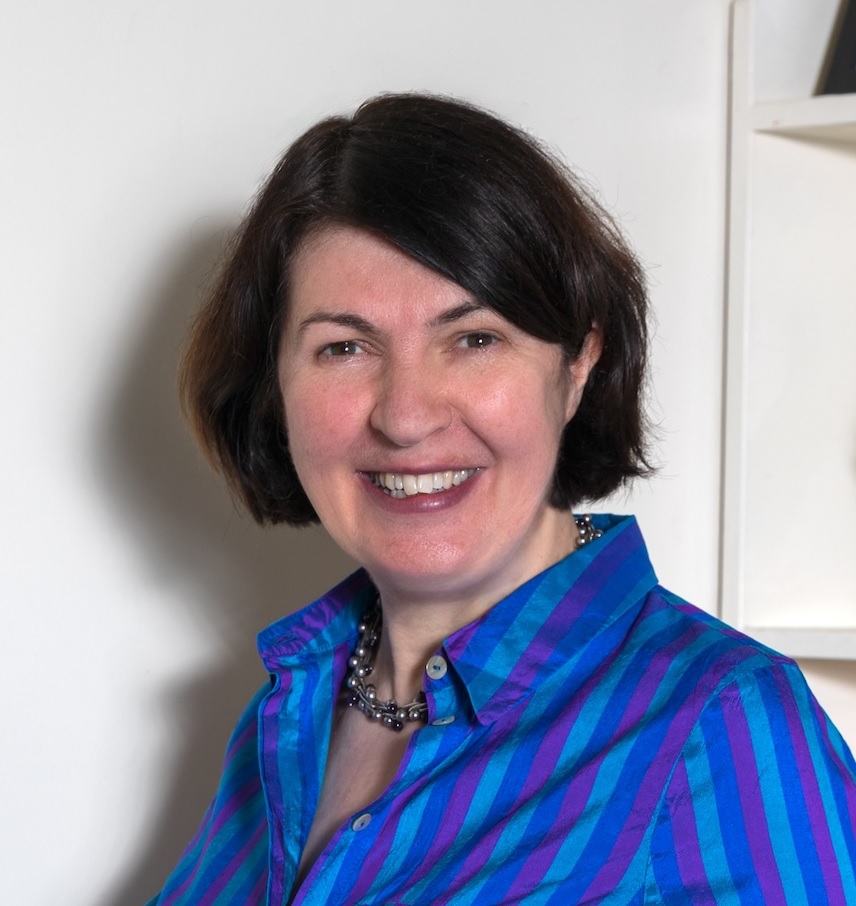
Portrait of June O'Sullivan, CEO of London Early Years FoundationBeing a 'future-fit' social enterprise is not about scale. It's about resilience, says Dr June O'Sullivan, who has led London Early Years Foundation for 20 years, taking it from being a small charity to an award-winning social enterprise.

It’s that time of year again when leadership teams polish their annual strategies, Boards prepare their questions, and budgets begin to take shape. For many organisations, especially social enterprises, this is a ritual of alignment: ensuring strategy, resources and purpose all point in the same direction. Increasingly, trustees ask the same question: “Does this keep us future fit?”

But what does being future fit actually mean?

A future‑fit organisation is one that is designed not just to survive but to evolve. It stays alert to signals of change, invests in resilience, and builds the capacity to make good decisions in uncertain times. It is as much about mindset as mechanics.

Before we start talking about growth targets, we must ask: what kind of growth do we want, and why?

Future-fit organisations demonstrate the agility to navigate rising energy costs, supply‑chain disruption, net‑zero demands, talent shortages, rapid technological innovation and the increasing impact of global shocks. They also hold on to the fundamentals: growth, productivity, efficiency, and long-term competitiveness.

In the social sector, we are navigating all these global shocks alongside recruitment gaps, rising costs, tighter regulation, shifting policy, and a level of need that keeps moving in one direction. Many of us are trying to deliver long-term outcomes on short-term funding, in markets where prices are capped but expectations aren’t. Growth rarely operates within perfect conditions. So, before we start talking about growth targets, we must ask: what kind of growth do we want, and why? This is where strategy work gets difficult and interesting.


Thinking about the future: the four domains

While preparing our own strategy, I read a compelling RSA article: “Future Tense: Why We Struggle to Think About the Future” by futurist Nick Foster. Foster argues that many organisations fall into lazy or distorted future-thinking. He identifies four domains:

  • Could Futurism – the sci‑fi, glossy, escapist version of the future.
  • Should Futurism – the data-heavy, “numeric fiction” of models and metrics that create a false sense of certainty.
  • Might Futurism – the limited thinking shaped by our personal experience, where anything outside our worldview appears “impossible.”
  • Don’t Futurism – the doom‑laden critique, a necessary counterbalance but one that can slide into paralysis.

When our senior team reflected on these, we found ourselves spread across the should and the might: pragmatic but aware of the limits of foresight. The discussion was illuminating. It reminded us that future fitness isn’t about predicting the future, it’s about building the capability to respond to whatever emerges.


Mission‑driven growth: learning from Mazzucato

Economist Mariana Mazzucato offers another crucial layer. She argues that growth should not be aimless or extractive but mission-led: directed toward societal challenges such as climate change, inequality or innovation. For social enterprises it is the only kind of growth worth doing. This requires an “entrepreneurial state” willing to invest in long‑term public value creation something highly relevant to social enterprises operating within market-led systems.

For those of us working with disadvantaged communities, the tension is familiar. We operate in markets distorted by government subsidies and commissioning with rising costs, inconsistent policy signals, and high need. We must apply commercial discipline while holding tight to social purpose. It is chaotic, messy, and morally demanding. Yet it is precisely why future-fit thinking matters: it helps us navigate uncertainty without losing our mission.


What future fit actually looks like

A future-fit organisation:

  • aligns sustainability with commercial objectives
  • strengthens its culture and organisational purpose
  • invests in talent attraction and retention
  • builds resilience into supply chains
  • uses data and technology intelligently, not blindly
  • prepares for regulatory and environmental shifts
  • innovates continuously, guided by evidence

Being future fit is almost like being a “superager”: cognitively resilient, socially connected, adaptable and capable of learning faster than the world is changing.


Technology, AI and the real-time organisation

Today’s future-fit companies are highly data‑literate. They collect, manage and interpret data to make real-time decisions. They experiment, adapt, and abandon ideas quickly when evidence shows they’re not working. AI is a central part of this shift—not as science fiction, but as a practical tool that increases efficiency, reduces risk and enables scale.

Being future fit is almost like being a “superager”: cognitively resilient, socially connected, adaptable and capable of learning faster than the world is changing

To stay ahead, organisations must:

  • collect and analyse real-time data
  • use evidence to guide investments
  • monitor markets constantly
  • experiment continuously
  • explore AI capabilities
  • make decisions grounded in empirical insight

This is not about jumping on technological bandwagons. It is about intentional innovation: using technology to strengthen mission, quality and operations.


Supply chains, sustainability and strategic resilience

Future fitness also depends on strong supply‑chain strategy. Trade tensions, tariffs, geopolitical instability and climate‑related risks make diversification essential. Technology, predictive analytics, transparent partnerships and flexible procurement help protect continuity and reinforce long-term resilience.

Sustainability is equally strategic. Consumers now expect ethical practice. Regulation is tightening. Carbon reduction is no longer optional. Organisations that integrate sustainability into governance, training, operations and pedagogy will be better positioned for the future—not just morally, but competitively.


Keeping the mindset alive

Being future fit is not a spreadsheet exercise. It is a mindset woven into leadership, culture and daily decisions. It shapes how we think about growth, innovation, workforce, and mission. It asks us to hold ambition and responsibility in equal measure.

As we prepare this year’s strategies – board papers, budgets, KPIs and operating plans – the real challenge is not simply what we plan to do, but how we are thinking. Are we building an organisation that can thrive in change? Are we designing growth that creates value, not just volume? Are we preparing our teams for the future we are walking into?

Future fitness is not an end state. It is a discipline: reflective, intentional, evidence-informed and mission-led. And in a world as volatile as ours, it may be the most important asset an organisation can build. To make it happen then we need:

Funders: to back capability, not just activity.
If you want innovation, fund the conditions that make innovation possible: systems, training, leadership development, evaluation and time to iterate.

Commissioners: pay for quality and sustainability, not just volume and cheapness.
Short-term, lowest-cost procurement drives fragility. Outcomes depend on workforce stability and continuous improvement.

Government: stabilise the policy environment for prevention and early intervention.
If you want long-term savings, stop treating community infrastructure and early help as optional. Prevention only works when the system is predictable enough to invest in.

Everyone: stop confusing “scale” with success.
Replication without resilience just spreads the problem faster.

Stop confusing “scale” with success. Replication without resilience just spreads the problem faster.


Future fitness is a discipline

Being future fit isn’t an end point. It’s a discipline woven into daily decisions. It’s the ability to hold ambition and responsibility together. Social enterprises don’t just need permission to grow. They need the conditions to grow well. Because the ultimate test is not whether an organisation gets bigger. It’s whether it stays true, stays capable, and keeps its promise to the people relying on it.


A quick future-fit test. Ask yourself:

If demand rose 20% next year, could you keep quality without burning out staff?
If costs rose again, could you absorb it without cutting the work that protects outcomes?
If key people left, do you have a plan?
If a supplier failed, is continuity protected?
If regulation tightened, are your systems ready?

If the honest answer is no, the plan isn’t future fit. It’s a risk register waiting to happen.


Dr June O'Sullivan was named WISE100 Social Business Woman of the Year 2025 and SE100 Leader of the Year in 2021


Ready to invest in independent, solutions-based journalism?

Our paying members get unrestricted access to all our content, while helping to sustain our journalism. Plus, we’re an independently owned social enterprise, so joining our mission means you’re investing in the social economy. 

Please consider becoming a member