How business can be a force for good in a world where short-term profit maximisation is king

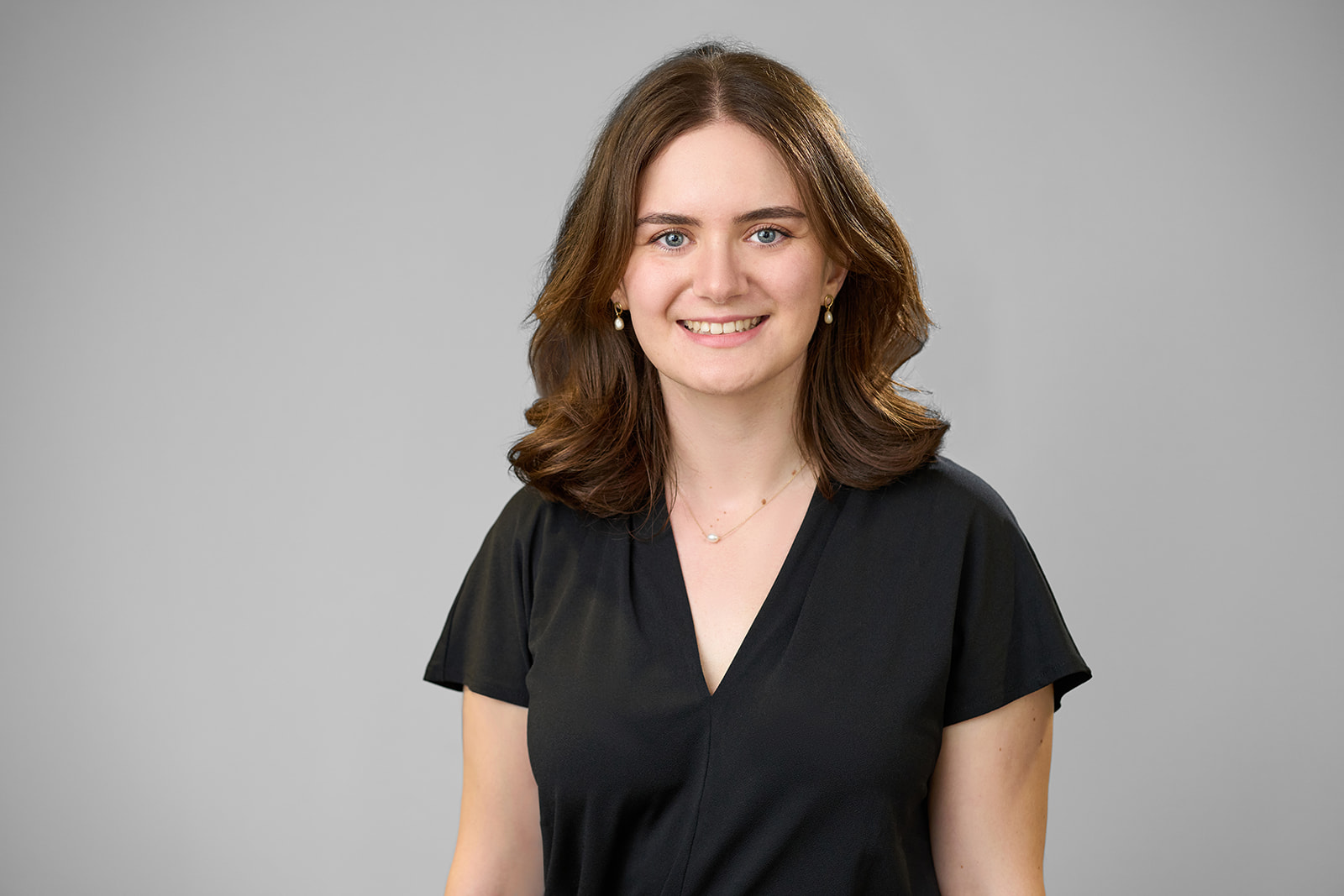
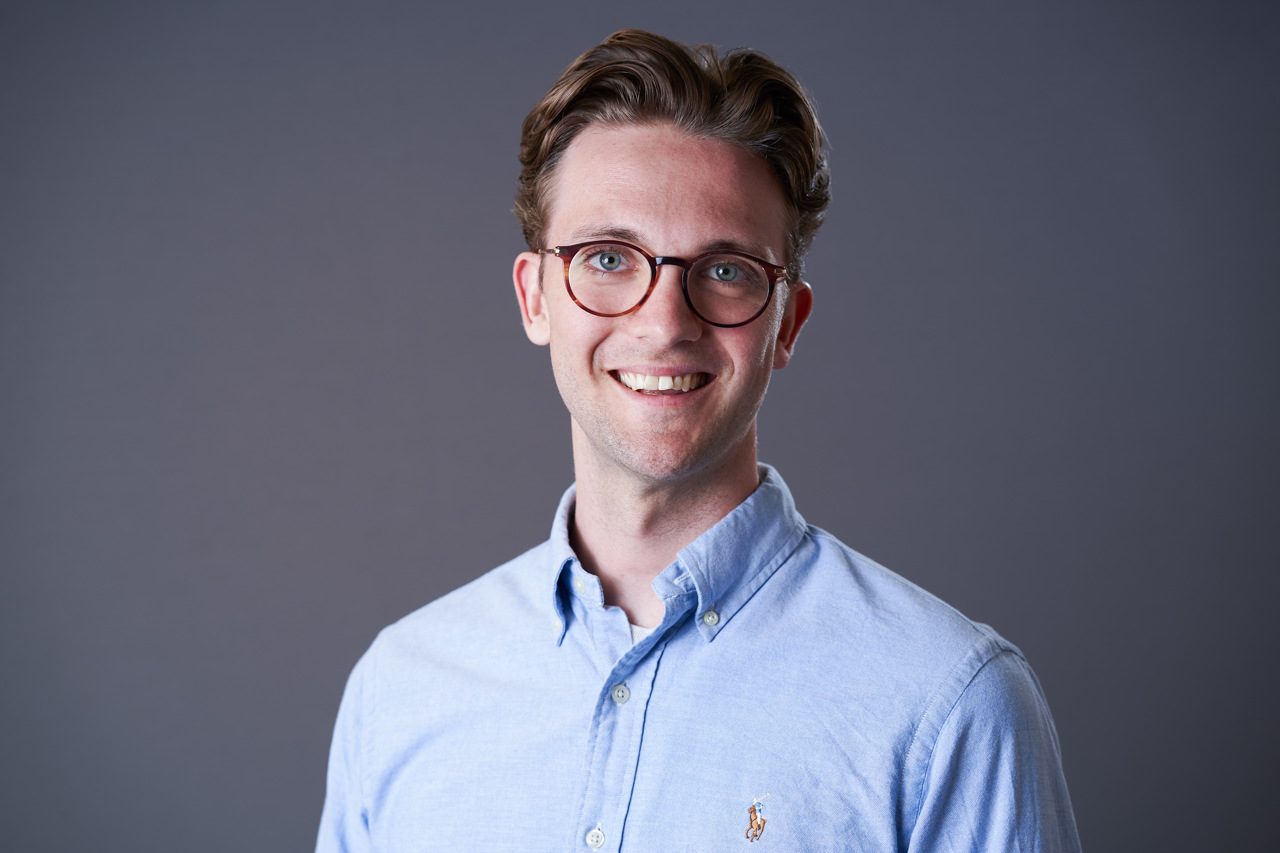
EXPERT INSIGHT: Many businesses now declare a social or environmental purpose, yet their strategies are still constrained by 20th-century ownership and governance models. Following a report by their team at purpose-led consultancy firm Clarasys, published earlier in 2026 in collaboration with A Blueprint for Better Business, Sarah MacCallum-Orr and Alex Willford (pictured above) argue that purpose only endures when it is structurally protected – not just championed – by business leaders. They explore why purpose so often stalls, the power of ownership as a protective force, how organisations can rewire themselves to make purpose a reality – and chart their own organisation's journey to employee ownership.

Business leaders are trapped in a moment of acute tension. There is growing recognition that “business as usual” is failing to address the urgent global polycrisis, yet pressure for strong quarter-on-quarter growth remains relentless. Simultaneously, there are calls for a wellbeing economy that puts people and planet first and demands purpose-driven businesses which deliver positive impact, manage negative externalities, and generate profit needed to remain viable. As the expectations of regulators, consumers, employees and investors diverge from the market’s short-term pressures, boards find themselves struggling to find a coherent strategy.
The noughties saw an explosion of purpose statements, net zero targets, and ESG pledges. Lots of buzzwords and hope but little action, and even less now in 2026.
So what’s gone wrong? The issue is not a failure of individual leadership. Instead, organisations are stuck in a structural and systemic trap. When those who own and govern organisations prioritise short-term financial extraction, purpose will eventually be sacrificed – no matter how good the original intentions.
The question then is this: once a business aspires to be a force for good, what does it take to make that purpose lasting and viable today?
Once a business aspires to be a force for good, what does it take to make that purpose lasting and viable today?
To answer this, we need to deconstruct the dynamics of organisational governance – the (often invisible) forces that dictate how, why and when decisions get made. Only once we understand this can we effectively begin to bridge the gap between what a business intends and what its structures actually deliver. As illustrated below, this requires deliberate design across several levers: from how a firm’s purpose is understood and defined, to how boards operate and decisions get made, to the legal mandates that make it stick.
Click image to enlarge
Purpose without action is symbolic, action without protection is ephemeral
An organisation’s ability to operate in a purpose-driven way is determined by three factors:
- Purpose potential: The capacity of an organisation to generate enduring, financially viable impact
- Purpose action: The scale of impact the organisation creates in the world
- Purpose protection: The resilience of the organisation to mission drift or financial gravity.
Most organisations focus on the first two, neglecting the long-term protective mechanism to sustain it. This is why sustainability initiatives are defunded when margins tighten, or social programmes disappear in the next restructure. Intent, it turns out, is not a long-term defence.
Ownership is the most powerful and least discussed of these structural protective forces. Whether a business is publicly listed, private equity-backed, founder-owned, employee-owned or structured as a cooperative or CIC shapes almost everything, from decision-making to time horizons. Listed companies and private equity-backed businesses are structurally drawn toward short-term financial performance, a gravitational pull that even mission-driven CEOs and boards cannot easily defy.
This explains why bowing to market pressures is so common and hard to escape. Organisations assume that intent is enough – that hiring the right people, writing the right strategy and making the right commitments will carry them through. It won't unless they build governance structures that formally protect the mission and ownership dynamics that are aligned to long-term value creation.
To sustain meaningful impact, organisations must bake purpose into their architecture. The form this takes... makes mission drift culturally undesirable and structurally difficult.
To sustain meaningful impact, organisations must bake purpose into their architecture. The mission must be a committed constraint that shapes decisions. The form this takes, whether through mission locks in their Articles of Association, employee ownership, or a foundation trust, makes mission drift culturally undesirable and structurally difficult.
Interventions – steering through the storm
We will outline a practical architecture of nine interventions for steering through the storm and “closing the gap”. Change begins with a shift in mindset, but must be reinforced by organisational governance and eventually legally binding changes to ensure the business remains resilient to shocks.
To be a force for good, a business must honestly re-examine the beliefs and assumptions that underpin its activity, particularly the focus on financial value as the single proxy for success.
We have found that creating distance from “business as usual” activity allows leaders to surface assumptions, challenge inherited beliefs about success, and reconnect with the organisation’s deeper role in society.
| MINDSET SHIFTS: | |
|---|---|
| From | To |
| Profit is our orienting goal Financial value takes precedence over social or environmental considerations | Wellbeing is our orienting goal We aim to deliver profitable solutions for the long-term wellbeing of people and planet |
| Purpose/impact is tangential It exists as an “add-on”, often disconnected from where real decisions about resources are made | Purpose defines our impact We define our optimal strategic contribution based on the world's needs, not just our own growth |
| Fixed pie mindset A belief that value for society comes at a direct cost to the business | Grow the pie mindset Investing in stakeholders grows the total value, with profit rising as a necessary by-product |
Making these shifts is difficult, especially for those who have held a profit-first set of beliefs for decades.
We use these questions to help organisations examine purpose:
| 1 | What is the purpose of business in society? |
| 2 | What is the role of our industry in enabling people and planet to flourish? |
| 3 | What is our unique role in society? What value can / do we create? |
| 4 | What challenges do we have a comparative advantage in solving? |
| 5 | What structural, cultural, or other barriers are stopping us from addressing those challenges today? |
Defining organisational intent
Moving purpose beyond a branding and comms exercise requires clarity on strategy. The purpose statement must serve as the inspirational catch-all, while individual impact ambitions offer tangible goals that business units can set goals around to deliver. This clear articulation of intent, supported by values and non-negotiable commitments to sustainability, ensures purpose guides strategy rather than sitting alongside it. Small-scale experimentation can be a powerful tool to test these ambitions in practice, helping build confidence, challenge beliefs and assumptions, and provide essential feedback on what actually works to deliver value.


Putting the structure in place to reward and protect purpose
Changing mindsets is necessary, but insufficient if the organisational architecture, governance, and incentives still reward short-term thinking. An organisation-wide rewiring is needed, revisiting how performance is measured, how decisions are made, and where accountability for impact lies. Governance must translate “what do we believe?” into “how do we make it happen?”.
Three changes are especially effective:
1. Rewiring the board
The board sets the agenda. Generally, changes to promote purpose come down to board composition (who), and board operations (what / how).
Changing mindsets is necessary, but insufficient if the organisational architecture, governance, and incentives still reward short-term thinking.
Some fascinating interventions are emerging. Faith in Nature has a director representing nature, IKEA’s CEOs serve as Chief Sustainability Officers, Danone has a panel of external experts on their board. Many organisations have reworked their board papers and board templates to ensure they are reframing value beyond short-term financial returns.
2. Rewiring performance
Purpose only creates value when paired with clear direction from management and deeply held beliefs among the employees. A study of 500,000 employee surveys found that firms achieved superior stock market returns when high purpose was combined with high strategic clarity. Organisations must move beyond standard metrics and measure performance across five dimensions:
- Impact performance: Mixing quantitative data with storytelling, tracking impact pathways (lead indicators), and stocktaking capital (natural, social, and human resources).
- Stakeholder performance: Measuring alignment against expectations for shareholders, impact partners, employees, and communities.
- Commercial performance: Profit is viewed as "fuel". Metrics focus on viability, surplus generation, and scalability to reinvest in the mission.
- Operational performance: Efficiency (e.g., reducing cycle times) frees up resources to scale impact.
- Responsibility performance: Managing negative externalities (ESG) by gaining transparency regarding trade-offs and establishing "red lines" (e.g., zero tolerance for exploitative labour).
3. External accountability
Many organisations like Patagonia, Triodos Bank or Tony’s Chocolonely use public commitments as a way to “lock in” to a mission-driven approach.
- Read more: Golden share but no veto rights: how Tony’s Chocolonely hopes to future-proof its mission
Assurance of impact reporting and adherence to purpose-led standards such as BSI’s PAS 808 or the forthcoming ISO 37011 standard can also provide an internationally-recognised baseline that organisations can adapt to their context.
Providing legal protection for purpose-led directors
The final, most powerful shifts hardwire purpose into the business’s DNA by changing its structure:
- Providing legal protection for directors
In the UK, directors are legally responsible for promoting company success. Without constitutional changes explicitly adding an external purpose, directors struggle to legally prioritise long-term, non-financial plays.
- Protecting from hostile takeovers or short-termism and shareholder pressure
Companies like Patagonia, IKEA, or Novo Nordisk have transitioned to a steward or foundation ownership structure. These structures separate financial return from organisational control, insulating the mission from activist shareholders and short-term pressure by placing control in a trust or foundation that prioritises a longer-term view.
Our own journey to becoming employee-owned
Our conviction in the role of ownership and governance is not theoretical; we have lived it ourselves. Clarasys was built on the simple premise that a different kind of consultancy was possible. From the outset, we built on the assumption that a consultancy could be non-hierarchical, people-first, and still commercially successful.
For many years, our culture was held together by the founders’ intent and the shared belief of everyone who joined. But as the founders considered succession, a critical question emerged: how do you protect a company’s culture even after the founders step away?
How do you protect a company’s culture even after the founders step away?
Their answer was to transfer ownership to the employees. In 2018, Clarasys transferred majority ownership to the Clarasys Employee Ownership Trust (EOT), a structure designed to steward and protect the value of the business and its people.
An employee advisory board was also established, creating a formal mechanism for colleagues to shape the direction of the company instead of being merely consulted on it. The EOT and advisory board have been tested during continual cycles of global socio-economic uncertainty and pressure on margins and have shown that different approaches are possible. Employee-made decisions, which prioritised collective wellbeing, are achievable because people are genuinely engaged, motivated, and aligned through shared ownership.
The call to “act like an owner” lands differently when employees actually are owners, with full transparency around performance and a genuine stake in the organisation’s success. This ownership model has become a differentiator in talent acquisition.
We have grown 400% since the transition. This proves that acting with purpose is not shutting out profit or growth. Protecting our purpose through ownership and governance has not eliminated market pressures, but it has provided resilience and a grounding structure within which to navigate them.
Building the wider conditions to enable purpose-driven business
While a growing ecosystem of services exists to help businesses transition, including the full repository of organisations detailed in our latest research, systemic change is needed to make purpose-led business the norm, not the exception. Specifically, we believe that the following outcomes are necessary:
- Reform company law so directors are legally required to consider broader stakeholder interests, not just shareholder returns
- Make it simpler and cheaper for businesses to lock purpose into a business's legal structure
- Expand access to patient capital that doesn't force trade-offs between growth and purpose
- Build literacy among current and future executives on the relationship between ownership, governance and purpose
Movements such as steward ownership are now pushing for legal forms that permanently anchor businesses to their mission, with organisations like the Purpose Foundation and Germany's Stiftung Verantwortungseigentum leading this charge.
Governance standards are beginning to establish a global baseline for what "good" looks like. ISO 37000 and the forthcoming ISO 37011 represent significant steps toward shared, internationally recognised principles.
Changes in national policy are also required. In the UK, the Better Business Act is campaigning to amend company law so that directors must weigh social and environmental interests alongside shareholder returns.
In the US, Italy, and a growing number of countries, benefit corporation structures enable building in stakeholder accountability from the outset.
Finally, perhaps the most significant unsolved problem is the misalignment between patient, long-term capital, and purpose-led businesses, especially when access to capital is urgently needed.
Promising work is underway here, too. ShareAction is working to shift investor norms, while the UK's newly established Office for the Impact Economy is attempting to connect impact capital with government priorities at scale.
The challenge now is ensuring these efforts connect into a system that makes purpose-led business structurally easier, financially viable, and universally understood.
So where do you start?
Every organisation will be starting from a different place and, to many, these interventions will feel extremely uncomfortable. Our recommendation would be to start with mindsets and start small. To quote Arthur Ashe, tennis player and civil rights activist, “Start where you are, use what you have, do what you can.”
This article is an abridged version of Clarasys (2026) Purpose by Design: Ownership, Governance, and the Future of Business. London: Clarasys, in collaboration with A Blueprint for Better Business. Available at: https://clarasys.com/insights/reports/purpose-by-design-ownership-governance-and-the-future-of-business.
| Ready to invest in independent, solutions-based journalism?
Our paying members get unrestricted access to all our content, while helping to sustain our journalism. Plus, we’re an independently owned social enterprise, so joining our mission means you’re investing in the social economy. |