
Changemakers in action: Building a public institution from scratch
How do you build a company that delivers both commercial and social value? Gareth Taylor, commercial lead at Great British Energy and an alumnus of LSE’s Marshall Institute, shares insights from the creation of a publicly owned energy company – and lessons for anyone seeking to drive change from within an organisation.
Pioneers Post: What makes your role at Great British Energy a job for a changemaker?
Gareth Taylor: It’s a start-up, but more than that, Great British Energy is the first time in the UK that a publicly owned company has been set up to act as a market participant and market shaper. So to some degree, we’re all changemakers. A truly hybrid organisation, it puts social outcomes at the heart of what it does, which means we act with shared objectives alongside either public or private sector players.
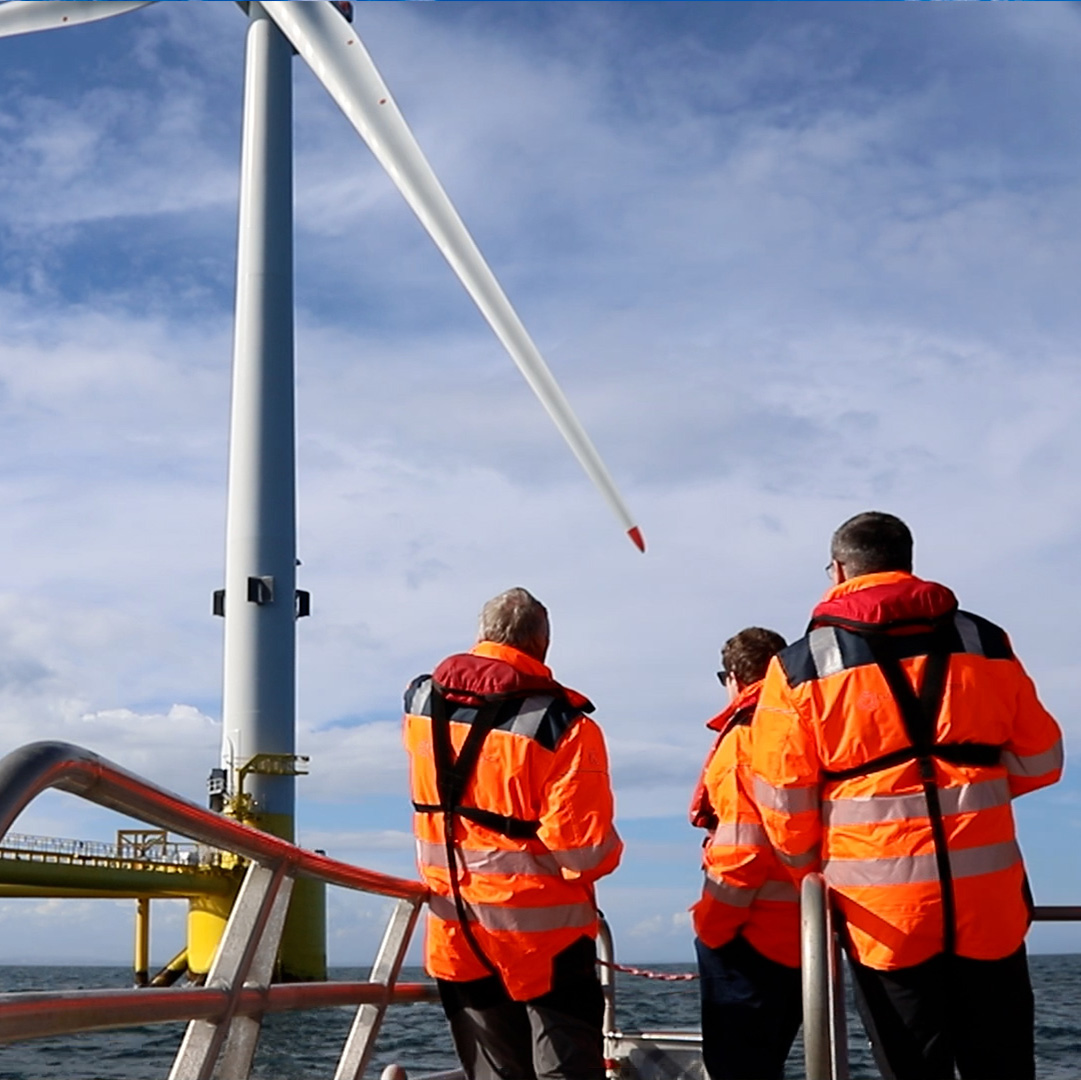
Specifically, my role is to help the company invest in commercial opportunities, including in nascent technologies, such as floating offshore wind. We’re supporting first-of-a-kind projects as well as more established sectors, which have the potential to create quality jobs and economic growth in the UK.
I am personally motivated by driving organisations with long-term horizons that deliver social value and offer something more than economic value – ie profit. This is not only because of the sense of purpose but because I find navigating the trade-offs stimulating. I’m also someone who likes to see the tangible outcomes of my work.
PP: Take us inside a moment when you helped turn that ambition into action. What happened?
 GT: Starting with a relatively blank sheet of paper, we were fortunate to be able to design and build GBE’s strategy. This meant canvassing ideas from some of the best people across industry, stakeholder organisations and academia, and taking the time to design metrics of success beyond the financial, within a strategic plan which is flexible but gives us clear priority areas.
In designing our approach to developing our own energy projects, it was clear that the public sector offered a unique opportunity, both as the UK’s biggest energy buyer and as a host for green energy.
Alongside the development of our strategy, I was part of a small team that undertook GBE’s first investment, in a test and demonstration floating offshore wind project. As well as the usual work of agreeing a commercial deal, we had to build proportionate but robust governance systems and processes around it. Spending public money cannot be undertaken lightly.
PP: When people from government, finance and industry talk about ‘success’, are they talking about the same thing? How do you bring those perspectives together?
GT: Not necessarily. Government, investors and industry often want to solve similar societal problems but they approach them from different perspectives. Government is focused on wider economic and social benefits, investors seek commercial returns, usually within a shorter time horizon, and industry wants confidence and direction to develop deliverable projects.
One of GBE’s strengths is that we bring expertise from all three worlds together. We understand what each needs and can help bridge those differences, identifying opportunities where commercial investment can also deliver wider public benefits.
We care about being commercial but we also care deeply about our social objectives. The sweet spot is where the Venn diagram overlaps, when there is strong ‘additionality’.
We care about being commercial but we also care deeply about our social objectives. The sweet spot is where the Venn diagram overlaps
Ultimately, success is about aligning those interests so that projects which might otherwise struggle to get off the ground become commercially viable and deliver lasting value.
THE CHANGEMAKER AT A GLANCE
In 2021, Gareth completed the Executive MSc in Social Business and Entrepreneurship at LSE's Marshall Institute. Interested in developing your own career as a changemaker? Join Gareth and the LSE team for an information session about the Executive MSc programme on Friday 27 November 2026. |

PP: You’ve talked about finding the sweet spot where commercial and social objectives overlap. But what happens when those objectives are in tension?
GT: GBE is at arm’s length from government. These tensions are at the heart of the trade-offs and decisions that politicians have to make, and I don’t envy them.
However, GBE has a role to play, and there are plenty of opportunities which are good for growth and jobs and have the potential to bring down costs in the longer term. These are the areas we’ve been set up to focus on.
Navigating the tensions of ensuring that supply chains are ethical, that communities are rewarded appropriately for hosing infrastructure and that the environment is sufficiently protected whilst remaining profitable is tricky. Ultimately, a project must remain commercially viable; if it becomes uneconomical it won’t be built and no-one wins – no green energy and no value created. Therefore, it’s being smart about how we can embed social goods through every part of the lifecycle. We’re privileged to be able to use some of our returns to support initiatives which are unlikely to ever make an economic return and we use social return on investment (SROI) to assess the likely impact of these interventions.
Navigating the tensions of ensuring that supply chains are ethical, that communities are rewarded appropriately... and that the environment is sufficiently protected whilst remaining profitable is tricky
PP: How do you distinguish pressure to show progress from progress that actually matters?
GT: To me it’s about making things scalable. We often have to start small, but making things replicable and process-driven means that you can show small progress while being part of a bigger picture. This is no replacement for empathy or taking the time to understand the likely consequences of decisions but I am a big believer that systems can enable more time to be spent on engaging with stakeholders and to undertake wider critical thinking.
Much large-scale infrastructure takes time, and thankfully we have patient capital. Remaining focused and celebrating the small, short-term wins keeps you on track.
Ultimately, it’s about the discipline to drown out the noise, prioritise the success metrics and celebrate the smaller victories along the way, especially where these have a human element. Storytelling is super important in what we do. It helps to bring stakeholders along on the journey, and I’m immensely proud of being able to share what we’ve built so far.
PP: How has further education influenced the way you navigate the challenges and responsibilities of your professional life?
GT: I am a big believer in lifelong learning. I think that the biggest thing further education gives you is a greater ability to think critically: to stop, take the time to understand the ‘why’, and let the strategy inform your tactics.
However, it’s no replacement for learning by doing, and I thrive best in roles where you can apply theory and learn new hard skills. I think that everyone should continually invest time in developing their leadership skills.
I think that the biggest thing further education gives you is a greater ability to think critically: to stop, take the time to understand the ‘why’
The Marshall Institute was set up specifically to explore how private sector techniques could be used by the public sector to bring rigour to social objectives – arguably the perfect framing for setting up GBE and understanding the perspectives of the various sectors that we’ve brought together.
Frankly, I wouldn’t be where I am without it. I’m not a natural academic but having theory helps me to join the dots and translate that understanding into tangible, real-world outcomes.
PP: What is the single most important lesson you’d pass on to someone trying to make change happen inside an organisation?
GT: We’re lucky to have been a start-up and to have been able to influence its direction early. However, intrapreneurship is really important – you can only control what’s within your influence.
The one piece of advice I’d give is to never stop being curious, to continuously expand your horizons and not be afraid to challenge the status quo. Ask the ‘why’ behind the intent, present the change as an easy solution and lean on your leadership skills.
Never underestimate your ability to influence those higher up in an organisation, no matter who you are or what your background.
Interested in developing your own career as a changemaker? Join Gareth and the LSE team for an information session about the Executive MSc programme on Friday 27 November 2026.
Changemakers in Action is a Pioneers Post series in partnership with LSE’s Marshall Institute, exploring how changemakers are putting the principles of social entrepreneurship into practice across business, government and civil society – and what others can learn from their experiences.

| Ready to invest in independent, solutions-based journalism?
Our paying members get unrestricted access to all our content, while helping to sustain our journalism. Plus, we’re an independently owned social enterprise, so joining our mission means you’re investing in the social economy. |