
‘A coalition strong enough to move markets’: faith-based investors unite after Paris conference

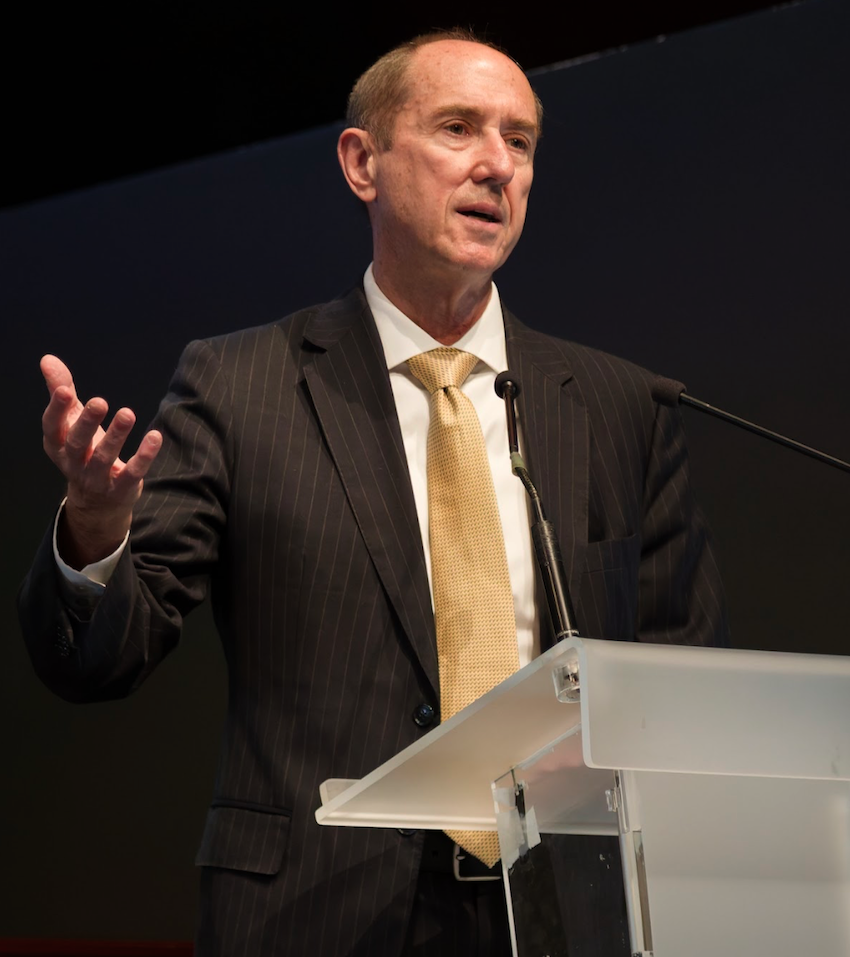
Dave Zellner FaithInvestEXPERT INSIGHT: Faith organisations holding billions of dollars of investment assets met in Paris for an inaugural conference last week. It’s time for faiths to truly align their investment decisions with their values, says FaithInvest executive chair Dave Zellner (pictured). A new multi-faith network of investors and centre of excellence are important first steps.

Last week, representatives of 33 institutional faith-based asset owners and faith networks from four major religious traditions (Christianity, Hinduism, Islam and Judaism) gathered in Paris for an important conversation. They came from across Europe, the United States and Malaysia to explore how faith groups can work together more closely and use their combined investment power for the common good. Above all, they wanted to pursue positive impact through their investments.

FaithInvest convened the Faith in the Common Good forum on 16 and 17 April, at the Collège des Bernardins in Paris, what we hope will be the first of a continuing series. We co-hosted the forum with the Collège, a centre for conferences, culture, training and dialogue. Its president, Jean-Baptiste de Franssu, also serves as president of IOR, known as the Vatican Bank.

Religious communities have always held values-based views on the use of money and wealth. Many faiths teach that economic decisions carry moral weight, and that wealth should be shared fairly. Religious leaders have preached these ideas for hundreds of years, and in some cases thousands.

Many faiths teach that economic decisions carry moral weight, and that wealth should be shared fairly

The practice of aligning investments with faith values is far from new. Islamic finance principles have shaped investment decisions for centuries. Many Christian religious orders have applied ethical exclusions to their portfolios for generations. The Interfaith Center on Corporate Responsibility has coordinated faith-based shareholder engagement in the United States since 1971. 


Faith-consistent investing as a defined field

What has emerged more recently is faith-consistent investing (FCI) as a defined field with shared terminology, networks and frameworks that cut across traditions. We use the term to describe an investment approach that reflects faith values in decision-making. When FaithInvest launched in 2019, public conversation on faith-consistent investing was still limited. Today the movement is growing rapidly, and we welcome this progress.

The world’s religions hold trillions of dollars in assets under management. Some have called faith-based capital the third-largest economic power on Earth. What faiths do with their money matters a great deal.

Religious organisations also carry serious financial obligations. They pay pensions, fund charitable work, and must fulfil fiduciary duties to beneficiaries. Many also operate with limited internal investment expertise and modest resources. These realities make faith-consistent investing implementation challenging for many faith groups.

Together, the 33 institutions represented in Paris hold at least US$200bn in investment assets, based on responses to a pre-forum questionnaire.


FaithInvest conference 2026


Investment industry partners with deep experience in faith-based and values-driven investing joined us for the forum. CCLA Investment Management served as our launch patron, alongside launch sponsors Amundi, Federated Hermes Limited, Anthos Fund & Asset Management, and Ascension Investment Management, LLC. Their support made the forum possible, and their perspectives strengthened our discussions throughout.

The discussions were substantive and, at times, passionate. Several themes emerged.


Deepening coordination, developing shared approaches

Participants unanimously agreed that faith groups need deeper coordination on faith-consistent investing. Many expressed real interest in developing shared investment approaches, and even shared vehicles, to address significant social and environmental challenges. They recognised that the systemic risks threatening our environmental and economic future require capital deployed at a scale no single institution can reach on its own.

Participants also agreed that faith-based investing needs a stronger supporting ecosystem. This means coordinated engagement on priority issues, regular peer learning and exchange, and better information sharing to spotlight the excellent work, initiatives and networks already in place. Participants looked to FaithInvest to lead this work, and we are ready to do so.

We have already begun. We are establishing a multi-faith network of institutional faith-based investors, starting with the groups represented in Paris and open to any faith-based asset owner who wishes to join. We are also creating a Centre of Excellence to showcase best practice in faith-consistent investing, and to help asset owners find the resources and partners already available to them.

A landmark piece of research that we launched at the forum reinforces this direction. For the past several years, we have tracked the state of faith-consistent investing by examining actual faith investment policies for our Good Intentions reports. Good Intentions 2026 is our most comprehensive study to date. It assesses 275 publicly available faith investment policies against our 10-point Level One FCI Assessment Framework.

The research found that policies tend to focus more on avoiding harm than on actively deploying capital toward mission-aligned outcomes

The report's subtitle captures the core finding: “What faiths tell us about how they invest – and how they could do more.” Many faith-based organisations demonstrate a clear commitment to investing in line with their values. Most of their published policies, though, fall within what we describe as a “basic effort” tier.

The research also found that policies tend to focus more on avoiding harm than on actively deploying capital toward mission-aligned outcomes. This reflects a practical reality: it is often easier to identify what one does not want to invest in than what one does. As FaithInvest’s founding president Martin Palmer often puts it, “We know what you are against. What are you for?”

The Good Intentions study surfaced something else worth attention. Smaller faith-based organisations struggle to implement faith-consistent investing without support from larger institutions, or from networks with specialised investment expertise. This reinforces the case for building a stronger supporting ecosystem.


Jean Baptiste de Franssu Vatican Bank


Our partner Jean-Baptiste de Franssu (above) made the same point after the forum, referencing the experience of Vatican Bank:

“When we [the Bank] invest as a Catholic investor, one of the things that we miss the most is the absence of an ecosystem. There is no Catholic financial ecosystem. In fact, there is no Christian financial ecosystem.

There is no Catholic financial ecosystem. In fact, there is no Christian financial ecosystem

“And what struck me in the room was to hear our brother Muslims, and also our brothers from the Jewish tradition, telling us that they feel a little bit the same. So fundamentally, this notion of creating an ecosystem for faith investment is extremely important to allow faiths to align their investment decisions to the faith that they proclaim.”

Our long-term vision is clear. The Paris forum marks an important step toward building a meaningful alliance of values-driven, faith-based investors who can coordinate action at scale. The work ahead is to shape a coalition strong enough to move markets and help drive the structural change our world urgently needs.


Ready to invest in independent, solutions-based journalism?

Our paying members get unrestricted access to all our content, while helping to sustain our journalism. Plus, we’re an independently owned social enterprise, so joining our mission means you’re investing in the social economy. 

Please consider becoming a member