Democracy under pressure: what role should impact investors play?
Autocracy is on the rise worldwide, and impact investors seem reluctant to step in. But if changemakers want to make large-scale transformations to health, education or the environment, they need a strong democratic base, highlighted a discussion at Latimpacto’s Impact Minds event last week.
Democracy is under pressure around the world. Sweden’s V-Dem Institute, which analyses the state of global democracy, contends in its latest report that we’re in a “third wave of autocratisation”, with 6m people now living in autocracies – that’s three-quarters of the global population. What’s more, it points out, the world has never seen as many countries “autocratising” at the same time.
Should or could impact capital play a role in applying the brakes to this democratic backsliding? This was one of the questions under debate at Latimpacto’s fifth annual conference, Impact Minds, which took place last week in Manaus, Brazil. The general consensus of the panel discussion at the event was that impact investors should get more involved, yet the figures that are available, a 2025 report from Phenix Capital Group, show that, out of a database of 2,900 impact funds, only 40 target SDG16, which covers peace, justice and strong institutions, the least popular SDG by far.
- Read more: How impact investors can support democracy to thrive
The conference’s host country, Brazil, has recently been a democracy success story. Since Luiz Inacio (known as ‘Lula’) da Silva won the general election in 2022, Brazil has been riding a wave of positive reforms. But a forthcoming general election in October threatens change again: currently da Silva, standing for reelection, is neck and neck in the polls with Flavio Bolsonaro, the son of the previous right-wing populist president Jair Bolsonaro.
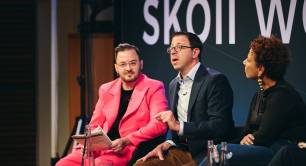
With this political backdrop in mind, we spoke to one of the participants in the panel discussion, Gabriel de Carvalho Morais (pictured), director of institutional relations at Brazilian political education non-profit Renova BR. The organisation trains potential political leaders with the aim of creating what it calls a “more participatory and informed democracy”. To date, more than 3,000 people have been through its programme and more than 400 have achieved elected positions, as mayors, councillors, and even national lawmakers.
Pioneers Post: Does Renova BR have an agenda or political position?
Gabriel de Carvalho Morais: So, of course it is political. We are a political organisation, but we don't have an agenda. It's supra-partisan and multi-partisan. That's the idea. What we really want to do is to create a good range of new political leaders for the country. If the voters don’t have a good range of options, they’re going to have no-one to vote for, no-one who is a good representative. Our idea is that we want to improve the options, so people see themselves there.
Pioneers Post: You were saying in the discussion that you think that it’s beneficial for investors and the private sector to invest in democracy because it brings them stability. Is that a fair summary?
Gabriel de Carvalho Morais: Yes, that's the point. Business leaders agree that a well functioning democracy is important for a strong economy. The private sector, the philanthropic sector, the impact sector, we want to change things [in the world]. But if we don't know the rules and if we don't trust the processes, we cannot change anything. Or maybe we’ll have a good, successful impact programme, and then there's a new authoritarian leader who changes everything, and all the work you have done is lost.
Pioneers Post: And an autocratic regime might be stable, but it's only the friends of the ruler who benefit from that, yes?
Gabriel de Carvalho Morais: Exactly. There's certain stability in [an authoritarian regime], but it's a stability for a selected group of people. And again, the rules are not clear. The people don't know if they can rise up.
Pioneers Post: So, under an autocratic regime, the people don't know how to make a change.
Gabriel de Carvalho Morais: Exactly. And they might be killed if they try it.
Democracy is the best available option because at least we know or we should know the rules. That's an important thing. Democracy is about the rule of law.
Pioneers Post: How do potential donors or financial supporters react when you talk to them about supporting democracy?
Gabriel de Carvalho Morais: We might try to negotiate a grant from a foundation and then they say to me that their programmatic focus is on health. That's great, that's amazing. I hope they have a wonderful programme on health. But it's not a decision between health or democracy, because when we are talking about the decision-makers for health public policy, we are also talking about democracy.
We have to talk more about the political actors, the decision makers. That's part of the idea. If you want to transform or to improve public health, we should have better policy-makers, people who really understand it.
If you want to transform or to improve public health, we should have better policy-makers, people who really understand it
Pioneers Post: So you see democracy as a cross-cutting issue?
Gabriel de Carvalho Morais: Yes. When we talk about impact investing, we should look more at a ‘transversal’ approach. Because if you invest everything you have on education only, for example, and then you have an awful education secretary, everything is done. It's gone.
Pioneers Post: And one public policy could have much more of an impact than one programme run by an NGO or a social enterprise.
Gabriel de Carvalho Morais: Exactly. I have one example. We have a leader called Tabata Amaral in Brazil. She's from the outskirts of Sao Paulo. Then she received a scholarship for Harvard. She went there, she studied there, and then she chose to come back to Brazil to become a political leader. So she joined Renova BR, our organisation. She was trained by Renova, and then she got elected as a federal deputy [member of parliament] in 2018.
She designed a public policy to mitigate the high school students dropout rate, giving a stipend to encourage them to stay in high school and not go anywhere else. That public policy is impacting over 35m students in Brazil – 35 million. So it's another level.
Pioneers Post: Why are you seeking new financial supporters at Renova BR?
Gabriel de Carvalho Morais: We wanted to diversify our income away from solely individual donations because when we talk about financial sustainability, if I go only with individuals, they can change their idea, they can move to another thing and donate to other organisations. So we started talking with foundations, grantmakers, especially international ones, because foundations in Brazil are not really interested in funding democracy. International grantmakers are more open to it.
Pioneers Post: Have you looked at repayable finance or any other types of investment?
Gabriel de Carvalho Morais: No, not yet. I think that will be an important discussion in the impact sector over the coming years, for sure. In our case, as we work with politics, it's very, very delicate for us to create revenue, because maybe people can say that we have an agenda or are interested in something else.
Pioneers Post: Do you think that the arguments we've just discussed apply around the world, so to countries in Europe, for example?
Gabriel de Carvalho Morais: Yes, for sure. We have contact with European organisations doing the same job as us. This crisis is about liberal democracy. So every country which is a liberal democracy right now is facing the same thing – on different levels, but the same thing.
Header photo: Gabriel de Carvalho Morais at the panel discussion on democracy at Latimpacto's 2026 Impact Minds event
Pioneers Post attended the conference as a media partner; Latimpacto covered our reporters' travel costs.

| Ready to invest in independent, solutions-based journalism?
Our paying members get unrestricted access to all our content, while helping to sustain our journalism. Plus, we’re an independently owned social enterprise, so joining our mission means you’re investing in the social economy. |