
Collection: Good Experts


As protests grow around the world against the building of massive, environmentally destructive data centres to serve the ever growing demands of AI, one Australian social entrepreneur has developed a different type of AI data centre which meets his organisation’s social values.
The streets of the comfortable, leafy suburb of Yarraville, Melbourne, Australia, were disrupted last week by hundreds of protesters calling for a moratorium on the building of new data centres.
Fury against proposed data centres is now commonplace, with the action in Yarraville just one of a litany of protests which have been held recently across the world.
On top of worries about data centres’ water and energy consumption, communities’ concerns include the noise and heat the buildings emit, that they will exacerbate the climate crisis and the alleged lack of democratic process in the approval of the constructions. Opposition to data centres has become symbolic of resistance against big tech companies which can seem to be imposing AI on us, rather than developing it for us.
While communities oppose the building of data centres, big tech companies and governments have classified them as “critical national infrastructure” and say they are necessary to the development of the AI sector, cybersecurity and countries’ economies.
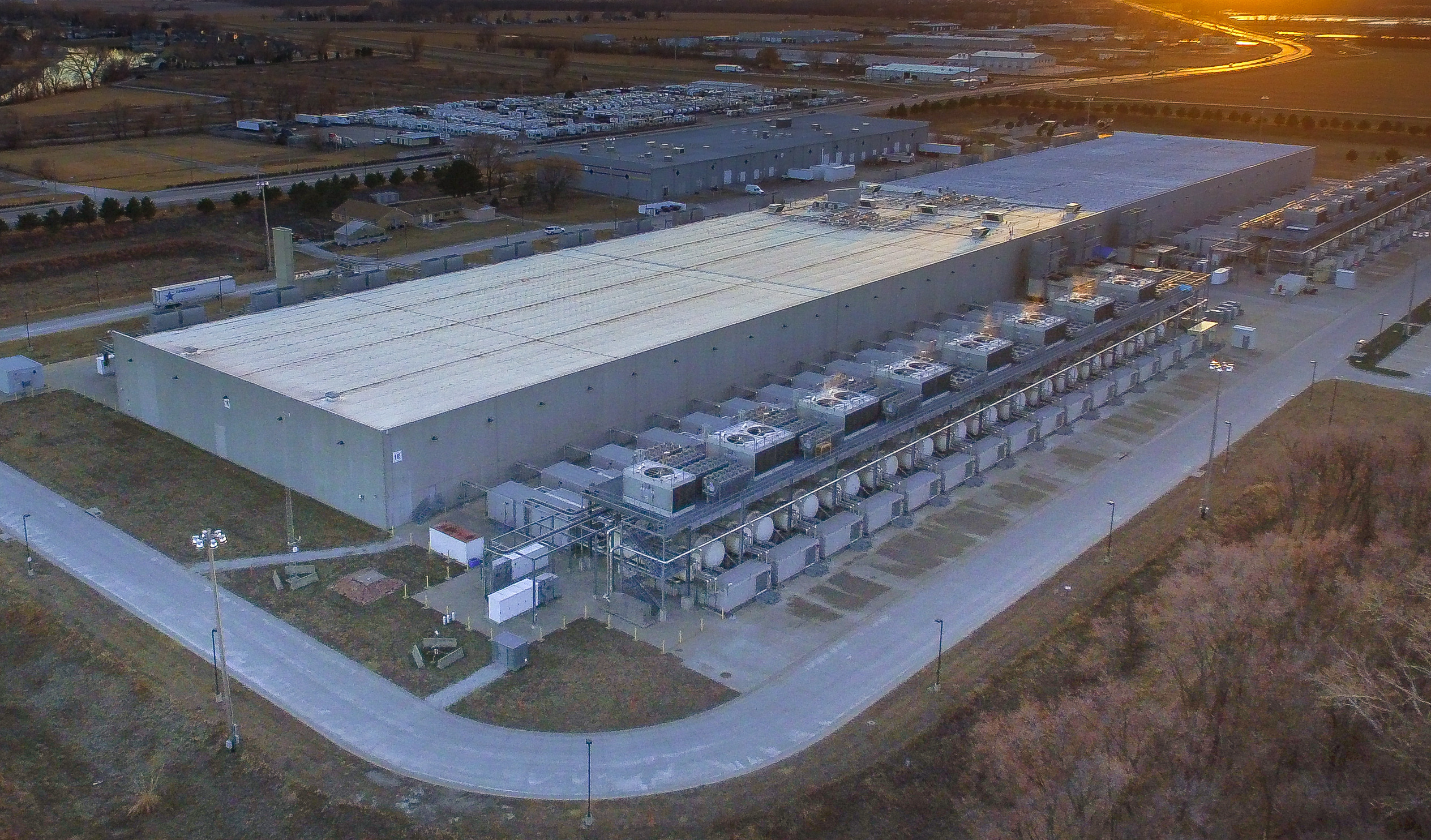
But are they? 850 miles north of Yarraville, in Brisbane, social enterprise AI consultancy Cadent has built a very different kind of data centre – in its founder’s house. James Gauci has built a 'small-scale' data centre from reused and upcycled technology, powered by 100% renewable energy, and since June it has been used to run AI tools, agents and solutions for the organisation’s clients.
Speaking to Pioneers Post, Gauci said: “What it gives me, beyond independence, is the ability to craft AI solutions the way I know they can be crafted, in a way that’s consistent with my social values, and that I believe aligns with most people’s social values too.”
The public backlash against the big tech companies, and increasing knowledge of the associated environmental and social harms of their AI products, is driving interest in small-scale AI set-ups like Cadent’s, believes Gauci.
“Once you strip it all back, it becomes really clear that [data centres] are just computers sitting in rooms. I’ve got five of them in my house: my phone’s a computer, my tablet’s a computer, my laptop’s a computer,” he said.
“[Data centres] are just super high performance versions of those things. We can design and architect them in a way that is consistent with our values and our objectives from not just a business performance perspective, but from an environmental, social and governance perspective. These are not impossibilities, they’re just design problems.”
The largest data centres currently built by big tech companies, dubbed 'hyperscale', cover millions of square feet of floor space, the equivalent of dozens of football pitches. Those hyperscale data centres typically contain more than 100,000 graphics processing units (GPUs). These are the chips that run AI models.
In comparison, Cadent’s data centre takes up only roughly 10 square feet of space, is about three feet tall, and is based in a spare room in Gauci’s house.
Within that space is a standard 19-inch server rack, housing a system that has 80 cores of CPU, eight terabytes of solid state storage, and two graphics cards, which combine to operate small language models, which are smaller and more resource efficient AI systems than large language models like ChatGPT and Claude.
Is it Claude Opus-level reasoning? No. But is it 90% of what most people need and expect from their AI agents? Absolutely
A McKinsey report estimates that by 2030 the cumulative investment in data centres globally could reach US$7t, with electricity demand growing annually by at least 20%. The IMF estimates that by 2030 data centres will consume more electricty than all but the world’s three largest electricity consumers (China, India and the US).
Cadent’s data centre runs on a 13kW array of 32 solar panels placed on the roof of Gauci’s house, and supported by 20kWh of lithium battery storage. It can currently serve 20-30 concurrent AI agent sessions, and has the rack space to add hardware for around 100.
Gauci (pictured below) said: “Is it Claude Opus-level reasoning? No. But is it 90% of what most people need and expect from their AI agents? Absolutely.”

A significant portion of big data centres’ water consumption comes from cooling the servers and processing chips. The chips get incredibly hot when they are working, and have reduced performance at very high temperatures. Evaporative cooling, which consumes water, is currently the most cost-effective way the industry has developed to keep the chips cool.
Instead, Cadent’s system is air-cooled, through a complex system of fans, solar-powered air conditioning and cooling technology in some of the components. It is less efficient, and extremely noisy, but Gauci believes the small drop in performance (less than 10% in comparison to a water-cooled system) is an acceptable price to pay for a more environmentally friendly approach. He has housed the data centre in a sound-proof enclosure.
The famous, big tech AI models – ChatGPT, Claude, Gemini – are large language models (LLMs). There are general purpose AIs which the companies sell as being able to perform a vast range of tasks. To be able to do so, the models need to be trained on huge quantities of data and require the compute power (and related environmental resources) of the hyperscale data centres.
Small language models (SLMs), like the ones run by Cadent’s data centre, can instead be connected to targeted, bespoke datasets and used to perform specific tasks. Because they are smaller, SLMs are much more limited in terms of what they can do, but require less compute power and as such demand fewer environmental resources. Because of their size, it is possible for SLMs to run off local devices (for example your own laptop or phone) so data does not leave the device.
For one social enterprise client, Cadent has developed a system to help it complete funding applications and tender submissions, based on a database of all its previous applications and submissions. The social enterprise can input a new application form, and the AI will comb through the database to produce a draft submission.
A financial services provider commissioned Cadent to build a tool which conducts a needs analysis of new clients which can be completed through a web browser, as opposed to a time-consuming pen and paper exercise which was often not carried out due to time constraints.
Gauci argues that although Cadent’s data centre is limited in its capabilities in comparison to what the big tech companies offer, 90% of individuals and organisations aren’t using the full scope of ChatGPT, Claude, Gemini and their rivals’ capacities anyway.
“People are starting to realise they don’t need [AI tools with] world class PhD level reasoning. The technology at the top end has far outstripped people’s needs and uses,” said Gauci. “It’s classic Silicon Valley hubris, which is fueling so much of the conversation around AI at the moment. But I think we're starting to cotton on to that fact as a society, which is encouraging.”
Crucially, this overpowered nature is directly tied to many of the social and environmental harms caused by the technology.
In the Pioneers Post film ‘The AI dilemma’, presented by Gauci, ethical technologist and social entrepreneur Nikoline Arns used buying a coffee in a hotel to illustrate the point. “If I want a cup of coffee, I don’t need this whole hotel to make it. I just need that coffee machine,” she said.
The human and environmental resources required to run the hotel aren’t necessary to deliver her caffeine boost, said Arns, just the coffee machine itself. Instead, identifying specific uses for AI, which set-ups like Cadent’s are more than capable of delivering, can allow organisations to choose AI tools which align with their values.
If set-ups like Cadent’s were more prolific, Gauci believes it would provide a viable alternative to the big tech AI models for 90% of individuals and organisations uses of the technology. A small number of hyperscale facilities would still be necessary to develop AI technology, which in turn would improve the capabilities and performance of set-ups like Cadent’s.
In that scenario, if the small-scale AI systems were designed with environmental and social returns in mind from the outset, the associated negative impacts of the technology would be greatly reduced.
Gauci began working on Cadent’s data centre around 18 months ago, but said a viral blog post by a feminist think tank SUPERRR, which examines the social and environmental harms of AI and argues for opting out of the technology, clarified his motivations.
Reading the list of arguments against using AI – which included unwanted bias in intelligent systems, the resource demands of the technology and the replacement of human workers – Gauci said he was confident he could build a system for Cadent to address the think tank’s concerns.
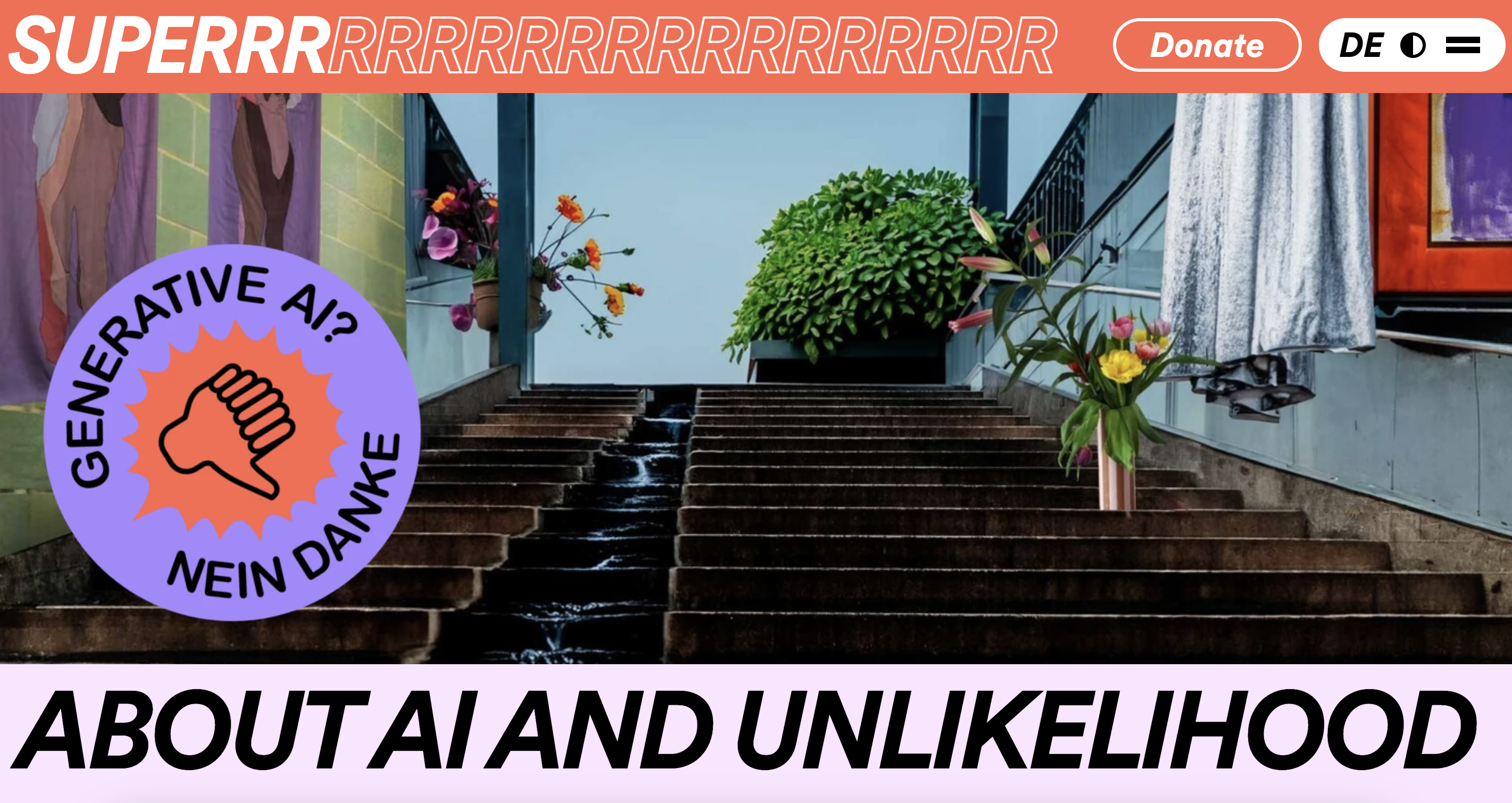 'If AI is a machine of the past, then it is our craft to dream up futures not yet imagined..what we need is the joy, wisdom and solidarity of real, messy, creative people': a blog by feminist think thank SUPERRR spurred James Gauci to build a system that would address its concerns about AI.
“There’s no technical challenge here, just a design challenge,” he said. “I wanted to do this to prove to people that it could be done.” But, there is one point SUPERRR made with which Gauci strongly agrees: “Accountability sits with people and values, not the technology.”
Despite the hype and mythology around AI, the technology is a tool, and Gauci believes whether it amplifies injustice or delivers positive social impact is a function of how it's built, deployed, and governed.
He said: “If we design more systems the way we’ve designed ours, with social and environmental returns built in and a human accountable in the loop, we get much closer to AI deployments that pro-social people would actually accept.”
Top image: James Gauci in front of Cadent's data centre (courtesy of Cadent)
Update: Some clarifications on technical terms were added shortly after publication.

| Ready to invest in independent, solutions-based journalism?
Our paying members get unrestricted access to all our content, while helping to sustain our journalism. Plus, we’re an independently owned social enterprise, so joining our mission means you’re investing in the social economy. |