

Investor in focus: How Anara Impact Capital is pioneering impact VC in the Middle East and North Africa
As MENA’s emerging impact investing sector gains maturity, Anara principal Mohamed Hussain talks to Pioneers Post about launching the region’s first early-stage impact VC fund, supporting investees in a febrile geopolitical context, and having clear roles in the region’s impact ecosystem.
In the Middle East and North Africa, driving investment towards the entrepreneurs building solutions to the region’s many challenges – from economic instability to climate disaster and outright war – is both urgent and ever more difficult.
For a long time, financing to the region has been limited to philanthropy and development aid. But this month, the first Arab Impact Summit, which brought together hundreds of impact investors and social entrepreneurs in Amman, Jordan, was the latest sign of the emergence of an increasingly sophisticated impact investing sector in MENA.
Co-organising the event was Anara Impact Capital, an impact investing firm spun out of Alfanar, a pioneer in venture philanthropy that has provided support and funding to social enterprises in MENA for 20 years. Anara this year achieved the first close of its debut fund – the first early stage impact VC fund to focus on MENA – at US$48m.
We speak to Anara principal Mohamed Hussain about pioneering impact VC in the region, navigating a fragile geopolitical context and why actors across the impact spectrum each have a different role to play in the impact investing ecosystem.
Pioneers Post: Where did the idea for the fund come from?
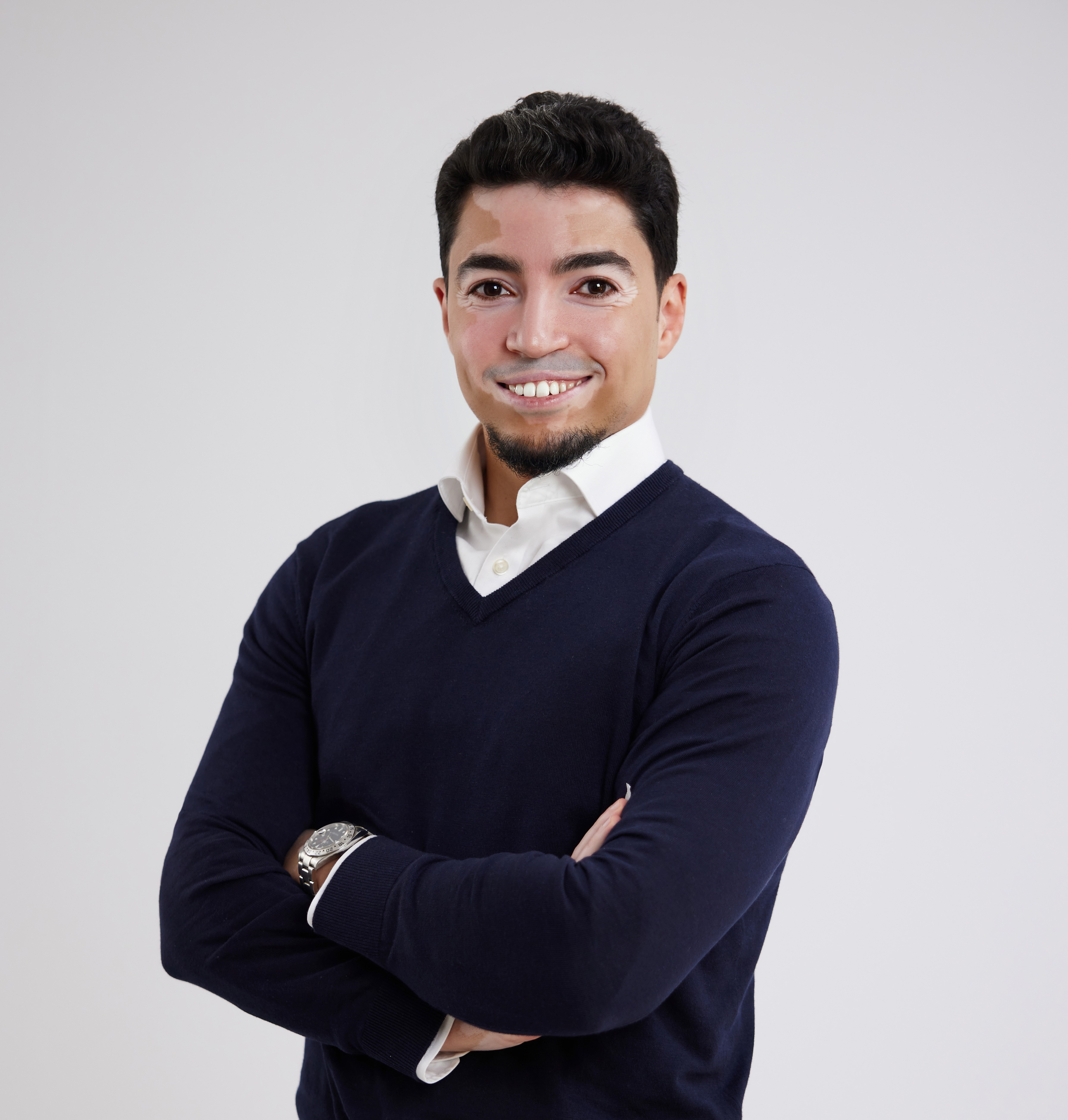 Mohamed Hussain: It started a few years ago as an idea by Alfanar, a venture philanthropy organisation that does programmes across MENA for social enterprises (including technical assistance, grants and zero-interest loans). They thought that in addition to venture philanthropy, we need a commercially-minded impact investment fund that invests in companies that can scale rapidly and reach venture scale – which is another form of impact.
PP: Who are the investors in the fund?
MH: We fundraised from [development finance institutions], and then we wanted to match that funding with commercial capital – we don't want this fund to just be development finance, because we want to prove that this is also commercially viable and can generate competitive market returns. The fund is 50-50 between DFI funding and private capital – which is our objective: to mobilise private commercial capital into impact investments.
We have a diversified pool of investors: DFIs, led by KFW, which is the German Development Bank, as well as the EU; Saudi family office Dara Holdings; the [Innovative Startups And SMEs Fund], which is a Jordanian fund of funds; and a number of regional family offices and high net-worth individuals. The private investors mostly come from across the MENA region – the GCC [Cooperation Council for the Arab States of the Gulf], Jordan, Lebanon, Egypt, Tunisia, Palestine.
PP: What type of enterprises do you invest in, and in which sectors?
MH: We invest in impact startups at seed or series A stage, across three verticals: learning, wellbeing, and climate. We also have some cross-cutting themes: we try to encourage female-focused solutions, whether that's female entrepreneurs or female beneficiaries, and solutions that target underserved communities and displaced communities. From a geographical perspective, we invest in North Africa and the Levant region. Once we invest, we help companies to scale – in their markets or even beyond their markets.
Anara impact fund at a glanceEstablished: first close in 2026. Location: the fund invests in North Africa and the Levant, and the team is spread across MENA. Size: target US$50m, raised US$48m at first close. Sectors of investment: learning, wellbeing and climate. Investees: high-growth potential impact startups at seed or series A stage. They are not required to have a special legal structure, but need to demonstrate that growing their business will lead to growing their positive social or environmental impact. Type of investment: equity. Typical ticket size: US$500,000 to US$1.5 million dollars as an entry ticket, with possibility of follow-on investment Investors: DFIs (led by KFW), family offices, high net worth individuals and commercial investors, most of which are based in the MENA region. Number of investees: 25 to 30 across the lifetime of the fund Fund lifetime: 10 years. |
PP: What investments have you made so far?
MH: We have made two investments so far. One in Egypt, in a biotech company called Reme-D, which manufactures PCR diagnostic tests – locally manufactured, affordable tests that can run on our own infrastructure, not expensive infrastructure in the US and Europe.
The second investment that we have made is in a company called Arab Therapy in Jordan, which provides mental health therapy sessions to Arabs, in the region, but also with a big focus on the Arab diaspora [around the world] as well.
PP: What are your returns expectations?
MH: We do expect the same returns as other VC funds, but we try to be more patient, as long as it's still within our fund life cycle [10 years]. We're trying to invest early to allow these startups more time to exit.
PP: What challenges have you been facing?
MH: The biggest challenge is defining what being an impact investment fund means, because I don't think there's a common definition. To some people, impact investment means it's impact-first and we sacrifice on the returns. To others, it means it's impact only – philanthropy – and we don't care about financial returns. We argue that we will not sacrifice on either financial or impact returns.
So the biggest challenge that we've been facing in fundraising, but also in investing, is trying to convince people that we call ourselves an impact investor, but that doesn't mean we don't care about financial returns.
We constantly have to raise awareness of what our thesis is as Anara because it doesn't really exist yet in MENA
During the fundraising, for example, when we're talking to some potential LPs, they just say, “this is philanthropy, so take my money – I'm not expecting anything back”. So we try to explain: no, this is an investment fund, and these are the returns that we're targeting. Sometimes, when we talk to corporates, they tell us, “Oh, speak to my CSR department”. No, we don't want to speak with your CSR department – this is an investment fund.
And then, when we talk to a potential investee and we don't see the scalability potential, for example, from a returns perspective, and we give the feedback to the startup, then they're a bit confused – they say, “you're an impact fund. Why do you care about scalability?” So we constantly have to raise awareness of what our thesis is as Anara because it doesn't really exist yet in MENA.
PP: What’s next for Anara – beyond this fund?
MH: The idea is to make Anara an impact investment platform that consists of many different funds, with this fund as the first one. Future funds don't necessarily need to have the same thesis, or the same size or target the same stages.
PP: How are you measuring your impact?
MH: We work with our portfolio companies to measure the impact at portfolio company level, and then we also have our own fund-level impact measurement and reporting to our LPs. We have a set of impact targets that we try to achieve from our portfolio – metrics like job creation, number of livelihoods improved, female employment, youth employment, environmental improvement, and so on. Different companies will contribute to different metrics. For example, with Reme-D, the impact metric is how many patients we can reach who were not able to get diagnostic tests before – this is how many lives we can improve, maybe even lives that we can save.
Every investment that we make has to go through an impact and ESG [due diligence] process alongside the regular investment process, and then once we make the investment, we also agree on an impact measurement plan with the company going forward.
PP: Currently, the MENA region is facing multiple conflicts. How do you deal with this challenge?
MH: It creates huge challenges for these companies. And when it comes to fundraising, usually investors are kind of on hold: “Let's wait and see how things evolve”. But for us, part of our thesis is to invest where others would not invest. So we try to support the companies through the most difficult times because I think this is where impact investment can be the most impactful.
When we invest we always think long term. We believe in the market fundamentals of our region, of the different markets that we invest in, and we invest based on long-term fundamentals and not based on temporary issues or geopolitical issues. These issues also create problems that need solutions – and we invest in those solutions.
We try to support the companies through the most difficult times because I think this is where impact investment can be the most impactful
But of course, we also have to be realistic, so when we make investments, yes, we always think: “okay, this is a risk. How do we manage that risk?” Maybe we need to diversify revenues, across different regions, maybe we need to move or diversify operations.
PP: The first Arab Impact Summit has just wrapped up, what conversations have you found most interesting?
MH: What was great about the summit is that it brought together people from across the impact spectrum. On the one end, you had philanthropy organisations and charities. Then on the opposite end, you also had investors – traditional VCs. And then in the middle you had people like us, impact investors. So I think what was great was just to bring these people together in the room and for everyone to explain their role in the ecosystem.
Sometimes there's this debate – are you impact-first or are you finance-first? [Some people say], “you as Anara, you shouldn't invest in high-potential startups, you should invest in social enterprises, in rural areas, in marginalized communities”. But at the end of the day, we're not all going to do everything, and we need to work together, for the good of the ecosystem.
We all have to agree that we just have different roles to play
At Anara, we've decided that [high-potential impact startups] is going to be our focus. It doesn't mean that investing in something else is bad or is wrong or is less important. It just means that maybe someone else should play that role – and if we play that role in addition to ours, then we'll fail in both. I think we all have to agree that we just have different roles to play, and the ecosystem needs all of these different players.
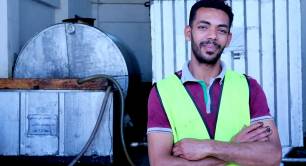
Header image: the team of Reme-D, one of Anara Impact Capital's first investees. Image courtesy of Reme-D.

| Ready to invest in independent, solutions-based journalism?
Our paying members get unrestricted access to all our content, while helping to sustain our journalism. Plus, we’re an independently owned social enterprise, so joining our mission means you’re investing in the social economy. |