

The Impact World this Week: 13 November 2026
Your quick guide to the most interesting news snippets about social enterprise, impact investment and mission-driven business around the world from the Pioneers Post team. This week: Breadwinners is SEUK’s Social Enterprise of the Year; Catalytic capital initiative launches in Australia; 60 English communities to share £175m fund; and more…
UK: Winners of 2026 Social Enterprise UK awards revealed
Breadwinners, which helps refugees gain work experience and employment, agricultural co-op Fram Farmers and social care organisation Turning Point are among the winners of the 2026 Social Enterprise UK (SEUK) Awards. Presented at a ceremony in Manchester last night, the awards covered 15 categories, including social enterprise of the year, co-op of the year and public services social enterprise of the year. SEUK CEO Peter Holbrook CBE said: “[The award finalists] are creating good jobs, sharing ownership and opportunity, keeping wealth rooted locally and proving that commercial success driven by a social purpose can strengthen communities the length and breadth of the UK.”
Australia: Catalytic capital initiative launches with AU$10.5m pool of grant funding
An initiative aiming to grow the currently “immature” catalytic capital market in Australia was launched at the Global Impact Investing Network (GIIN) conference at the end of October. Catalytic Capital Consortium Australia (C3 Australia) is a partnership between Hand Heart Pocket, Minderoo Foundation, Paul Ramsay Foundation and Snow Foundation, with support from the US-based John D and Catherine T MacArthur Foundation. In a statement, C3 Australia said it is estimated that AU$100m of catalytic capital has been deployed in the country in the past three years, less than 1% of assets held by Australia’s leading impact investing foundations. C3 Australia will not provide catalytic capital directly, but the partners have approved an initial AU$10.5m pool of grant funding to launch the organisation. Expressions of interest for grants will be available for eligible Australian organisations from February 2027, with funding available for an initial three years.
England: 60 communities selected to share £175m Community Wealth Fund
The areas selected to benefit from a government-backed £175m fund aiming to give communities a leading role in addressing local challenges, influencing decisions and creating lasting change have been revealed. Funded jointly by The National Lottery Community Fund and the government's Dormant Assets Scheme, the Community Wealth Fund, first announced in 2025, will be available to charities and community groups in 60 areas, selected based on national data on high levels of deprivation, and low social capital and local community infrastructure to enable them to take full advantage of their strengths. Areas selected include parts of Liverpool, Portsmouth and Swindon. From Wednesday 13 January 2027 organisations in the chosen areas will be able to apply to the fund, providing they can provide evidence of how they will give local people a central role in decision-making.
- Read more: Community wealth funds to direct new dormant assets money to deprived neighbourhoods in England
US: Impact investing boost for local news publications
With 50m people in the US facing limited or no access to local news, a US$21m impact investing fund has been launched to enable local news organisations to grow and strengthen their business models. Social Finance will be the Local News Impact Investment Fund’s investment manager, supported by anchor funders the MacArthur Foundation and Knight Foundation, alongside philanthropic network Press Forward. The fund will deploy investment capital, with most deals ranging between US$500,000 to US$2m. Independent for-profit or nonprofit news organisations that are actively building sustainable business models and have a credible path to revenue growth and profitability will be eligible investees.
Luxembourg: National strategy for the social and solidarity economy launched
A new national strategy for the social and solidarity economy (SSE) was launched by the government of Luxembourg on 9 November at the country’s first SSE and Social Innovation Forum. The strategy is based on five objectives: promote the recognition and visibility of the social and solidarity economy and social innovation; promote a legal environment conducive to the social and solidarity economy and social innovation; strengthen dialogue between stakeholders; encourage partnerships and synergies; and develop skills within the ecosystem. The government also launched ‘Luxembourg for Social Innovation’, a platform for social economy and social innovation actors to network, share information and develop new initiatives with social and environmental impact.
UK: Total number of community interest companies reaches highest ever level
There are 43,065 community interest companies (CICs) in the UK, the highest total since the model was introduced, according to the Regulator of Community Interest Companies’ Annual Report 2025 to 2026, published on Wednesday. The regulator approved a record 10,767 new CICs in the 2025/26 financial year, while 4,677 CICs were dissolved in the same period. Eighteen percent of CICs incorporated when the model was introduced in 2005 are still active in 2026. In March 2025, the UK government proposed merging the Office of the Regulator of Community Interest Companies into Companies House as part of an effort to streamline the UK’s regulatory environment and reduce administrative costs for business. In its annual report, the Regulator of Community Interest Companies said it is working with Companies House “to progress this while maintaining a high level of customer service.”
Spain: SpainNAB and GSG LATAM propose Ibero-American coalition to unlock more impact capital
“Latin America is a land of opportunity for investing in ways that generate measurable social and environmental impact, while also yielding financial returns,” said Emilia Cerra, of GSG’s Latin American network, launching a call with SpainNAB, Spain’s impact investing alliance, for a new fund of funds to be created to mobilise investment from across Spain, Portugal and Latin America. The argument for the fund was set out in a position paper which was presented at the Ibero-American Summit in Madrid earlier this month. The paper pointed out that while capital is available, it is not being reinvested within the region: for example, Latin American family offices allocate only 15% of their portfolios to Latin America itself, while official development assistance fell by 23% in 2025.
Scotland: Social investment deal aims to help Scots dispose of devices responsibly and make tech more affordable
Social investor Firstport has invested £250,000 in Edinburgh Remakery, a social enterprise which refurbishes and redistributes end-of-life technology and won the Climate Pioneer of the Year award at the SE100 Social Business Awards 2025. The investment will be used to strengthen the social enterprise’s earned-income operations by recruiting new staff, enhancing systems and increasing capacity to process, refurbish and redistribute tech devices. Edinburgh Remakery estimates 350,000 reusable business devices become available in Scotland each year, most from small and medium-sized businesses. Last year, 114 businesses disposed of devices with Edinburgh Remakery, diverting 52 tonnes of e-waste from landfill and donating 224 devices to people facing digital exclusion. The investment is from Firstport’s Catalyst Fund, through which repayments are linked to trading performance rather than fixed monthly payments.
Global: Interactive map of social innovation solutions launched
An interactive, global map of social innovation solutions was launched by the One Family Foundation on Monday. Called the Social Innovation Engine, the map showcases social innovations from trusted organisations, government portals and academic institutions. Users can browse by area of impact, including employment and livelihoods, climate and environment and health and wellbeing, and see the organisation behind each innovation. The Social Innovation Engine is free, requires no account, and is built for governments, donors, innovators, academics, businesses and citizens who want to learn from solutions already in practice elsewhere and adapt them to their own priorities.
Global: Be careful not to put people and planet first in the wrong place
Look out for confused social entrepreneurs and innovators turning up at the wrong events for the next two weeks, as we navigate the double bill of People and Planet Week, followed immediately by People and Planet First Week. The inaugural People and Planet Week, which runs from 9-15 November, is an EU-wide initiative, organised by One Family Foundation in collaboration with the European Commission's Directorate-General for Employment, Social Affairs and Inclusion, with the aim of promoting a better understanding of social innovation. That is immediately followed by Social Enterprise World Forum’s People and Planet First Week (16-22 November), through which social enterprises, cooperatives, benefit corporations and more are invited to run events to celebrate the sector’s impact. Excitingly, in the midst of all that, is Social Enterprise Day, on Thursday 19 November. Be sure to double check our Events page to make sure you're in the right place at the right time.
In Case You Missed It
South Korea: Government passes first-of-its-kind social and solidarity economy legislation
The South Korean government has passed a new law to establish a coherent national policy framework for the social and solidarity economy. The Framework Act on the Social and Solidarity Economy is the first legislation of its kind in the Asia-Pacific region. First proposed in 2014, the legislation brings co-ops, social enterprises and village enterprises, until now split across different ministries and laws, under one national structure. Under the new law, a national five year plan will be developed for the sector and the country’s first legal basis for financing social and solidarity economy organisations through investment, loans and guarantees will be established.
Movers and Shakers
- AVPN CEO Naina Subberwal Batra was named winner of the 2026 Tatler Impact Award for Humanity at the Tatler Ball Singapore
- Philip Donnay and Andy Bindon have been appointed as CEO and deputy CEO of Greenwich Leisure Limited, following the retirement of Peter Bundey
- Amir Rizwan has joined the Tudor Trust as associate director, investments
- Paul Buysens, Jeroen De Keer and François Bailly have joined the board of Impact Finance Belgium
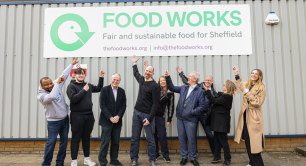
Top image: Social Enterprise UK 2026 award winners celebrate (courtesy of Social Enterprise UK)

| Ready to invest in independent, solutions-based journalism?
Our paying members get unrestricted access to all our content, while helping to sustain our journalism. Plus, we’re an independently owned social enterprise, so joining our mission means you’re investing in the social economy. |
