
Collection: Good Ideas


‘I believe in revolution. I believe in devolution,’ says Coffee Afrik co-founder Abdirahim Hassan. He tells us how he took an east London cafe from a startup to a 32-project enterprise taking a groundbreaking approach to tackling deeply embedded trauma.
Trauma experienced by racialised communities in the UK is being exacerbated, rather than alleviated, by public services.
This process is exemplified by the effect of the Windrush scandal, overdiagnosis of psychosis and discrimination in schools among the Black population.
That is one of the key findings of research published on Monday by Coffee Afrik CIC and the Centre for Mental Health, commissioned by the NHS Race and Health Observatory.
Possibly Coffee Afrik stood out to you among the organisations involved in the research - it isn’t a name that screams “trauma-informed care”. When it was founded in 2018 Coffee Afrik was a cafe, community garden and food co-op in east London, serving up a safe space, support and signposting to appropriate services to people in distress alongside hot meals and coffee. Now the organisation is an expansive social enterprise, taking in 32 projects covering mental health, youth work, women’s rights, substance abuse support and more.
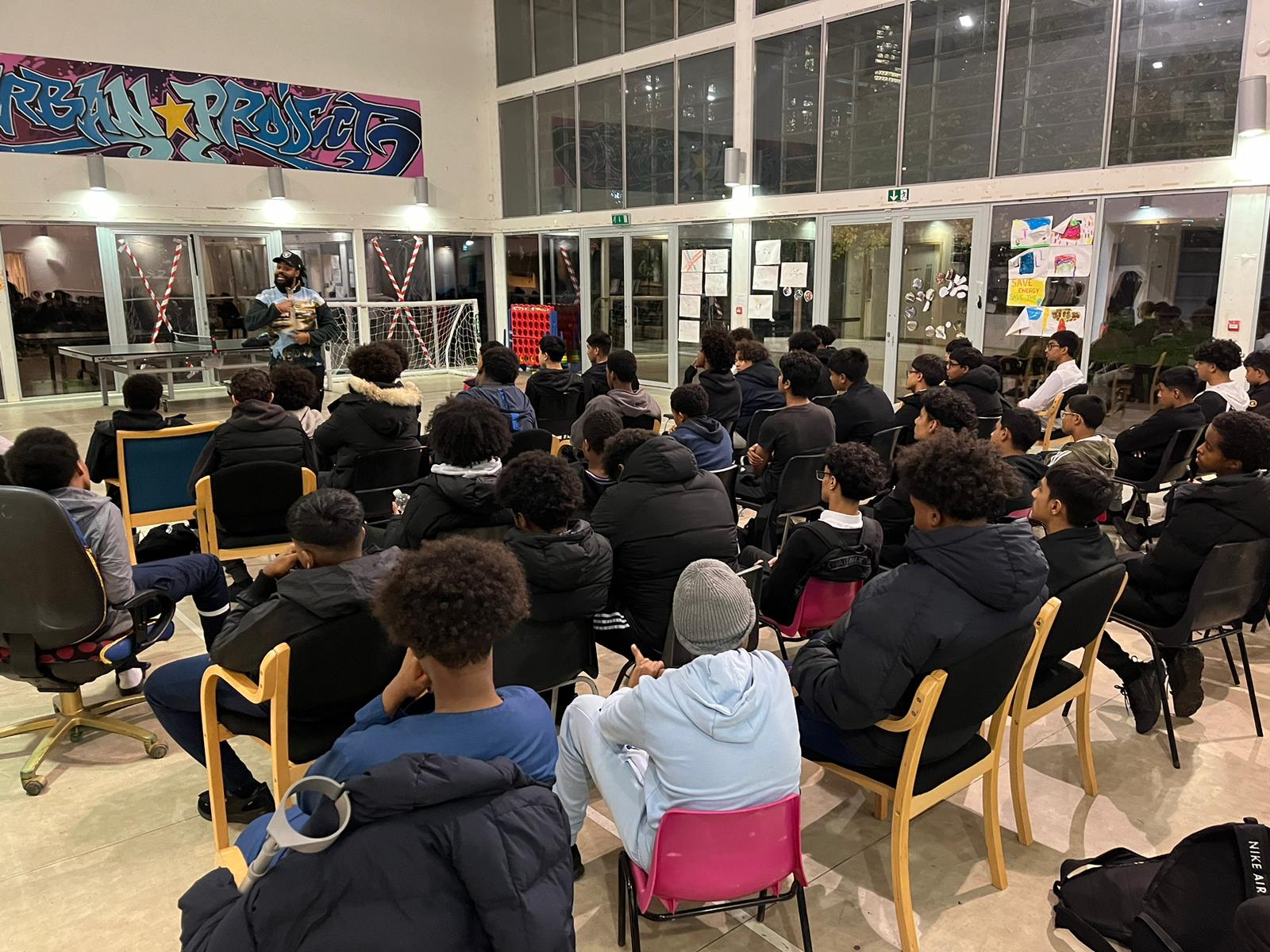
Community-led, trauma-informed care, identified as crucial to supporting racialised communities in the research published this week, is at the heart of all of Coffee Afrik’s work. Its projects are focussed on east London, in particular the boroughs of Hackney, the site of the original cafe, and Tower Hamlets, where co-founder Abdirahim Hassan has lived all his life. They are places Hassan describes as “traumatised landscapes”, geographical areas where people face multiple factors of deprivation.
Describing Tower Hamlets, Hassan says: “We have the poorest children in the country, the highest opiate use in London. We're the most densely populated in terms of building structures. We have over 20,000 people on the housing waiting list. ”
Coffee Afrik’s work has also extended to include campaigning on behalf of the communities the organisation serves and research. Now, thanks to Hassan being a winner of the 2025 Cambridge Social Innovation Prize, Coffee Afrik is simultaneously looking to expand its reach and impact, while devolving power over its services to local people.
Listen to Hassan talk for any length of time, as you can in episode six of our Good Ideas podcast, and his commitment to progressive concepts and theories will become apparent. He is a deep thinker about power and democracy, championing practices like co-production of services, regenerative governance and non-hierarchical management structures.
These theories and philosophies were present at Coffee Afrik’s very beginning, when Hassan and his sister Simeera opened the crisis cafe. Hassan says the cafe was the answer to questions that he and his sister were asking about their community.
How do we create food, smell, senses in that space, so that people can walk in and be treated with dignity and respect?
He says: “How can we create a space that has culturally sensitive frameworks – decolonial frameworks – that creates safety for people and belonging. How do we create food, smell, senses in that space, so that people can walk in and be treated with dignity and respect?”
Hassan explains that their radical approach enabled the organisation to truly embed in the community, but potentially limited Coffee Afrik’s initial growth, despite the evident impact it made.

Describing the original crisis cafe, he says: “We saw so many unmet needs, clients coming in for support who are using problematic drugs and other people who were fleeing domestic violence. And the place became a go-to place for mostly marginalised and working class folk in Hackney. The first year was really brutal, because I think funders and foundations really struggled to connect with this idea of creating a place that was led by community, that had a regenerative practice, that had reimagined governance principles and ideas, that was genuinely by and for community.”
I think funders and foundations really struggled to connect with this idea of creating a place that was led by community
But because of being truly embedded in the community, Hassan and the Coffee Afrik team were able to work with the people coming to the cafe for support to identify other potential areas of work, co-creating the route for it to become the organisation it is today.
Hassan is keen to emphasise that his approach isn’t new, but rather is cherry picking ideas and practices from progressive movements and thinkers across the world. Just some of the inspirations Hassan namechecks on the Good Ideas podcast are east London dockers, the Black Panthers, land justice movements in the global south and Audrey Lorde.
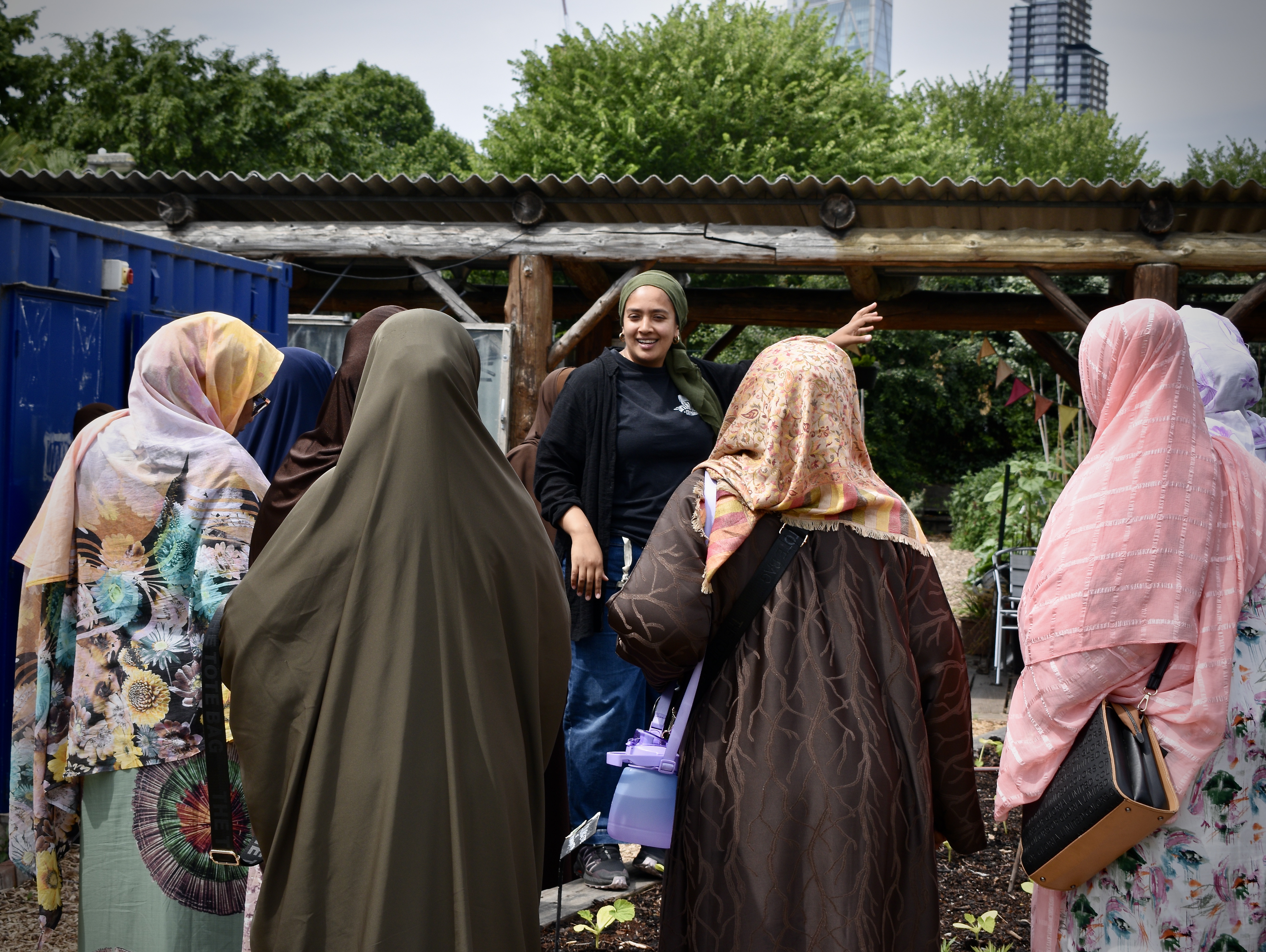
Coffee Afrik’s unconventional approach to governance is having a notable effect on the organisation’s strategy. While the organisation continues to work with its community to identify and co-design additional services as needed – it hopes to open a new hub to deliver support to underserved young women this year – Hassan’s vision for other areas of Coffee Afrik’s work is a little less conventional.
The organisation is currently working with Sistren Legal Collective to devolve control over a number of its buildings to its service users, including a women’s hub and a youth service. New organisations are being set up to run those services, with ongoing engagement and support from Coffee Afrik.
You don’t have to, as a leader, hold on to everything
Hassan says: “If we’re for community, that has to start with the community taking back control and power. I think it’s very important for us to be able to carry on this focus of remembering that we are at service for the community and to hand back as much as possible.
“I believe in revolution. I believe in devolution. I believe in giving people their power back. And I think that you can still influence systems and create impact in different ways, but you don’t have to, as a leader, hold on to everything.”
While Hassan sees this devolution of control as crucial to truly serving a community, he doesn’t think this approach is common across the social enterprise sector, because of an emphasis on business and profit. “I don’t know if other people are necessarily thinking like that. I think the driver is more and more the bottom line, cash flow, sales, forecast, profit and loss,” he says.
But he says from Coffee Afrik’s experience, business success will follow from genuine partnership with community, says Hassan: “I think if you have a clear social responsibility and ethical framework, the funding and money will come anyway, but I think it has to be grounded in community.”
In 2025 Hassan was one of four winners of the Cambridge Social Innovation Prize. The prize includes a £10,000 award for personal and professional development.
Even in a high point like this, trauma remains a theme of Hassan’s work. Recognising the significant amount of secondary trauma he’s been exposed to over more than 20 years of community-organising in Tower Hamlets and Hackney, he’s invested some of the prize money in therapy.
“I’ve spent a lot of time organising groups, supporting people, advocating for people, often forgetting myself. [Now] I’ve put myself first, and invested in weekly therapy because of all the trauma that I witnessed in the work”, he says.
|
The Cambridge Social Innovation Prize The Cambridge Social Innovation Prize celebrates social impact through business across the UK. It is a prize for mid-career social innovators. Rather than targeting the rising stars or presenting lifetime achievement awards, it recognises those with potential to grow their impact who could use support to get to the next level. It is delivered by Trinity Hall and the Cambridge Centre for Social Innovation, supported by a donation from Trinity Hall alumnus Graham Ross Russell. Winners of the Cambridge Social Innovation Prize are selected for their achievements and potential in creating positive social impact for individuals and communities in different parts of the UK. These awards are made annually to extraordinary founder-CEOs of scale up social enterprises to support their growth as leaders. The Cambridge Social Innovation Prize includes a £10,000 cash award for personal and professional development. Additionally, mentoring from experts from Cambridge Social Ventures at Cambridge Judge Business School and support from an expanding community of social innovators at Trinity Hall help the winners to develop the skills, resources and networks they need to create more impact.
|
Hassan has further invested the prize money in coaching from crossbench peer Baroness Polly Neate, who served as CEO of homelessness charity Shelter from 2017 until March 2025.
I love where I live, and I love the people that are around me, and I love the community that I serve
He says the therapy and coaching have been “instrumental” in enabling him to reset, build resilience and boost his productivity. Following the award, Coffee Afrik has secured almost £1m of funding, employed five new members of staff into its women’s and health services and launched a new youth services building in Tower Hamlets.
Although Hassan is interested in expanding Coffee Afrik’s work to other areas of the UK, his community-centered approach means the organisation will always remain rooted in east London. He says: “You can build places with love and through love. I love where I live, and I love the people that are around me, and I love the community that I serve.”
This content is brought to you by Pioneers Post in partnership with the Cambridge Social Innovation Prize, a collaboration between Cambridge Centre for Social Innovation and Trinity Hall.


| Ready to invest in independent, solutions-based journalism?
Our paying members get unrestricted access to all our content, while helping to sustain our journalism. Plus, we’re an independently owned social enterprise, so joining our mission means you’re investing in the social economy. |
