
Digital transformation for social enterprises: start with the problem, not the technology
 EXPERT INSIGHT: More digital tools don’t always mean greater impact. From an AI adviser in Ireland to simpler systems in Croatia, social enterprise networks are showing how a focused digital strategy can save time, strengthen human connections and help small teams achieve more. Euclid Network’s DiGi-SEII project explores what others can learn.
Europe’s digital transformation is galloping ahead at full speed. The European Union’s vision is a more connected, sustainable and resilient Europe by 2030, harnessing the power of technology for the benefit of citizens across the continent. Social economy actors are key agents of change on this transformative mission, prioritising people and our planet over an economy of mere profit maximisation. Social enterprise support organisations take on a particularly interesting role. As digital scaling catalysts, they can mobilise not only their own digital potential, but also help their communities achieve the same.
However, the digital transition is not without challenges. To social economy actors, Europe’s digital landscape can feel like a rapidly changing maze of new systems and tools, difficult to grasp and even more difficult to navigate. Resource constraints, skills gaps and a lack of tailored support often get in the way of harnessing the power of technological progress. Fail to keep up, and the force and speed of this transition will leave social enterprises and their support organisation disoriented and unable to translate their full potential into real impact.
Taking the reins of Europe’s digital transition requires an effective strategy, and the DiGi-SEII Project was designed for exactly this purpose. Funded by the EU and led by Euclid Network, DiGi-SEII offers a hybrid capacity building programme for both social enterprises and social enterprise support organisations that prepares participants with the skills to formulate a customised digital strategy for their organisation. But what is a digital strategy?
Avoid tools for the sake of tools
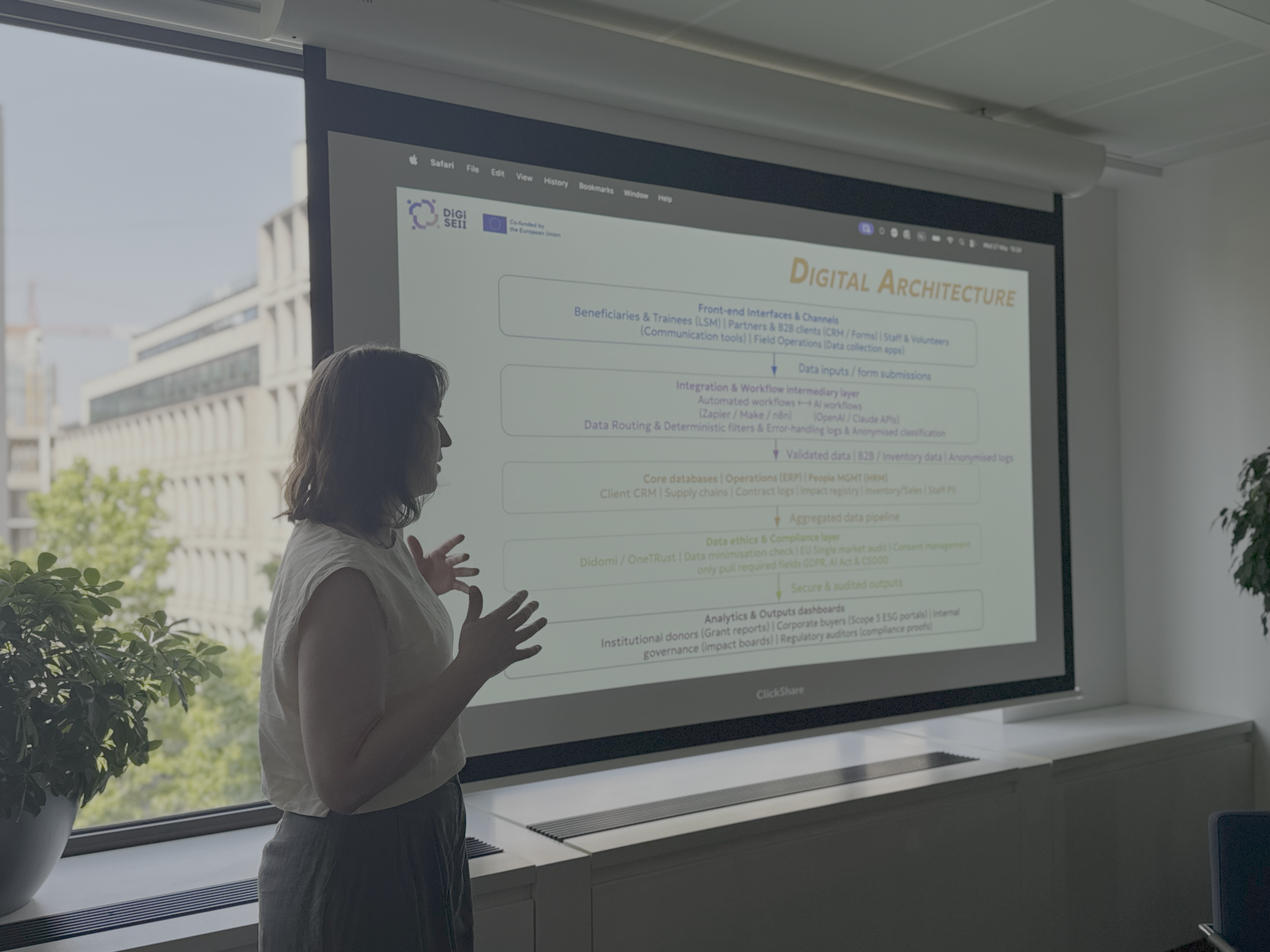
In the words of lead project manager Adeline de Jong: “If the system is wrong, the tool will not save you.” Instead of endless excel sheets and cluttered google drive folders that leave employees confused and unable to understand the digital infrastructure of their organisation, a good digital strategy provides the framework for an efficient system of tools that operate in harmony and in service of the people who harness them. By improving internal processes, as well as deepening and broadening outreach to ecosystem members, organisations can digitally scale the impact they have on their community. Euclid Network’s member organisation Act Grupa connects and supports social enterprises across Croatia and the Western Balkans.
If the system is wrong, the tool will not save you
Board member Ana Brigovic explains what makes Act Grupa’s digital strategy so effective: “Avoid tools for the sake of tools.” Digital tools are used to automate processes and connect people, with the goal to simplify and manage the “sensory and attention overload” that the application of too many tools can cause.
Social Enterprise Republic of Ireland (SERI) is another prime example of a social enterprise support organisation that is successfully scaling their impact with digital tools. SERI’s motto is: Start with the problem, not the technology. By identifying the core issues that arise for members of their ecosystem and addressing those with tools that are as simple as possible but as complex as needed, SERI manages to provide valuable support for a much larger national network than traditionally possible with their very small team.
A notable example for a tool supporting SERI’s digital infrastructure is their AI social enterprise advisor Áine. Áine addresses the common problem of information overload and limited staff capacity, acting as an always-on advisor and librarian for social enterprises. Instead of having to manually weed through SERI’s various resources, social enterprise leaders can ask Áine a simple question, and the AI agent will formulate an immediate response based on the entirety of SERI’s knowledge base. For Irish social enterprise leaders who often wear many hats in their organisation, this tool helps them access crucial support while saving valuable time.
SERI thereby also addresses the hot topic of AI through a human-centred approach. In the words of SERI’S CEO John Logue: “Our strategy is [...] about using technology where it adds value while protecting the human connections that are particularly important within the social enterprise ecosystem.” With the right training, social economy actors can transform the burden of digital chaos into an opportunity of digital impact.
SERI is a positive example of what an organisation can achieve with the right digital strategy. Their advice reflects what DiGi-SEII is all about: Identifying the biggest problems that stand in the way of delivering impact, and finding the tools that will resolve those problems in the most direct way possible. At its best, a digital strategy does exactly what DiGi-SEII participant Livia Onofrei (Digital Innovation Zone, Romania) wanted to learn: How can we make repetitive tasks more efficient to dedicate more time to those activities that require creativity, human input and direct interaction?
Practicality matters
DiGi-SEII provides social enterprises and their support organisations with an initial push to initiate the process that SERI has mastered, but this project is only the beginning. There are many more organisations that require tailored training - DiGi-SEII’s compendium of best practices provides guidelines to help future providers design their training programmes. The compendium compiles the preliminary lessons learned throughout the project so far. At its heart lies the need for accessible, practically relevant training that connects peers on their individual digital transformation journeys.
How can we make repetitive tasks more efficient to dedicate more time to those activities that require creativity?
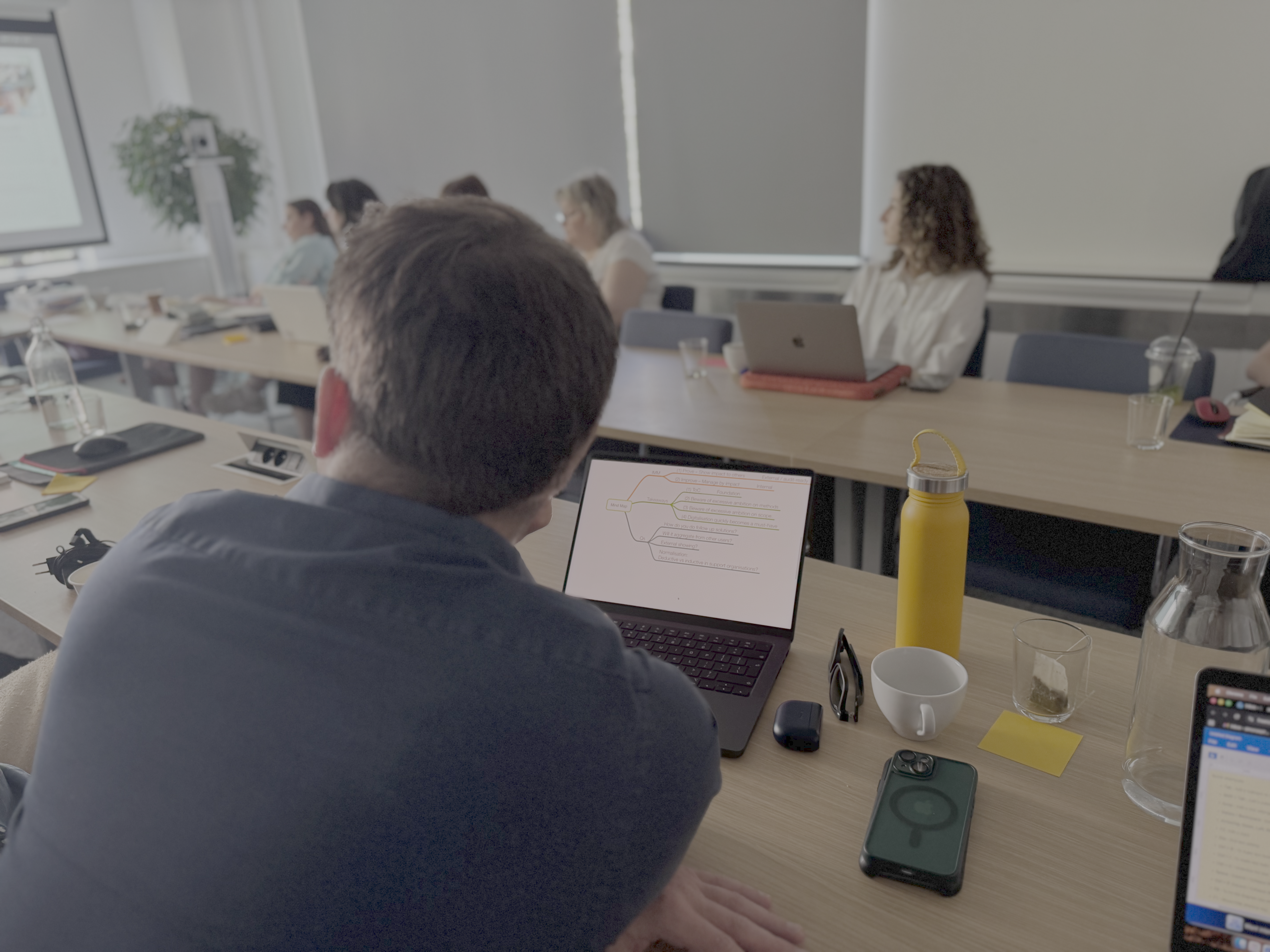
Clarisse Blanc from the Social Good Accelerator (France) notes that the focus on the needs and realities of impact-driven organisations’ limited resources, varying levels of digital maturity – and the need to keep social impact at the centre of every decision –was a key to the programme’s success. Carrying the lessons learned throughout the programme back into her team, she explains that her colleagues responded positively, because of this practical approach geared towards relevance to their everyday work. Livia echoes a similar sentiment: “I was able to test the tools using our own organisation as a real case, particularly through the digital maturity assessment, and to explore concrete examples of how other organisations use digitalisation to improve their work. This made it much easier for me to translate what I learned during the training into my day-to-day activities.”
This need for practicality and community deeply reflects the spirit of the social economy. Sharing challenges and successes, learning from each other, this is the desire social economy actors share. However, knowledge alone does not ensure success. Beyond what participants learn in training, confidence to turn this knowledge into action matters. Digital skills hidden behind insecurity are impact stuck in the state of potential.
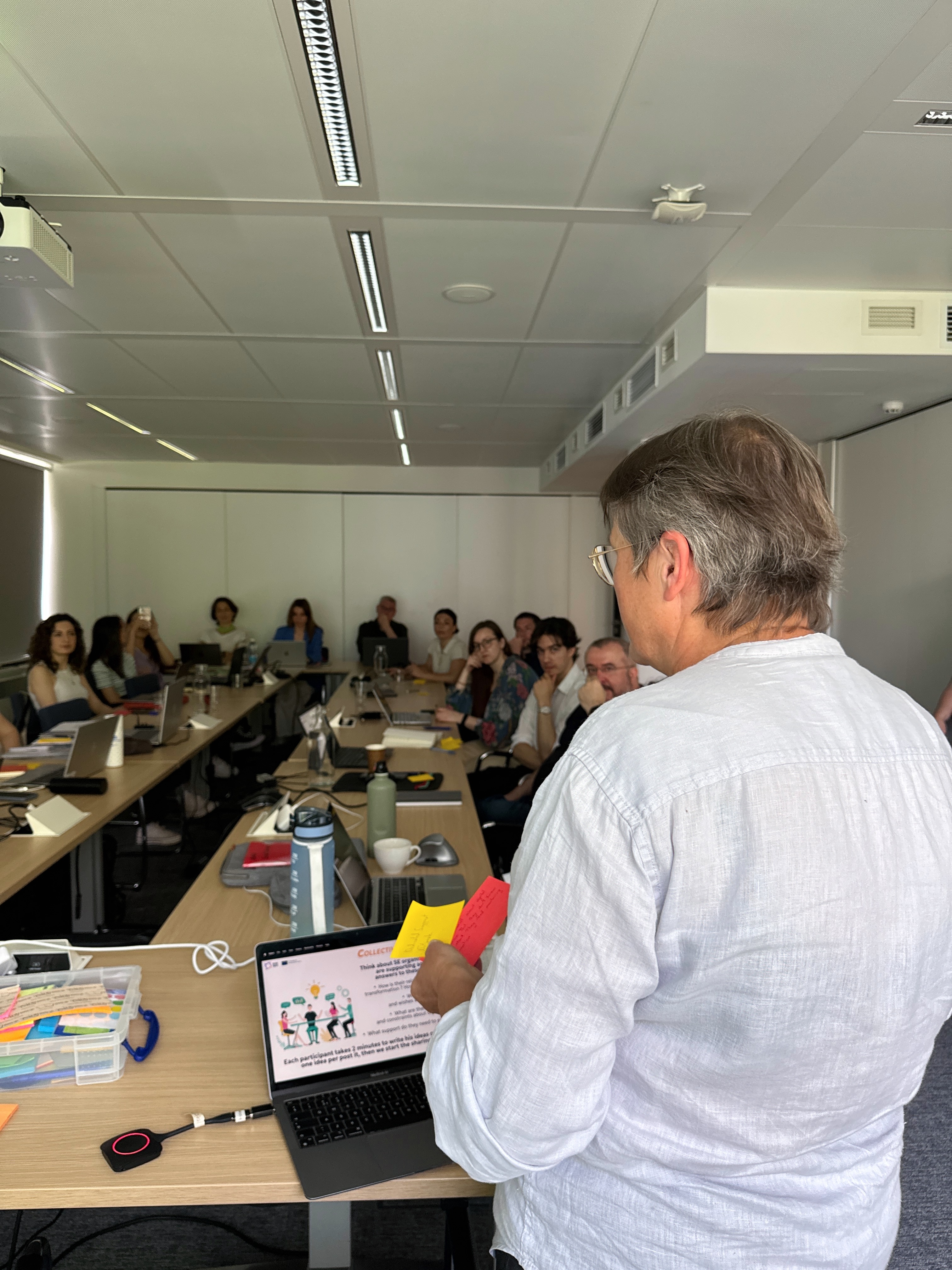
A word of advice from John that may encourage those that are still at the start of the digital transformation journey: “It is possible to start much smaller than many organisations assume.” Leave the long list of tools that confuse staff rather than improve processes behind, identify the three biggest challenges, and consider whether they can be solved by technology. DiGi-SEII’s participants left the training confident and ready to implement what they learned. In the words of Livia’s colleague Georgiana Oprescu (Digital Innovation Zone, Romania): “Rather than sending us off to rewrite our digital strategy from scratch, the training gave us practical tools and fresh perspectives that we're now weaving into the digitalisation and automation work we were already doing. It felt less like starting over and more like finally having the right map for the journey we were already on.”
It felt less like starting over and more like finally having the right map for the journey we were already on
Clarisse shared this sentiment: “The programme helped me identify realistic priorities and understand that digital transformation can be implemented step by step”.
Beyond DiGi-SEII
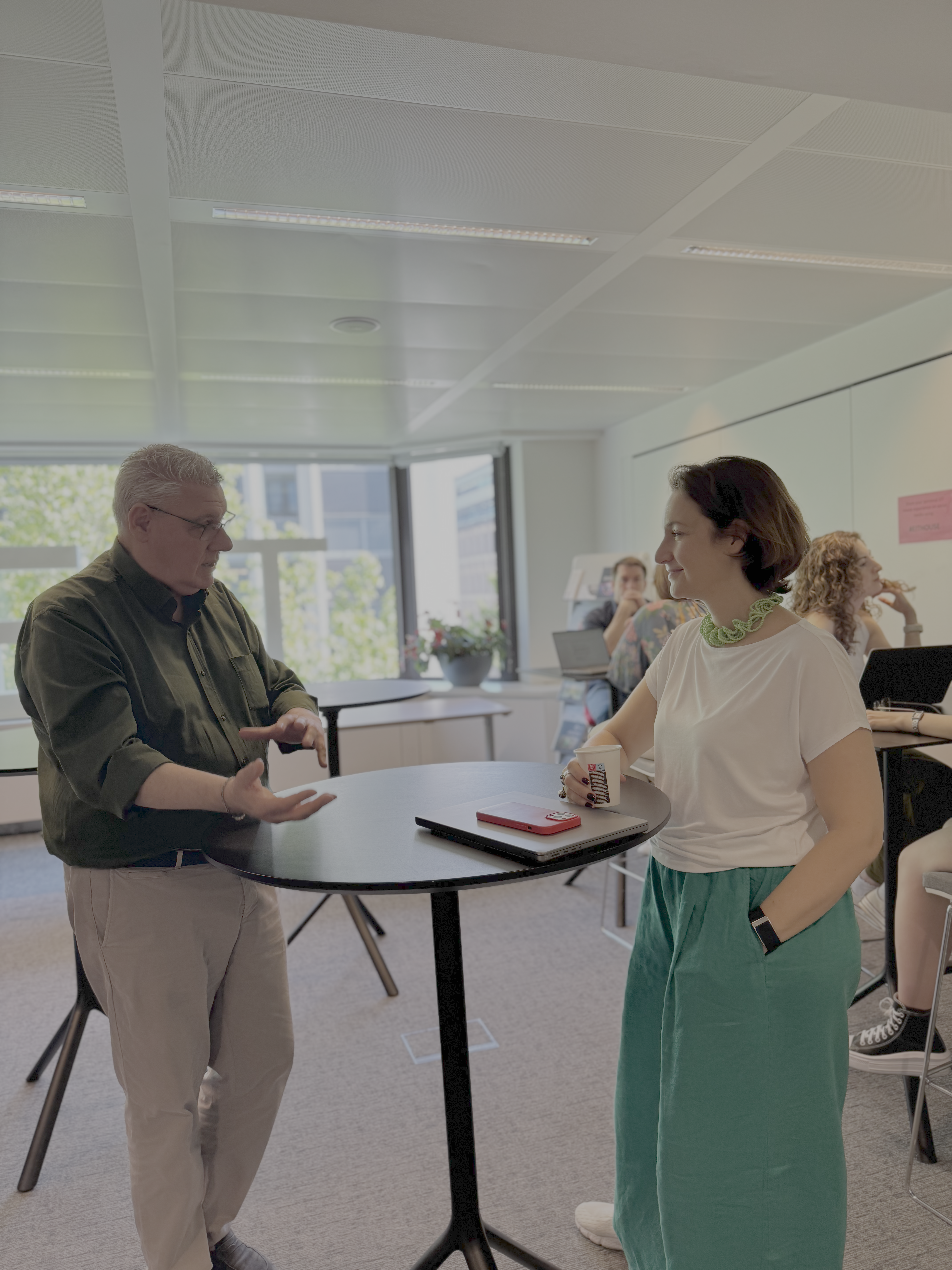 To achieve the vision of a more connected, resilient and sustainable Europe, the social economy needs to step up its digital game. SERI shows us what is possible and DiGi-SEII’s compendium of best practices provides a starting point you can refer to as a resource to guide capacity building initiatives.
Beyond the lessons compiled in DiGi-SEII’s compendium, we need to reflect: How can we reach those who feel intimidated by digitalisation? How do we align the use of new technologies like AI with our values? And ultimately, how can we support each other in digitally future-proofing the social economy?
The digital transition is a structural force nobody can avoid, but with the right support we can address the challenges social economy actors face and ensure that they can tackle digital scaling with confidence.
Sophie Utfeld is a Communications Officer at Euclid Network, writing to you from her base in The Hague.
Photos: courtesy of Euclid.

| Ready to invest in independent, solutions-based journalism?
Our paying members get unrestricted access to all our content, while helping to sustain our journalism. Plus, we’re an independently owned social enterprise, so joining our mission means you’re investing in the social economy. |