
‘Forget impact measurement’ and stop the semantics: Europe’s impact leaders urged to wake up the social economy
From corporate 'greenhushing' to the 'winter of mainstreaming': survival tactics for the social economy from Europe's big impact thinkers at the Euclid Network Impact Summit 2026.
Jeroo Billimoria, serial social entrepreneur and co-founder of social entrepreneur and innovator network Catalyst Now, has had enough of debate over how the social economy is defined.
“We split hairs over these words and waste endless hours discussing them. Most people in Europe don’t know what the social economy is, they don’t know what social enterprise is,” she said.

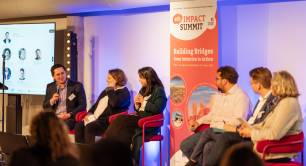
Billimoria (pictured) was speaking at the Euclid Network Impact Summit, held this week in Amsterdam, Netherlands. For two days B Corp hotel and coworking space The Social Hub Amsterdam City played host to social enterprise leaders and practitioners, investors, academics and politicians to debate the most pressing issues for the social economy.
The event’s title was Resilience in Action: Mainstreaming the Social Economy. Cleary, mainstreaming anything requires the majority of people to understand what it is.
Another of Billimoria’s roles is facilitator of the Government Council for Social Innovation, a coalition of government leaders from 51 countries who are embedding social innovation into the heart of public policy, finance and service delivery.
- Pioneers interview: Jeroo Billimoria - 'You have to be bold enough to shut something down'
‘Forget impact measurement’
Hans Stegeman, chief economist at Triodos Bank, ruffled a few delegates’ feathers during his keynote speech when he announced that the social economy should “forget impact measurement.”
He said: “Of course, you should be accountable for what you do. But if you really understand and live what you are doing, why should you spend so [many] hours on measuring if it’s right?”
Stegeman (pictured below) was presenting his theory on how to mainstream the social economy. Crucial to that process, he argued, was a focus on business ownership, governance and power structures, rather than treating transparency as a catalyst for economic transformation, which he said is “most of the time merely a distraction”.
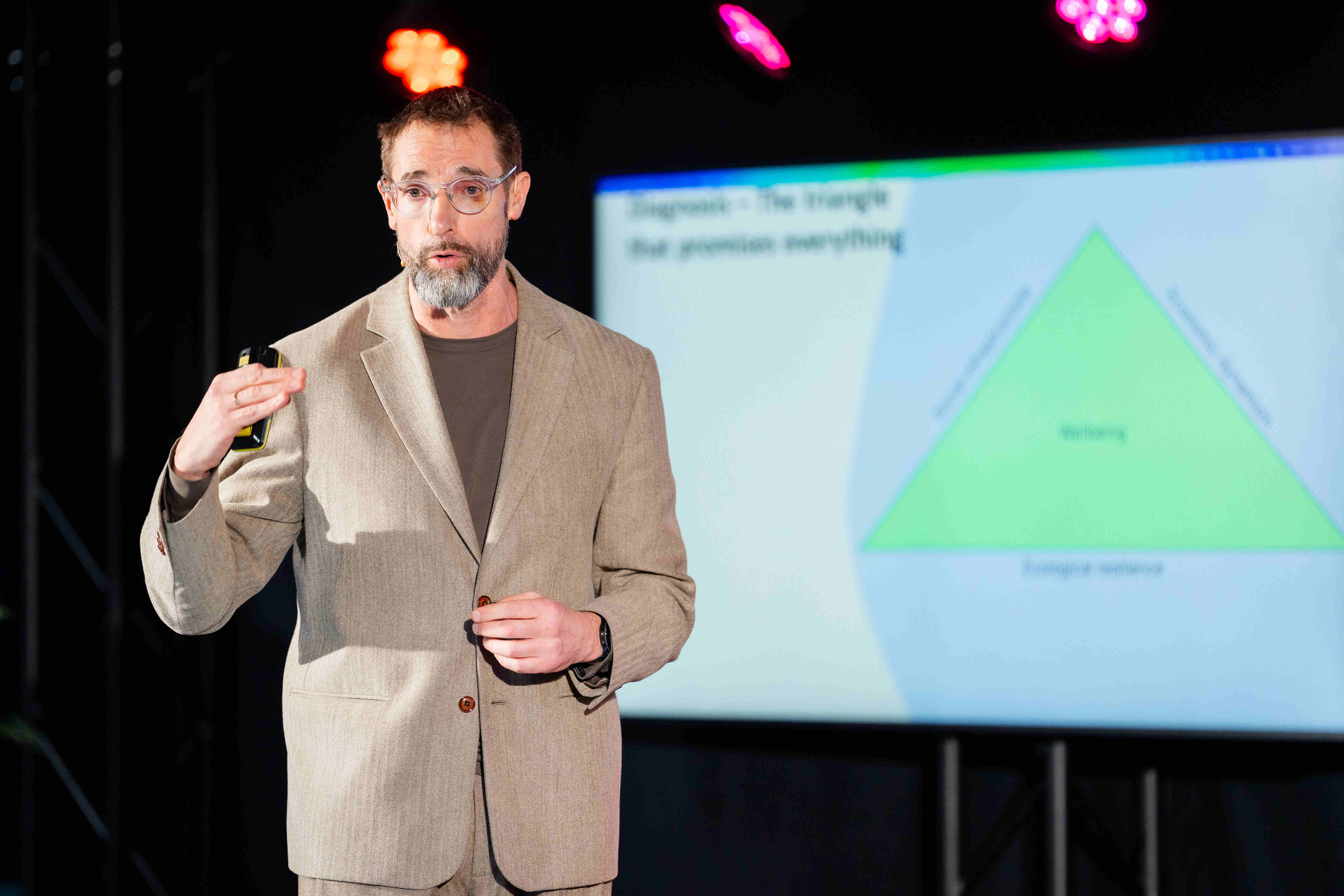
Describing social enterprises as “the prototype” business for a new economy, Stegeman said the current economic status quo of neoliberalism took hold during a moment of crisis, suggesting the current global political and economic crises could be an opportunity for the social economy to become the emergent form of business.
A major obstacle to that, said Stegeman, is the persistent obsession with GDP growth as the be all and end all of economics. But, he emphasised, moving away from that isn’t as simple as just setting an alternative economic goal.
“We have a growth-dependent economic system. Our social security depends on it. Our education system, our healthcare system, depends on growth. Our markets depend on growth, our employment depends on growth,” he said.
The rules of the economy were written by humans. They can be rewritten by humans. Who will write them?
Shifting away from growth requires full-scale, fundamental transformation of the economic system, argued Stegeman, including changing business incentives and policies like taxation systems.
Stegeman left Summit delegates with a challenge: “The rules of the economy were written by humans. They can be rewritten by humans. Who will write them?”
Planting the seeds of future success
Urging caution before demanding too much of social entrepreneurs, Daniel Nowack (pictured), head of social innovation for the Schwab Foundation for Social Entrepreneurship and the World Economic Forum, noted the numerous financial and political headwinds the sector is facing.
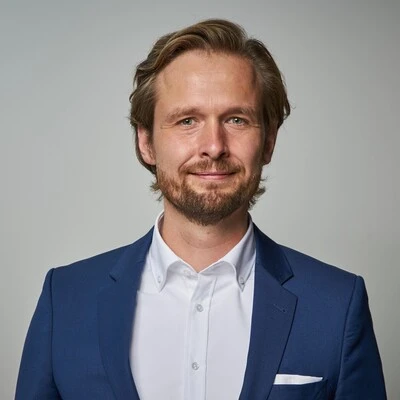
“When we talk about mainstreaming today, sometimes I wonder: how do we avoid being tone deaf to the challenges that many social entrepreneurs are facing in the sense that they’re fighting for survival?” he said.
While acknowledging those pressures as real and significant, Nowack questioned the popular narrative which suggests big corporates have retreated from investing in sustainability and impact. He said ‘greenhushing’ (corporates keeping quiet about sustainability and impact initiatives out of a sense they don’t serve the businesses in the current political atmosphere) was a genuine phenomenon, and in his experience most firms were maintaining, if not increasing, the commitments to social innovation.
- Opinion from Daniel Nowack: Social innovation - it’s still on the global agenda at Davos and beyond
Nowack described the present era as the “winter of mainstreaming”, when social entrepreneurs and their supporters can take stock, weather the storm and prepare for future success.
He said: “In wintertime families come together, they celebrate and look back, but they also think about next year and what’s to come. It might be winter, but winter is when we prepare the seeds for spring.”
Top image and image of Hans Stegeman courtesy of Euclid Network and Holland Park Media.
This article was corrected on 17 March 2026. The original article said Jeroo Billimoria was co-founder of social entrepreneur and innovator network Catalyst 2030. That organisation has changed its name and is now called Catalyst Now.

| Ready to invest in independent, solutions-based journalism?
Our paying members get unrestricted access to all our content, while helping to sustain our journalism. Plus, we’re an independently owned social enterprise, so joining our mission means you’re investing in the social economy. |