
Social innovation: it’s still on the global agenda at Davos and beyond
OPINION: Have heads of state and business leaders lost sight of the importance of social innovation as their attention is taken up with global unrest and shifting geopolitical alliances? During the World Economic Forum Annual Meeting in Davos, Daniel Nowack of the Schwab Foundation found social entrepreneurs continuing to inspire politicians and corporations. Social innovation remains a key enabler for a transition to a sustainable and equitable economy, he says.
“The old order isn’t coming back,” said Canadian prime minister Mark Carney in his speech at the World Economic Forum Annual Meeting in Davos, Switzerland, last month. He was referring to the global economic system and its complex web of socio-political dynamics. But the same can be said about sustainable development too.
Traditional aid is in decline. Developing countries face a $4.3tn annual financing gap for sustainable development, of which $1.8tn is for climate needs, according to most recent UN data. Focused on the rise in conflicts and geopolitical disruption, as well as the growth of populist political movements that denounce the funding of ‘foreign’ projects, government leaders are de-prioritising sustainable development. As listed in the Forum’s 2026 Global Risks Report, seven out of the ten biggest long-term threats relate to the environment or society.
These risks remain pressing and will continue to intensify if left unaddressed. Even as global attention shifts toward geopolitics, economic strain and military tensions, social enterprises remain firmly committed to their missions. Social innovation continued to prominently feature on the official programme in Davos through ten official sessions, three of which were publicly livestreamed. These conversations included ministers and heads of state, executives from Fortune 500 companies, and of course a rich selection of social innovators. In addition, dozens of events outside of the official programme complemented this show of force for the topic.
Leaders from global corporations such as SAP, Naspers, and Schneider Electric, for example, highlighted how important alignment of social innovation with internal business cases has become. Since its launch in 2024, Rise Ahead Pledge signatories have invested over half a billion US dollars in social innovation. And four new companies just joined the pledge. Gina Vargiu-Breuer, SAP’s chief people officer, noted that companies investing in ecosystems are better able to scale, manage risk and perform over the long term, while helping build more inclusive and resilient economies. Business leaders from Asia and Africa outlined that social innovation remains a key business capability for them. At the same time, public sector leaders recognise the contribution of social enterprises to inclusive economic growth, particularly as many of these enterprises are youth- and/or women-led.
- Read more: Fresh solutions for Africa’s jobs challenge – How social enterprises plug the employment gap
The social innovators and entrepreneurs at the Schwab Foundation Awards 2026 (pictured below) presented another source of optimism. By sharing stories of how they have innovated new business models to address social and environmental challenges – like strengthening emergency medical services in Ethiopia, addressing clean water scarcity in Bangladesh and establishing circular textile economies in Lebanon – they demonstrated that this period of flux offers an opportunity to replace global aid with something more equitable, systemic and resilient.

Indeed, social innovation offers a means of upgrading our entire economic system so that it’s as much about purpose as profit.
Three insights from impact innovation pioneers
The small community of social entrepreneurs among the business leaders and politicians at Davos embodied three things on which these collaborations of the willing should focus.
1. Adaptability The best social innovators create new business models that not only overcome today’s social and environmental obstacles but also navigate longstanding challenges in the face of destabilising headwinds.
For example, Tebita Ambulance is Ethiopia’s first private ambulance service. Anaesthetist Kibret Abebe founded it back in 2008 because Ethiopia has one of the worst records for traffic accidents in the world and, yet, even in early 2000s most patients were brought to hospital by public transport. Despite political instability and the 2020 to 2022 Tigray War, Tebita Ambulance has gone from strength to strength. Having responded to more than 60,000 calls, it’s now expanding its services across East Africa.
2. A collective approach To address today's complex challenges, social innovators show us that the way forward is about more than just delivering products or services. It requires a new kind of leadership that embraces collective action to drive long-term change for hard-to-reach communities by partnering with governments, corporates and investors.
For instance, social enterprise Drinkwell tackles clean water scarcity in Bangladesh and India through public-private partnerships with utility providers to roll out its ATMs that dispense drinking water like cash. Using a patented filtration technology, these machines remove bacteria and heavy metals, while recovering 90% of the input water, thereby tackling social and environmental issues simultaneously.
Its co-founder and CEO, Minhaj Chowdhury, shared that when bilateral donors terminated grant agreements last year, multilateral donors who work in the same communities stepped in as partners willing to fill the gap. This is proof that the narrative around multilateralism being in decline is not true – it is evolving.
- Read more: Blended finance market should brace for impact of development aid cuts – Convergence warning
The deployment of development capital will be in flux for the foreseeable future. But it is fair to assume that it will become more focused, flowing to areas where there is local government ownership alongside economically viable sustainability initiatives. For many social enterprises, that shift has been a tailwind – not a headwind – for collaboration.
3. Appetite for private partnership
Savvy innovators understand that supplying big business represents a mutually beneficial opportunity. Such social procurement means that entrepreneurs can scale their impact with each dollar spent by large customers. But it also offers companies a tangible way of operationalising their social and environmental commitments, and increasing supply chain resilience without adding layers of reporting complexity. The need for social resilience of supply chains remains high. The State of Social Procurement 2026 highlights that 18% of supply chain issues are connected to social causes.
A new Schwab Foundation awardee left Davos with new support from international corporations. FabricAID, the Lebanon-based circular textiles organisation, launched its international pledge on corporate textile sustainability at the meeting. This involved engaging with senior leadership teams at companies to formally commit to responsible management of their textile waste and securing commitments from several organisations to join the pledge. This creates a clear operational pathway, companies channel their used textiles to FabricAID which are then upcycled into useful products or recycled responsibly, while new corporate apparel is produced through socially and environmentally sustainable processes.
- Read more about FabricAID in our Earth Fixers feature: Against the odds: The growing green businesses of the Middle East
Beyond Davos 2026
As one of this year’s Schwab awardees, Ioana Bauer of eLiberare put it: “As social innovators, our leadership and actions go beyond who is in power. Because our work touches too many lives for us to pick and choose the systems we operate within.”
As social innovators, our leadership and actions go beyond who is in power
Jointly, the social innovators and their partners leave Davos reassured that social innovation remains a key enabler for our societies to transition to a sustainable and equitable economy. They found the necessary partners and allies to drive systemic change. While the political winds in some countries may have changed, other countries double-down on social innovation. And certainly, facts and science have not changed either: 2025 was one of the three hottest years on record. The world’s 12 richest people own more than the poorest half of the world’s population. And this inequality is fuelling a range of economic and societal risks, creating instability and uncertainty.
Social innovation offers real-word solutions today and long-term resilience for the future. To unlock it, we need a new kind of collective leadership, suited to address complex challenges, and a capacity to transform mainstream business and policy. The choices made now will determine whether our systems evolve to protect and sustain both people and the planet. The next step is clear – we need to support the solutions that are already working and build an ecosystem for scaling them.
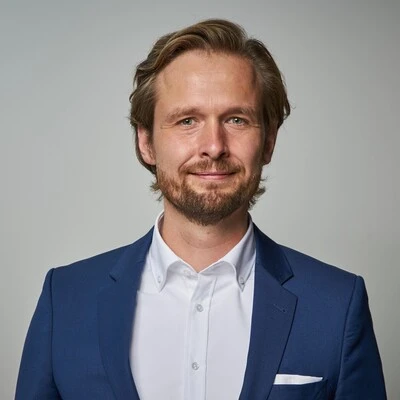
Header photo: Kibret Abebe, founder of Tebita Ambulance in Ethiopia and 2026 Schwab Foundation award winner
Centre photo: The Schwab Foundation awardees. Photo courtesy Jason Alden/World Economic Forum
| Ready to invest in independent, solutions-based journalism?
Our paying members get unrestricted access to all our content, while helping to sustain our journalism. Plus, we’re an independently owned social enterprise, so joining our mission means you’re investing in the social economy. |