Better support for regional policies and promotion of social procurement among EU commitments to grow social economy
In a review of the bloc’s Social Economy Action Plan, the EU Commission said progress is “tangible” but commits to doing more to “level the playing field” for the sector.
Better support for regional and local authorities, the promotion of social procurement practices and clarification on State Aid rules are among a raft of commitments to back the social economy announced on Monday by the EU Commission.
The Commission made the commitments as part of its midterm review of the EU’s Social Economy Action Plan. The action plan, launched in 2021, covered three broad areas of support for the social economy: improving the business environment; helping organisations to start up and scale up; and boosting awareness and recognition.
The review concluded that the action plan has “injected new momentum into the social economy” and has resulted in “tangible progress”. The report cites the more than €2.8bn of investments and guarantees allocated to support the EU social economy between 2021 and 2027.
More must be done to help the social economy thrive
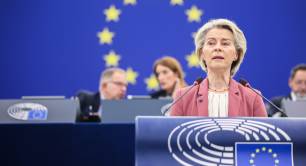
Roxana Mînzatu, executive vice-president for social rights and skills, quality jobs and preparedness at the European Commission (pictured top), said in the report: “Our mid-term review shows we are delivering, but more must be done to help the social economy thrive.”
The EU defines the social economy as social enterprises, cooperatives, mutual benefit societies, associations (including charities) and foundations. The report says the EU social economy now comprises 4.3m organisations providing 11.5m jobs, while addressing key social and environmental objectives.
The original action plan detailed 63 specific actions the EU would carry out to promote the social economy, expanded to 89 following the review. Examples of actions include proposing a Council recommendation on developing social economy framework conditions in 2023, launching a study on the potential use of dormant assets and conducting a new mapping study on social enterprises and their ecosystems.
According to the report 16 of the 89 actions are completed, 12 completed and continuing, 33 ongoing 26 upcoming and two have been discontinued.
The report said the next phase of the action plan, which runs until 2030, will “aim to foster a competitive, robust and recognised social economy operating on a level playing field and supported by stronger frameworks, financing, talent and data across the EU.”
EU Commission switches to focus on regional support for social economy
Of the 27 EU member states, 21 now have social economy strategies either adopted or in preparation. While celebrating the progress made at national and international levels under the action plan, the report notes “significant untapped potential at regional and municipal levels”, with the level of policy support for the social economy varying greatly across member states and different levels of governance.
In response, the Commission said it will now take action to support regional and local social economy policies and enable social economy organisations to operate in the single market without barriers.
One move the Commission said it will make is to clarify relevant State Aid rules to make it simpler and easier for public authorities to finance the social economy. State Aid rules set out when governments can support organisations financially without breaching EU competition law.
Critics of the existing State Aid regime say the lack of clarity on how the rules should be applied to social enterprises – that are both 'commercial' but also reinvest their profits to support their social goals – can make public authorities reluctant to give social economy organisations the support they need.
After the 2021 launch of the action plan Victor Meseguer, then director of Social Economy Europe, said State Aid was the “holy grail in Europe”.
Also included in the report is a commitment to expand the European Social Economy Regions (ESER) initiative. The ESER was launched in 2018 by the Commission's Directorate-General for Internal Market, Industry, Entrepreneurship and SMEs (DG GROW) to raise awareness about social economy at a regional and local level.
On 1 May 2025 the Commission disbanded DG GROW’s social economy unit, leaving the continuation of ESER unclear. Toby Gazeley, policy lead at Euclid Network, welcomed the Commission’s commitment to ESER.
He said: “We suggested they reinvigorate the ESER network in our response to the consultation so it’s great to see this happening. It wasn’t disbanded when DG GROW was restructured but it’s been inactive and drifting for the last few years. This network in the past gathered cities in Brussels once a year and led to calls to support collaboration between regions, so let’s hope these activities will also come again.”

Ensuring social economy organisations can compete and thrive across the single market
One of five key action areas identified by the Commission for the next phase of the action plan is ‘making rules and frameworks work’.
Alongside clarifying State Aid rules, the Commission said it will strengthen procurement rules, conduct a study into whether impact-driven businesses face distinct barriers such as recognition and access to funding and promote tax policies that incentivise investments in social economy organisations to ensure they can compete and thrive across the single market.
A call for proposals to scale up business-to-business partnerships will be launched by the Commission to promote systematic integration of social economy organisations into the value chains of mainstream businesses. This is similar to a call which was previously launched, then cancelled, by DG GROW.
The Commission will also explore opportunities to promote the uptake of socially responsible public procurement practices by contracting authorities, as part of the ongoing revision of EU public procurement directives.
The social economy as a driver of competitiveness and strategic autonomy
The action plan review comes in the aftermath of the passing of the EU’s controversial Omnibus package last December, which radically reduced the scope and power of flagship laws designed to hold companies accountable for their environmental and social impacts.
The Omnibus package was passed with the justification of simplifying regulations and promoting EU competitiveness. The Commission has also identified competitiveness as a key priority for the 2024 - 2029 term.
The Social Economy Action Plan review argues “the social economy supports Europe’s prosperity and competitiveness” and “strengthens Europe’s preparedness and strategic autonomy, contributing to greater economic sovereignty”. Competitiveness was not a central theme in the original 2021 action plan.
The review notes the dramatic change in geopolitical landscape since 2021, adding that the social economy can help build resilience among EU communities. It said: “A series of overlapping crises have shown how the social economy acts as a source of resilience, creating and retaining local jobs, mobilising communities in a spirit of solidarity, and stepping in where markets fall short to promote inclusive growth.”
Top image: Roxana Mînzatu, executive vice-president of the European Commission (credit: EU DG EMPL, Flickr)
| Ready to invest in independent, solutions-based journalism?
Our paying members get unrestricted access to all our content, while helping to sustain our journalism. Plus, we’re an independently owned social enterprise, so joining our mission means you’re investing in the social economy. |