
Collection: Good Experts


A multilingual AI companion that helps survivors of domestic violence. A satellite-guided enterprise that detects marine plastic hotspots. And an AI-driven blood transfusion management system that strengthens patient safety.
These were just three of the ideas made real by 10 inspirational women shaping the world of responsible innovation in AI, who have been recognised for their leadership in an international awards programme.
The She Shapes AI Global Award winners were announced last month at a gathering hosted at LSE Generate, the entrepreneurship hub at the London School of Economics in London, UK. The winners were chosen across 10 categories after a rigorous selection process saw 250 applications narrowed down to 28 finalists, representing six different continents.
The event, which was also accessible globally via Zoom, was themed around the idea of 'The Power of AI Done Well' – and showcased women who are not just using technology, but actively diversifying who gets to build it. While the tech industry is often criticised for a “growth at all costs” mentality, observers reflected that these pioneers are proving that the most powerful application of Artificial Intelligence is best combined with empathy and social restoration.
She Shapes AI founder Dr Julia Stamm (pictured centre in the main photo above, and left in the photos below) reflected that in a moment when the AI discourse too often swings between uncritical hype and wholesale alarm, this event was “proof of what becomes possible when the question shifts from 'what can AI do?' to 'what should AI do, and for whom?'”
Their work reflects what happens when AI is developed with intention. Not for the sake of innovation alone, but in response to real needs
Sharing the news of this year’s winners on LinkedIn, She Shapes AI said the criteria it had set for the awards were clear: “Responsible AI, tangible impact, innovative approaches to real challenges, and strong leadership.”
It added: “Across sectors and geographies, their work reflects what happens when AI is developed with intention. Not for the sake of innovation alone, but in response to real needs — grounded in context, shaped by lived experience, and designed to deliver meaningful outcomes.
“From strengthening healthcare systems and enabling privacy-preserving digital identity, to reducing food waste, protecting people from online harm, and building more equitable workplaces, this year’s winners are applying AI where it matters most.”
The AI + Health award focuses on pioneers improving patient outcomes and medical logistics while maintaining human-centric care. Winner Ghislaine Zinzindohoue, co-founder of Ayooka (Benin), embodies this by leading Guinea’s first fully integrated AI-driven blood transfusion management system. Her work improves national supply predictability and reduces life-threatening shortages, directly strengthening patient safety through smarter distribution.
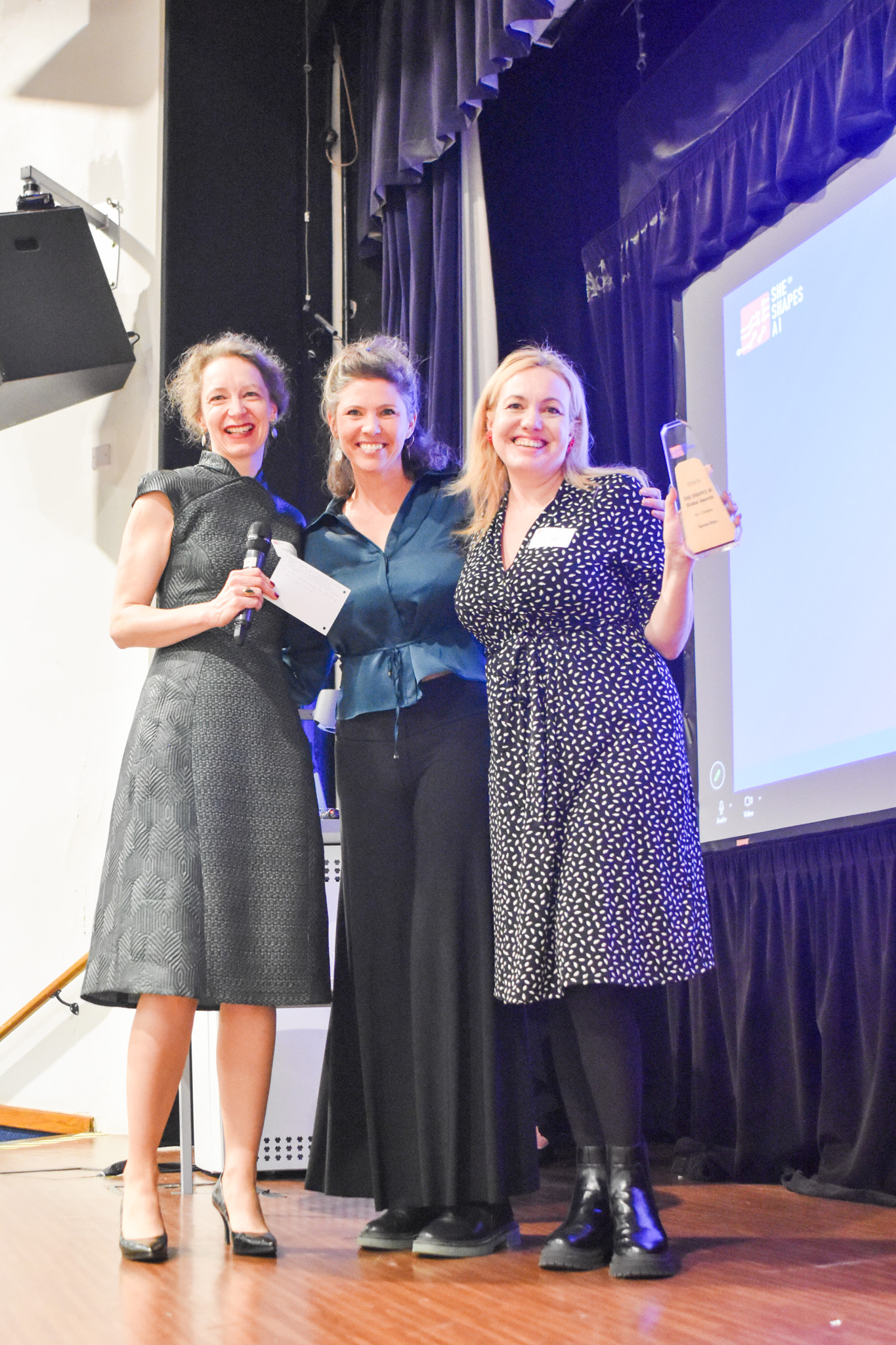 The AI + Climate award recognises leaders using technology for environmental mitigation and resilience. Sorina Uleia (pictured left, on the right), founder and CEO of Recycllux (Romania), won for her innovative combination of satellite Earth Observation, AI, and blockchain. Her platform detects marine plastic hotspots and coordinates low-carbon community cleanups, providing the transparent, audit-grade data necessary for real climate impact.
The AI + Safety award highlights tools that foster inclusive, secure, and respectful digital spaces. Jacqueline Comer, founder and chief product officer of Areto Labs (New Zealand), leads the development of AI systems that detect microaggressions, harassment, and scams in real-time. By pioneering fairness-weighted moderation tools that have analyzed over 23 million interactions, she is building a more inclusive global digital community.
The AI + Education award celebrates tools that bridge geographical and generational gaps to democratize knowledge. María Sierra, co-founder and COO of Propel (US), was recognised for equipping over 400 nonprofits across 27 countries with practical AI training. Her work ensures that social impact organizations have the digital capacity to scale their missions through the power of large language models.
The AI + Creative Industries award explores how technology can intersect with identity, art, and democratic discourse. Chantal Pisarzowski, founder of forward stud.io (Germany), won for her project Parallaxe. She is developing an AI-mediated dialogue system designed to structure and de-escalate conversations between people with opposing political views, using tech to foster understanding rather than division.
The AI + Food and Agriculture award targets innovations that build sustainable food systems and reduce global waste. Dalma Szabo, CEO of OH! a potato (Romania), created an app that uses intelligent agents to help households adapt recipes and manage ingredients. Her work has already helped over 30,000 users across 174 countries prevent food waste at the source.
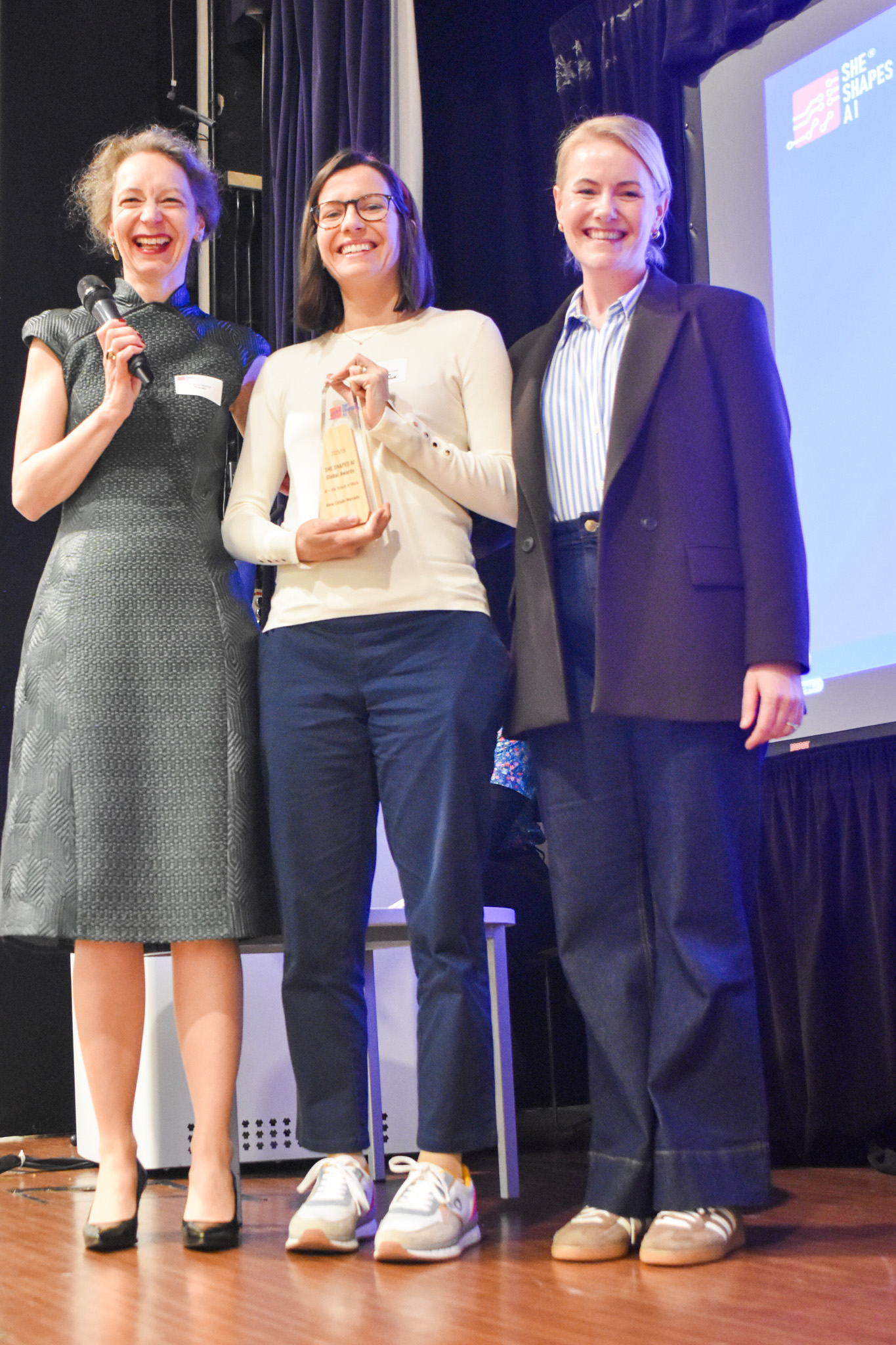 The AI + the Future of Work award seeks innovations that prioritise a human-centric workplace and lifelong learning. Anna Cejudo Mercado (pictured right, centre), co-founder and co-CEO of Founderz (Spain), is transforming education through AI-powered, hyper-personalised learning systems. Having reached over 300,000 learners globally, her work ensures that no worker is left behind as the job market evolves in the AI era.
The AI + Security award spotlights innovations building a transparent, inclusive, and secure financial ecosystem. Priya Guliani, CEO of EarthID (UK), was recognised for her privacy-preserving digital identity platform. By leveraging AI to democratise access and combat fraud, her software has completed over 1.2 million verifications, reducing onboarding fraud by 70% and strengthening digital trust for underserved communities.
The Thought Leadership in AI award honours those shaping the governance, ethics, and cultural framework of technology. Maha Jouini (Tunisia), AI ethics and policy advocate at the Global Center on AI Governance, was recognised for her decolonial approach to AI policy. She brings Arab, Muslim, and African perspectives into global conversations, ensuring that AI ethics are grounded in diverse cultural realities.
The AI Wild Card award is reserved for unconventional game-changers whose work defies traditional categorisation. Rhiana Spring, executive director and founder of Spring ACT (Switzerland), won for her chatbot Sophia. Launched years before the mainstream AI boom, Sophia is a multilingual AI companion that helps survivors of domestic violence anonymously access legal information and support services across 172 countries.
Beyond the technical accolades, the ceremony highlighted the unique hurdles female founders face. Anna Le Judo Mercado noted that the skills required for motherhood often translate into professional efficiency: “Having a support network teaches you... you become more productive." However, the strain is real; Sorina Uleia candidly shared, “You can’t do it all. I have three kids and I can't imagine myself traveling almost every week for events.”
These women are not just filling spaces in the tech industry, they are redesigning them. As Rhiana Spring concluded: “Taking on a project around chatbots wasn’t a thing yet... now that it has taken off, we have to really open these spaces up.” Through their leadership, AI is becoming a tool for community, safety, and a more inclusive global economy.
More information on the winners is available on the She Shapes AI website.

| Ready to invest in independent, solutions-based journalism?
Our paying members get unrestricted access to all our content, while helping to sustain our journalism. Plus, we’re an independently owned social enterprise, so joining our mission means you’re investing in the social economy. |