Pride is over – will social investors ensure the work continues?
 OPINION: At a time when anti-rights movements are growing stronger, why is social investment not yet kicking in at scale to help build a more sustainable LGBTQI movement?
The rainbow flags are coming down. The stages are being dismantled. Corporate social media logos (if they ever changed in the first place) have returned to their original colours.
Another Pride season is over.
And yet, for millions of LGBTQI people around the world, the challenges that Pride was created to confront have not disappeared. In some countries, they have intensified.
Across Europe and beyond, anti-LGBTQI rhetoric has become increasingly mainstream. Homosexuality remains criminalised in more than 60 countries, with some still imposing the death penalty. Earlier this year, Senegal increased the prison sentence for same-sex acts from five years to ten. Meanwhile, the vehicle-ramming attack associated with Berlin Pride shocked Europe and reminded us that, even in countries often seen as progressive, visibility can still come at a cost.
Homosexuality remains criminalised in more than 60 countries, with some still imposing the death penalty.
When rights come under pressure, strong institutions become even more important. The question we should all be asking every year in August is: what happens when Pride ends?
From visibility to sustainability
Last year, in my Pioneers Post article, We need more LGBTQ+ social enterprises – here's why, I argued that the LGBTQI movement needs more financially sustainable organisations capable of delivering long-term social change.
Since then, the evidence has become even clearer.
Research published by Social Enterprise UK found that only 0.1% of charitable income goes to LGBTQ+ organisations while demand for support continues to grow. The LGBTQI movement has become dangerously dependent on funding models it does not control and the impact is already visible. The Guardian recently reported that corporate donations to Stonewall, the UK's largest LGBTQI charity, more than halved in the last financial year
The reality is that rights movements cannot rely solely on goodwill and cutting funding for pride events is another way to attack queer visibility. Additionally, running organisations that are financially vulnerable is exhausting and incredibly risky as there is no guarantee of impact continuity; the work can stop anytime due to lack of funding.
If we want housing, healthcare, employment support, community spaces and advocacy services to exist ten years from now, we need organisations with sustainable revenue models and access to capital.
This is where social enterprise and social investment have a critical role to play.
The funding gap is becoming a resilience gap
The LGBTQI movement is facing a dangerous contradiction.
At precisely the moment when anti-rights movements are becoming better organised, better funded and more politically influential, many LGBTQI organisations are seeing resources shrink.
Another report from Social Enterprise UK shows that some Pride events have struggled to secure sponsorship, while hate crimes in the UK have risen by 112%.
At Micro Rainbow, we support LGBTQI people fleeing persecution because of their LGBTQI identity. These are individuals who have escaped imprisonment, torture, forced marriage, conversion practices and death threats.
Many arrive in the UK expecting safety, only to face homelessness, isolation and further discrimination not only because of their LGBTQI identity, but also because they are migrants.
Without sustainable organisations, there can be no sustainable movement and impact.
We need decades to tackle the root causes of LGBTQI-phobia, to change laws and people’s minds and hearts. That is why building resilient organisations matters. Without sustainable organisations, there can be no sustainable movement and impact.
A different model is possible
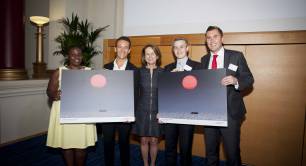
This year, Micro Rainbow was honoured to be nominated and Highly Commended for the NatWest SE100 Social Investment Pioneer Award.
The recognition reflects something that, just a few years ago, many people believed was impossible: using social investment to scale an LGBTQI-led organisation tackling one of society's most complex challenges.
In December 2025, we secured £3.45m in our second round of social investment. Across investment rounds, we have now raised almost £9m. This capital will allow us to expand from 30 to 45 safe houses across the UK, creating approximately 20,000 additional safe bed-nights each year, supporting a further 60-100 LGBTQI people seeking asylum annually, and extending our work into Scotland and Northern Ireland.
Most importantly, it brings us closer to our ambition of ending homelessness among LGBTQI people seeking asylum in the UK by 2030.
But this story is about more than Micro Rainbow, and it is about more than the amount invested. It demonstrates that LGBTQI organisations can attract significant social investment, build assets, generate sustainable income and scale impact without compromising their mission.
In many ways, Micro Rainbow's recognition at the NatWest SE100 Awards suggests that social investment in LGBTQI organisations is no longer a niche concept. The more important question is: why are there so few examples?
Across the UK, LGBTQI social enterprises are proving that different models are possible. Tonic Housing has pioneered specialist housing for older LGBTQI people. Gaydio has built a commercially successful media platform while creating opportunities for LGBTQI voices and talent. Other social enterprises are tackling everything from inclusion and wellbeing to education and community safety.
What these organisations have in common is a determination to create long-term change rather than short-term interventions. They show that social enterprises can do more than fill gaps left by shrinking public services or unreliable grant funding. They can build lasting solutions, strengthen communities and create impact that endures.
Micro Rainbow's investment journey is just one example of what becomes possible when strong organisations are given access to the capital they need. The bigger opportunity is making sure many more LGBTQI social enterprises can follow a similar path.
Why investors should pay attention
One of the most encouraging aspects of our recent investment round was that two new investors entered the social investment market through the deal. For one, it was their first social investment. This matters.
The challenges facing LGBTQI organisations are often about access to capital and access to early-stage support.
Micro Rainbow... is just one example of what becomes possible when strong organisations are given access to the capital they need. The bigger opportunity is making sure many more LGBTQI social enterprises can follow a similar path.
On the one hand, many investors still have limited exposure to LGBTQI-led organisations. As a result, opportunities can be overlooked despite strong business models and significant social impact. On the other hand, many LGBTQI organisations need practical support, including training, coaching, financial planning, legal advice and specialist expertise, to become investment-ready.
Now that Pride is over, we can focus on bridging these gaps.
Social investors often seek organisations capable of combining measurable impact with sustainable revenue streams. That is exactly what many LGBTQI social enterprises are doing. Yet Micro Rainbow remains the only LGBTQI social enterprise featured in the NatWest SE100 Index and recognised by Pioneers Post. To me, that is evidence of significant untapped potential: a part of the social investment market that remains largely underserved.
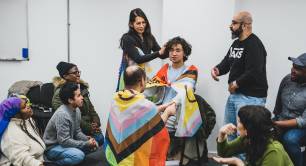
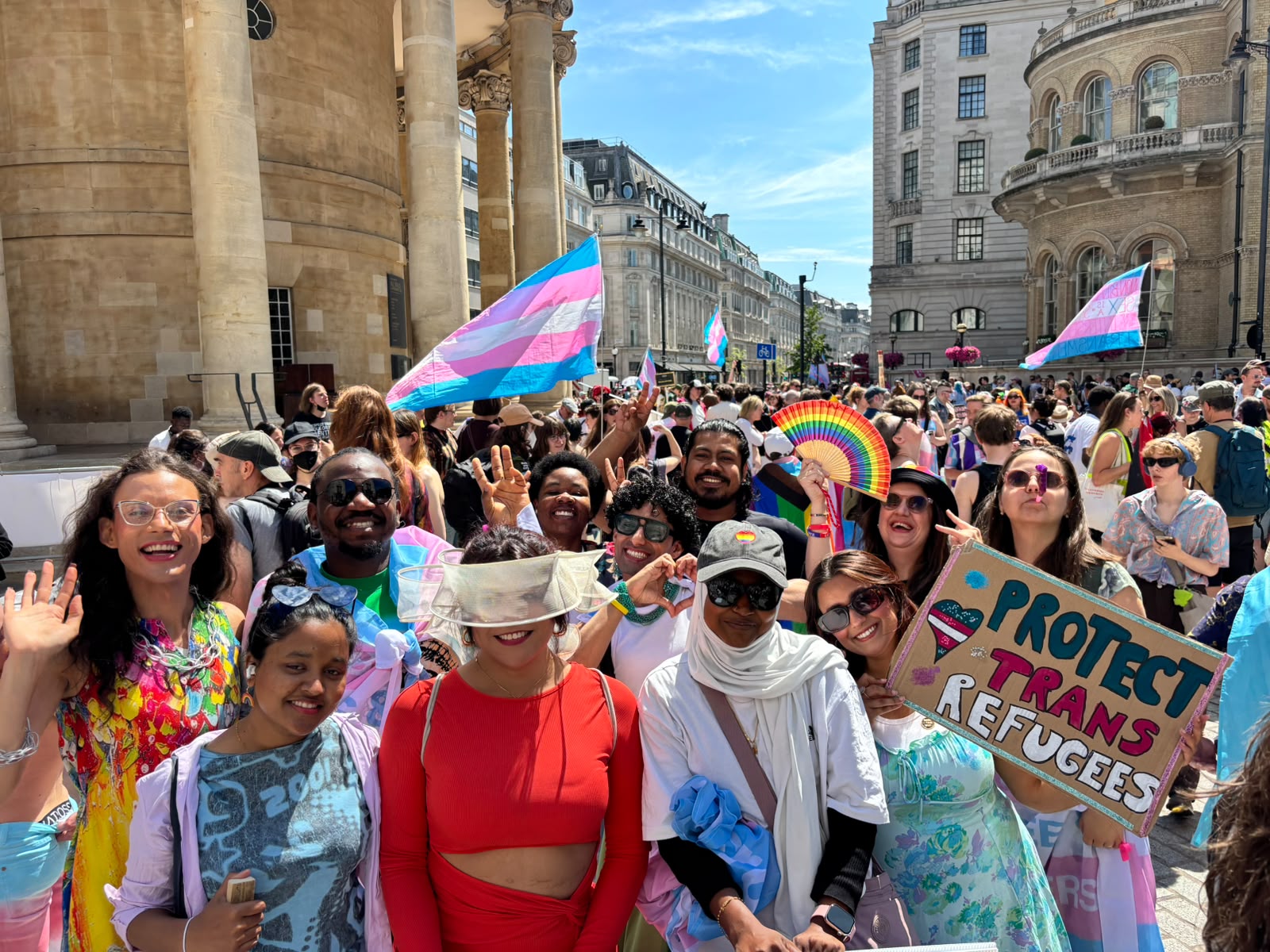 Some of the Micro Rainbow team marching in London's biggest ever Trans+ Pride march with trans beneficiaries and allies.
Pride was never the destination
Hopefully, if you're one of those people who asks, “Do we still need Pride?”, you'll now have more information to help answer that question.
Pride still matters.
But visibility alone does not house someone facing homelessness, just as a rainbow logo does not guarantee equality in the workplace. What happened in Senegal earlier in the year is also a reminder that human rights can worsen. Real change requires systems, institutions, services, communities and organisations that are built to last. And that requires money, investment and financial resilience.
If you are an investor, actively seek LGBTQI investment opportunities; if you are a funder, provide substantial investment-readiness support; if you are a social entrepreneur, explore trading models.
As another Pride season comes to an end, the questions I want to ask are these: How can we invest in organisations capable of turning visibility into lasting impact? What needs to change to make that possible? What role can each of us play in making it happen?
If you are an investor, actively seek LGBTQI investment opportunities; if you are a funder, provide substantial investment-readiness support; if you are a social entrepreneur, explore trading models.
Pride is not the destination, and it is not just a parade. It is a lifelong commitment to equality, dignity and opportunity for all. The flags may come down, but the work continues.
Photos courtesy of Micro Rainbow. Main photo above: The Micro Rainbow team getting ready to march in Pride in London.

| Ready to invest in independent, solutions-based journalism?
Our paying members get unrestricted access to all our content, while helping to sustain our journalism. Plus, we’re an independently owned social enterprise, so joining our mission means you’re investing in the social economy. |