
The Editor's Post: Does this circular economy solution turn your stomach?

How maggots, toilets and organic fertiliser combine for an innovative circular economy solution in Africa: This week's view from the Pioneers Post newsroom.
Are you squeamish? If so, our top story this week might not be for you.
It opens with millions of black soldier flies buzzing around a hatchery in Kenya, where they are bred by social enterprise Regen Organics. Black soldier fly larvae (ie maggots) are both incredibly efficient at eating organic waste, and a climate-friendly source of protein for animal feed. Regen Organics breeds them for use in regenerative agriculture products.
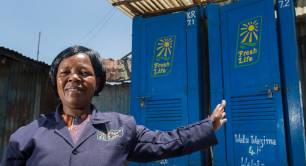
Then the story goes on to cover where much of that waste is coming from: toilets in low income communities which previously lacked proper access to safe sanitation.
Put it this way, our colleague Laura Joffre asked if she could read the article draft so she didn’t have to look at the pictures.
But, even if you find all of this a little nauseating, I’d urge you to read the article. As ever in our Earth Fixers collection of immersive features, produced in partnership with international law firm Hogan Lovells Cadwalader – HLC BaSE, it covers an innovative solution to some of the world’s most pressing climate-related challenges.
In this case, it is about The Sanergy Collaborative, a social enterprise operating primarily in Kenya (but expanding to other African countries). The organisation, which was a finalist in the 2021 Earthshot Prize, has built an innovative circular economy approach to create a positive impact in water, sanitation, and hygiene (WASH) and regenerative agriculture.

Make no mistake, these are issues which need to be urgently addressed. As the World Health Organisation said in a report published in October, the world remains “dangerously off track” to achieve Sustainable Development Goal 6 (the availability and sustainable management of water and sanitation for all). Inadequate WASH contributes to 1.4m deaths each year globally.
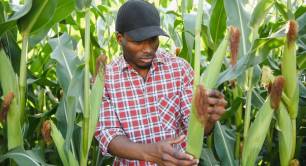
And, as I wrote about in a previous Earth Fixers feature about the Earth Rover Program, the world is facing a severe soil crisis, with scientists estimating more than 75% of Earth's land areas are already “degraded”: that means they are in such bad health that the soil’s ability to support plants, animals and ecosystems is limited. This figure is projected to rise to 90% by 2050. Regenerative agriculture is a solution to that problem.
Regen Organics describes its circular economy system of providing hygienic toilet facilities, safely managing the waste, then converting that waste into organic fertiliser and animal feed as turning “the waste problem of a growing city into the soil solution of smallholder farms”.
So, while I apologise for serving you up a story full of maggots and human waste, please do read the feature. While some of the details might turn your stomach, there is much to learn from the Sanergy Collaborative’s circular economy approach to impact.
This week's top stories:
From urban waste to healthy produce: how innovative tech fuels a circular economy in Africa
Creativity, tech and connection: how Intercultural Roots is bringing local communities together
Six social entrepreneurs chase share of £50k prize fund at IGNITE final
Top image: Black soldier fly larvae (courtesy of the Sanergy Collaborative)

| Ready to invest in independent, solutions-based journalism?
Our paying members get unrestricted access to all our content, while helping to sustain our journalism. Plus, we’re an independently owned social enterprise, so joining our mission means you’re investing in the social economy. |