

Lula wins in Brazil: What does it mean for the Amazon, its Indigenous communities, and impact investing?
After incumbent president of Brazil Luiz Inácio Lula da Silva won a shock election victory against climate-sceptic Flávio Bolsonaro, we asked Amazonian impact investor Marcelo Cwerner what the result means for restoring the rainforest.
If the Amazon rainforest is the lungs of the world, as the metaphor goes, then it surely let out a huge sigh of relief at the end of October when incumbent president of Brazil Luiz Inácio Lula da Silva won the country’s presidential elections.
Lula, leader of the left wing Workers' Party, won the election with 51.79% of the vote, securing 4.4m more votes than his right wing rival Flávio Bolsonaro. As president from 2023-2026 (he was also president from 2003 to 2011), Lula achieved a sharp reduction in the yearly deforestation rate of the Amazon rainforest (about 70%), established a Ministry of Indigenous Peoples and launched programmes like the Tropical Forest Forever Facility (TFFF), a global blended finance conservation initiative.
In comparison, climate-sceptic Bolsonaro’s policy platform was heavily influenced by his father, Jair Bolsonaro, who was president of Brazil from 2019-2023. Under Jair Bolsonaro’s presidency, deforestation of the Amazon rose sharply, as did illegal logging and goldmining on Indigenous lands. Bolsonaro junior planned to loosen environmental protections to promote farming, cattle ranching and mining in the Amazon.
Following the result, Flávio Bolsonaro fled Brazil for the US and Jair Bolsonaro is currently under house arrest after being found guilty of attempting a coup d'état. Meanwhile, this week Brazil published the world’s first global “roadmap” for phasing out fossil fuels.
Marcelo Cwerner is director of capital flows and Amazonian economies at the Amazon Investor Coalition and is the founder of Projeto Amana, a regenerative agriculture and community development initiative focused on the Brazilian Amazon. He previously worked in corporate finance for KPMG and in investment banks, and has 11 years of experience as an entrepreneur in Amazonia, where he founded three ecotourism businesses.
We asked Cwerner what it means for impact investing and Indigenous communities in the Amazon to have Lula as president, rather than Flávio Bolsonaro, and what he hopes the president will do next.

Pioneers Post: What has the response among impact investors been to Lula's win?

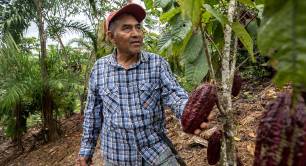
Marcelo Cwerner (pictured): Positive, in the majority of the impact investor circles. Social and environmental causes clearly have more support from Lula’s administration than they had during Jair Bolsonaro’s. The Workers’ Party policies have always been open to civil society input and contributions, and this is positive for impact businesses, communities and vulnerable people. Impact investors should be pleased that these agendas will be strengthened.
PP: And how have Indigenous communities reacted to the election result?
MC: Lula’s win was a big relief for Indigenous groups. They all remember the persecution, fear and violence they faced while Jair Bolsonaro was in power. Some Indigenous groups were attacked in the aftermath of the elections, which has been seen as revenge from the illegal loggers and miners, but the government acted quickly and moved national forces to protect the territories. This safeguarding is only possible because Lula is in office and will remain in office for an additional four years.
PP: In his most recent term as president (starting in 2023) what impact has Lula had on the Amazon and on impact investing in Brazil?
MC: Several environmental programmes were created and a national bioeconomy plan and agenda was put in place. During this period, the government reactivated PlanaVeg [Brazil's national policy and strategy to restore degraded ecosystems and expand native forest cover] and Conaveg [the National Commission for the Recovery of Native Vegetation, governed in partnership by the government and civil society organisations].
Lula’s government also reactivated Fundo Clima [Brazil’s primary public climate finance instrument] and Fundo Amazonia [a funding mechanism to reduce emissions from deforestation and forest degradation] and created other investment mechanisms like Eco Invest [which aims to mobilise domestic and foreign private investment into long-term sustainable and green projects].
Alongside that, Lula’s government renewed focus on conserving the Amazon, and re-strengthening environmental agencies and enforcement. All that led to a 70% drop in deforestation rates, which in 2025 reached the lowest rate since satellite monitoring began in 1988.
PP: What would a Bolsonaro win have meant for the protection and regeneration of the Amazon?
MC: A Bolsonaro win would have meant a significant drop in the efforts to protect and restore the Amazon. Not only Brazil's Nationally Determined Contributions (the country's updated climate targets under the Paris Agreement) and reforestation targets, but its very commitment to the Paris Agreement would be at risk.
Given Flávio Bolsonaro's rhetoric and plans, and what we saw in the Jair Bolsonaro administration, it is very likely that environmental protection agencies like ICMBio, Ibama and Funai would again be dismantled and deforestation would spike again. The safety and integrity of Indigenous people, environmentalists, journalists and other forest defenders would be in a very high peril.
PP: How would impact investing in Brazil have been affected by a Bolsonaro win?
MC: Brazil’s governmental agenda for impact investing would likely have suffered if Bolsonaro had won. Programmes like Enimpacto, Eco Invest and others would either not advance, not be prioritised or even be cancelled.
PP: What will Lula do instead?
MC: Lula will double down on the understanding that the Amazon rainforest must be preserved and its people must thrive. His win means the continuation and potential enhancement of the bioeconomy national agenda. Command and control actions against deforestation will continue and the commitment to the protection of Indigenous territories is even stronger now.
Investment mechanisms like TFFF and Fundo Amazonia are set now to receive more investment. We have already seen the announcement of a US$500m investment from the Dutch government to TFFF, just a day after the election.
PP: What would you like Lula to do differently, or more of, in his next term as president?
MC: I would like to see the bioeconomy agenda go beyond a strategy and a national plan to become a central development model for the Amazon and Brazil. Investments should focus on research and development, technology development and infrastructure, creating the conditions for new products and business to launch and take root.
In addition, regulation of the mandatory carbon markets and payment for environmental services policies must advance and define the rules of the game. Finally, I would like to see more demarcation of Indigenous lands and other protections being created, as this is scientifically proven as one of the best actions for forest conservation in the long term.
Top image: Brazilian president Luiz Inácio Lula da Silva (credit: Lula Oficial, Flickr)

| Ready to invest in independent, solutions-based journalism?
Our paying members get unrestricted access to all our content, while helping to sustain our journalism. Plus, we’re an independently owned social enterprise, so joining our mission means you’re investing in the social economy. |