
Collection: Ashoka System Changers
‘When public climate finance shrinks, community-led solutions pay the price’
OPINION: UK aid has helped coastal communities in the global south restore mangroves, reefs and rebuild fisheries, says Blue Ventures’ Naly Rakotoarivony. Its sudden withdrawal means these effective and efficient ways of building climate resilience will undo years of work. The short-term savings from these cuts may be modest, but the long-term environmental, humanitarian and geopolitical costs will be far greater.
Recent reports indicate that the UK will reduce climate aid to the global south by 14%, bringing annual support down to about £2bn. Marine protection programmes worth millions of pounds are already being scaled back. These cuts are not abstract budget decisions: they disrupt long-term adaptation efforts in frontline communities and weaken the social enterprises and impact investors working alongside them.
Across the impact sector, organisations are under pressure to deliver more with fewer resources. At the same time, access to public climate finance is becoming more complex and less predictable, constraining investment flows and disproportionately affecting lower income countries and community-led initiatives. As these emerging markets become more central to impact investing, the gap between where capital is most needed and where it is most readily deployed is growing ever wider.
What funding cuts mean on the ground
According to the Intergovernmental Panel on Climate Change, more than 3bn people live in high climate-risk regions, with coastal communities among the most exposed to climate change. Sea-level rise, warming oceans, stronger storms and coastal erosion combine to threaten homes, food security and livelihoods. In many areas, healthy marine ecosystems are the first line of defence, buffering communities from climate shocks while sustaining fisheries and local economies.
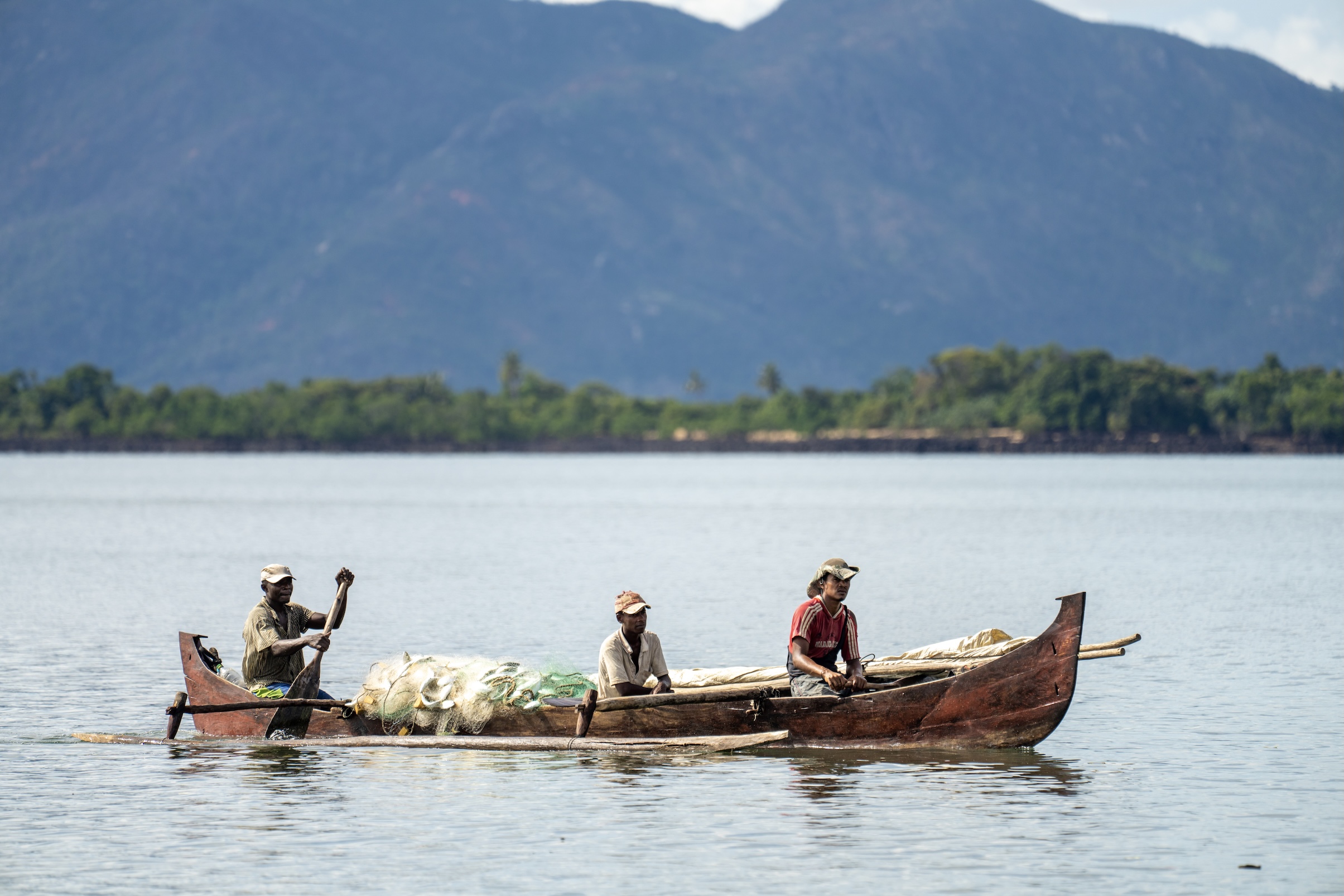
1.5m people in Madagascar depend on artisanal fishing for their livelihoods, food and income. Photo Leah Glass, courtesy Blue Ventures
In Madagascar, for example, small-scale fisheries operate along almost the entire coastline, with around 1.5m people depending directly on artisanal fishing for their livelihoods, daily nutrition and income. Long-term and strategic investment is vital to restore and protect the mangroves and coral reefs these livelihoods depend on.
Without continued support, years of progress risk being undone. Social enterprises and NGOs are pushed to either scale back support or shift focus to what’s fundable rather than what is needed
This isn’t an isolated case. Similar patterns play out across parts of West Africa, South East Asia, and wherever adaptation finance underpins long-term, locally led work. Without continued support, years of progress risk being undone. Social enterprises and NGOs embedded in these contexts are pushed to either scale back support or shift focus to what’s fundable rather than what is needed.
The fragility of community-led adaptation
Community-led adaptation is one of the most effective and cost-efficient ways to build climate resilience. It draws on local knowledge, strengthens leadership, and delivers solutions rooted in lived experience. But abrupt reductions in funding do not simply slow progress; they can undo years of locally led work.
Funding cuts undermine the foundations of community-led adaptation, which depends on trust, local leadership, and consistent stewardship. Adaptation finance is not a one-off intervention but a cumulative process. When funding is withdrawn, without a sustainability and support plan, governance structures weaken, local capacity erodes, and restored systems become vulnerable again.
For more than 20 years, we at marine conservation NGO Blue Ventures has worked in close partnership with small-scale fisheries and coastal communities whose livelihoods depend on healthy marine ecosystems. In Madagascar, this work has supported the growth of locally managed marine areas, from a single area in 2006 to more than 280 in 2025, alongside community stewardship of reefs, seagrass and mangroves. Support from UK aid programmes has contributed to restoring ecosystems and rebuilding fisheries that underpin food security and economic resilience. That progress is now at risk as sudden climate finance cuts threaten the long-term, flexible funding that enables these initiatives to function.
These outcomes reflect years of sustained investment and locally led action, demonstrating the importance of financing resilience at the community level. Their fragility underscores how progress could quickly be reversed, leaving communities more vulnerable to climate shocks and illustrating how a policy decision taken in the UK can have immediate and far-reaching consequences for small-scale fishers, coastal communities and the locally led adaptation models that support them.
Climate aid as infrastructure for social innovation
Public climate finance plays a role that private capital cannot fully replace. Because it is designed to deliver long-term social, economic and environmental value – not just short-term financial returns – it can take on risks that private investors often will not. This gives social innovators and community-led models the space to experiment, build long-term partnerships and make decisions locally, helping solutions emerge, evolve and ultimately attract private investment. Climate aid is not charity; it is a deliberate strategic investment for food security, economic stability and more resilient communities.
Public climate finance plays a role that private capital cannot fully replace...it can take on risks that private investors often will not. This gives social innovators and community-led models the space to experiment, build long-term partnerships and make decisions locally
That is why public climate finance matters on the frontlines. It enables local organisations to catalyse and sustain fisheries management, protect ecosystems and strengthen livelihoods through approaches such as locally managed marine areas. When funding is reduced, these systems become harder to maintain and progress can quickly stall.
The short-term fiscal savings from these cuts may be modest, but the long-term environmental, humanitarian and geopolitical costs will be far greater. When public climate finance is reduced, it is not only funding that disappears, but also the pipeline of locally led innovation it sustains. For funders, investors and policymakers, the priority should be clear: protect and strengthen this support so community-led solutions can continue to build resilience where it is needed most.
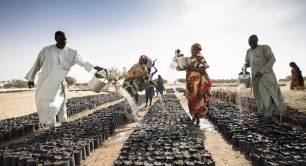
Naly Rakotoarivony (pictured top) is head of partnership network – Madagascar at Blue Ventures

| Ready to invest in independent, solutions-based journalism?
Our paying members get unrestricted access to all our content, while helping to sustain our journalism. Plus, we’re an independently owned social enterprise, so joining our mission means you’re investing in the social economy. |