

Advice from the exhibition floor: how to survive and thrive at an impact conference stand
Bring your sandwich, speak English, stay true to your ethics and other tips: impact entrepreneurs at ChangeNOW share advice on landing deals, partners and customers at a conference exhibition.
What is it like to spend a day running a stand at a conference or trade show, speaking to strangers about what your organisation does and answering awkward questions? It is a situation many social entrepreneurs, impact startups and nonprofits are likely to face as they look for opportunities to raise their profile, meet prospective clients or pitch their idea to investors.
To find out, we took a walk around the vast exhibition floor of the ChangeNOW conference in Paris and asked five entrepreneurs showcasing their work there for their insights and advice, as thousands of delegates browsed through the stands.
- Read more: New momentum, difficult questions and “greenshouting”: actions for change from ChangeNOW 2026
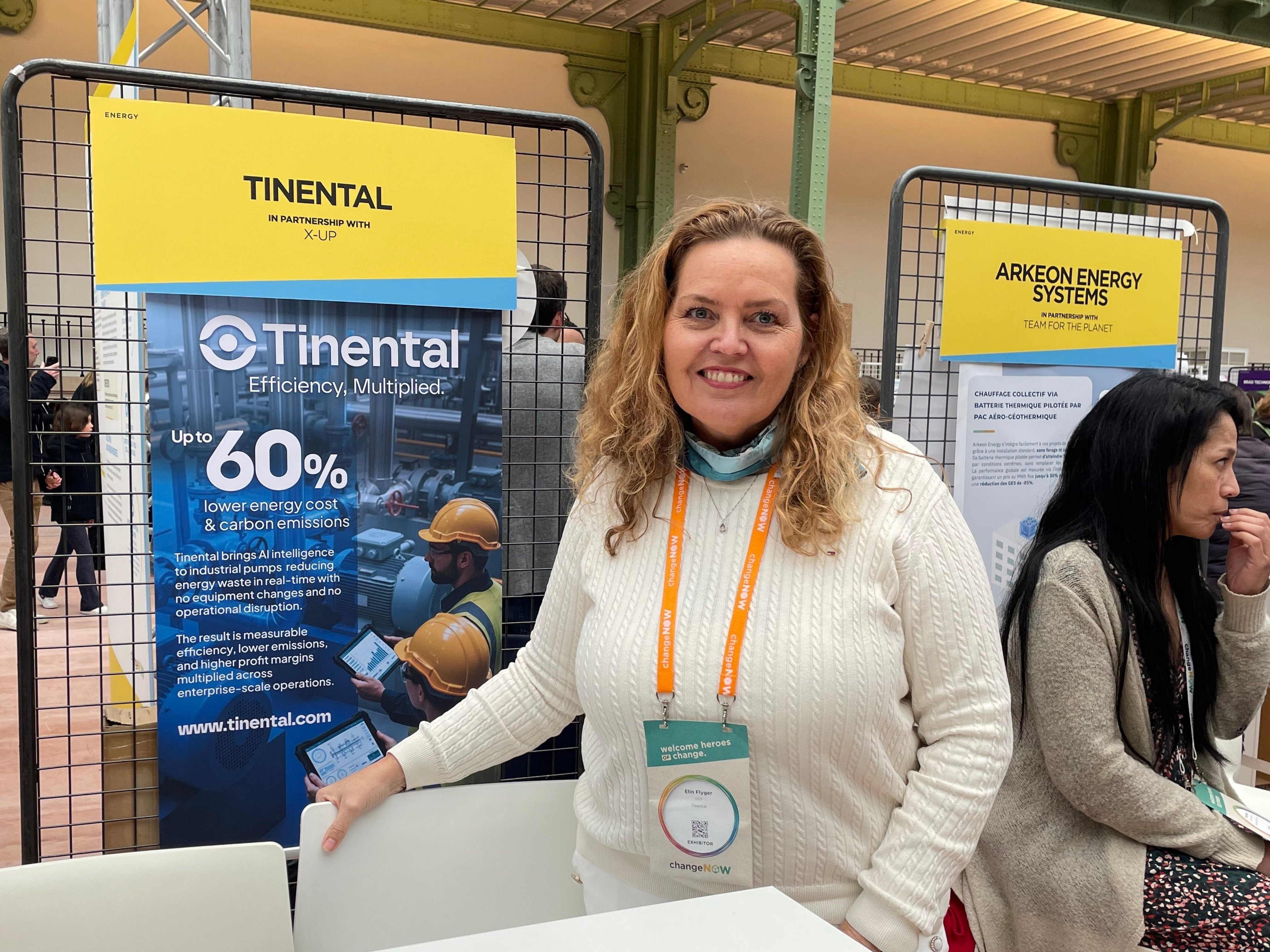
Elin Flyger, co-founder and CEO of Tinental: speak English – but not like a tourist
Q: Why are you here?
EF: We're at the scale-up phase, and when you are a startup, you don't have a huge network of salespeople. So when you go to these kinds of events, it's like a catalyst [to find buyers].
What many people don't understand is that these events are not like taking orders from people that want to buy. It is about creating a network. Then you go to two, then you go to four, then you go to eight, then you go to 20 events, and then, all of a sudden, people recognise you… people fundamentally want to buy from people that they know, it is part of human nature.
Q: What are the hardest questions you’re being asked?
EF: The hardest questions are always [from people] that want to prove that you're wrong. So instead of spending their time understanding the possibility of change, they want to teach you that it's not possible to change. And that's the thing that's hard, because you get a lot of people like that. The early adopters, the people who are actually thinking about change, are the minority.
The hardest questions are always from people that want to prove that you're wrong
Q: What do you find difficult?
EF: Logistics – when you're a startup, you're on a budget, so it's always difficult to manage logistics. For instance, today, I was not prepared that this room would not be heated, and when I arrived this morning, it was 5C, and I'm not dressed for that… It's all those small things that make life impossible, but it's all part of the work.
Q: What do you enjoy?
EF: What I enjoy is meeting a lot of new people. I like the challenge. Every country has a different way of approaching [things]. So I do events in Korea, the US, in France, Italy, all over the world, and I really enjoy [discovering] the different cultures. Try to understand, culture-wise, how people communicate with each other, and you will have so much more success… If you can, try to go international right away.
Q: What advice would you give other impact entrepreneurs exhibiting?
EF: Speak English. But don't speak it [like a tourist] in a restaurant. I'm from Denmark, and I live in Italy, but when I speak English I try to be fluent. It is fundamental, and a lot of people underestimate it. You cannot be a startup and not speak English. If you know English, you can go everywhere. So if you want to be a startup, if you want to do internationalisation, you have to speak – because people want to speak with the CEO, they want to speak with you, the founder. I don't care if you have somebody on your team that speaks English, you, as the CEO, have the responsibility to learn good English.
Italy-headquartered Tinental operates an AI-based device that improves energy efficiency for fluid-dynamic machinery – anything that moves air or liquid, like pumps. The plug-and-play device doesn’t require changing existing machinery, and can work across sectors, from industry to heating and cooling buildings. The company provides the device free of charge, and customers pay a percentage of the savings they achieve on energy bills.
Francis Huicq, business developer at Terres de Café: be a good marketer
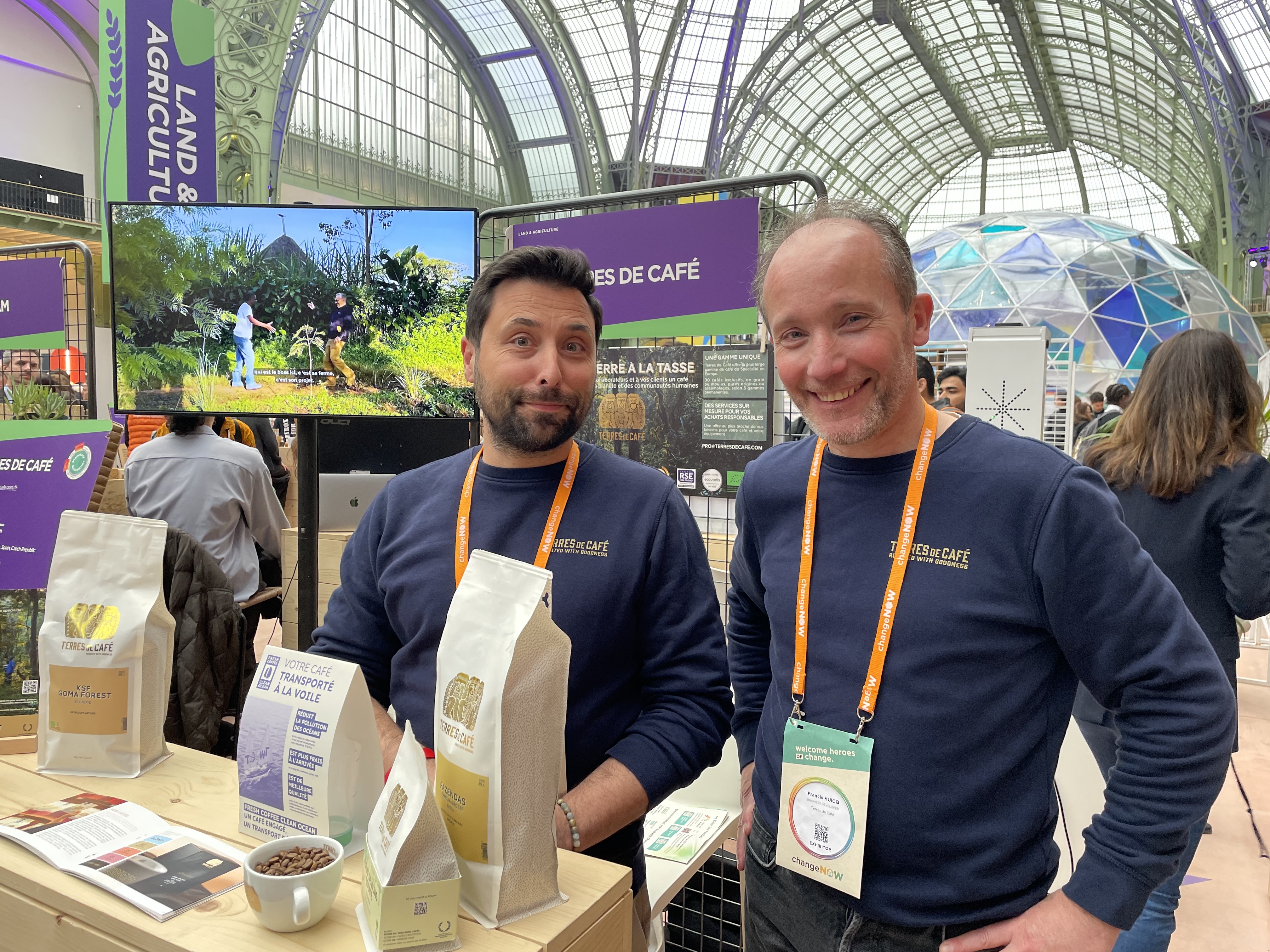
Francis Huicq, right, with Terres de Café France commercial director Tony Boulo
Q: Why are you here?
FH: We’re looking to raise our profile, and start conversations with potential clients, for example in the B2B field.
Q: What’s the hardest question you’re being asked?
FH: The question we hear most often is about price, because the vast majority of coffee consumers today never ask themselves the fundamental question: ‘What does my purchase actually support when I buy coffee at a coffee shop?’ What we find most challenging is helping the public understand the cost differential and how, through a simple purchase, they can have a positive impact somewhere in the world.
- Listen to our podcast: Urbania: The Colombian enterprise using great coffee to do good
Q: What do you find difficult?
FH: There are people you try to communicate with, but who just don’t understand because, as consumers, we’ve been conditioned to think within a certain framework. This framework doesn’t allow us to question things beyond it, and understand that business models that are sustainable, circular, transparent do exist. And that’s very difficult. I experienced this just now, someone kept asking the same question over and over and just couldn’t understand this. There’s very little you can do about that.
Q: What do you enjoy?
FH: The opportunity to connect with people from diverse backgrounds and different industries, all united by shared values.
You need to highlight the core pillars of your business in a way that resonates with people
Q: What advice would you give other impact entrepreneurs exhibiting?
FH: You must stay true to your company’s ethics and be a good marketer, because at an event like this, you only have a short time to grab attention, so you need to highlight the core pillars of your business in a way that resonates with people visiting your booth. This could be through figures – like your environmental impact or carbon footprint – or by showcasing what you can recycle, for example. This can spark interest, and help attract investors – for a young startup that's the fundamental challenge. But it’s also about getting your name out there, breaking the ice, and generating new contacts.
Terres de Café is an award-winning specialty coffee company that sources its beans directly from farmers who grow coffee sustainably through agroforestry or within primary forests, focusing on transparent, traceable and sustainable value chains. Founded in 2009, it now employs around 50 people in the Paris region.
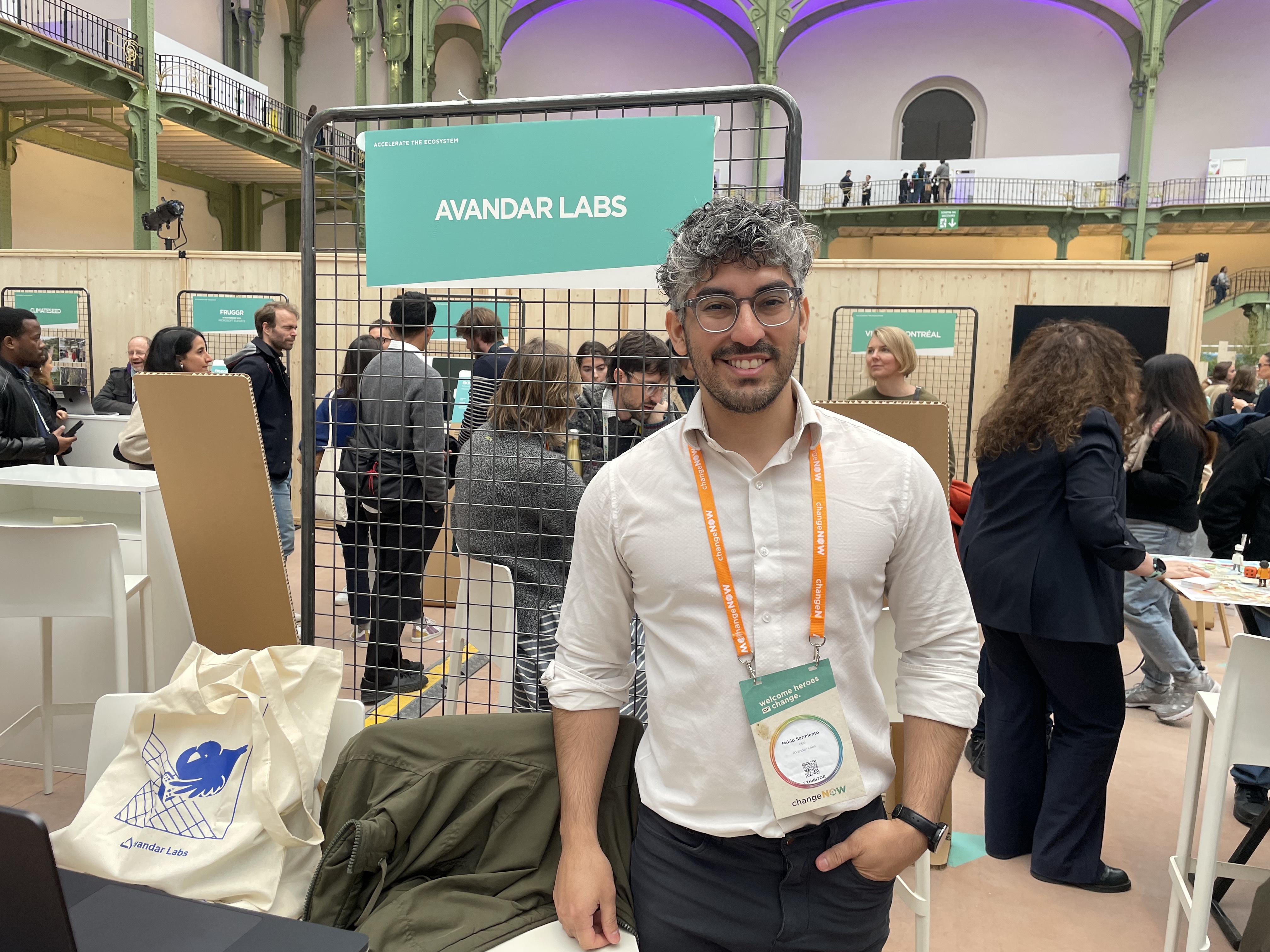
Pablo Sarmiento, CEO of Avandar Labs: know your energy levels
Q: Why are you here?
PS: Our main reason for coming here is to get the name out there for the company, to get users. Because we are a data management platform for resource-constrained teams, one of the hard things is that they are much harder to find… So you have to really go out there to these kinds of places to speak to people.
Q: What do you find difficult?
PS: Just how long you need to be at your booth. The booth can never be left unattended, which is not hard if you have a bigger team of five people or so, [but] when you have a small team, it's hard, the amount of hours you have to commit to just standing is tiring.
Q: What do you enjoy?
PS: All the booths and the exhibitions are fantastic. So everyone that comes and talks to us is incredibly interesting, then going out there and seeing what everyone's doing is great… Seeing how many nonprofits are in those spaces is fascinating, and also all of those being resource-constrained teams as well, they’re perfectly in line with what we're trying to do.
Q: You also took part in a pitching competition with investors this week, how was it?
PS: It’s nerve-wracking, because it’s a competition. My biggest struggle has been finding out how to communicate the value of my idea in a short amount of time. So having an event where you have to condense it to three minutes has been a good way to force myself to do that and that's helped a lot with the exhibition, where people are just passing by.
My biggest struggle has been finding out how to communicate the value of my idea in a short amount of time
Q: What advice would you give other impact entrepreneurs exhibiting?
PS: In my case, I really like presenting and putting on a show, but I'm not as good at the one-on-one, I get tired easily. So, know your energy levels and find team members that can complement that, so everybody has their own strengths to play during the week.
US-based Avandar Labs is a data management platform for nonprofit organisations or small for-profit social enterprises to analyse their data, explore it and visualise it, at a lower cost than alternatives provided by big tech companies and with better control of the data. The team has been working on it for about a year, and the startup officially launched at the ChangeNOW conference in March.
Josephine Graf, co-founder and co-CEO of Rrreefs AG: don’t get overwhelmed
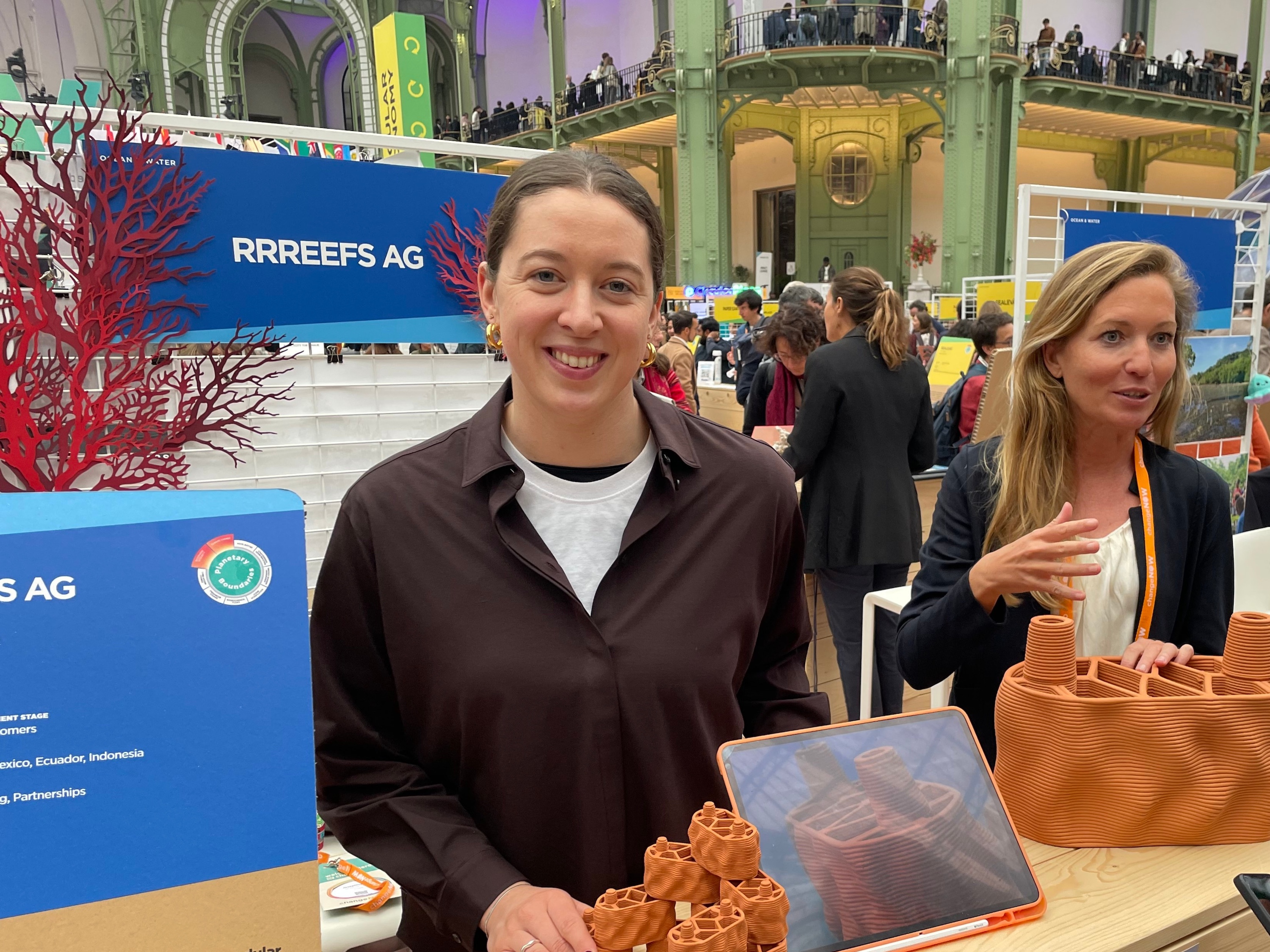
Q: Why are you here?
JG: It's our third time here, and we met one of our biggest partners, the Accor hotel group, at ChangeNow previously. [It’s really good] for us to have interactions, not only with lots of cool organisations, but also with companies here that are interested to work with us, as well as investors.
Q: What do you find difficult?
JG: Sometimes, being overwhelmed with all the things that are going on, because there are many cool talks and many investors you could meet, but it's such a big conference, I think that's sometimes a challenge for us.
Q: What do you enjoy?
JG: There are so many good interactions, because we are all on the same baseline. There's also really an atmosphere [of collaboration] with different organisations. There's this feeling that we're not competitors, but that we can together solve big problems.
Q: What advice would you give other impact entrepreneurs exhibiting?
JG: It's great for us to have a booth – I think just attending [a conference] is not for us. It’s also good to have something physical, like a prototype, that people can interact with.
Based in Zurich, Switzerland, and operating across the world, Rrreefs regenerates degraded coral reefs with modular clay reefs – three dimensional structures that mimic the complexity of natural reefs and can be organised in different shapes to create niches for marine biodiversity. Founded five years ago, the team of eight runs projects in Ecuador, the British Virgin Islands, the Philippines, the Maldives and Mexico. All projects are financed by companies as part of their ESG strategies, and the organisation had a turnover of CHF500,000 (€550,000) last year.
Karin Gerhardt, executive director of the the Indigenous Women Rangers Network: bring your sandwich and persevere
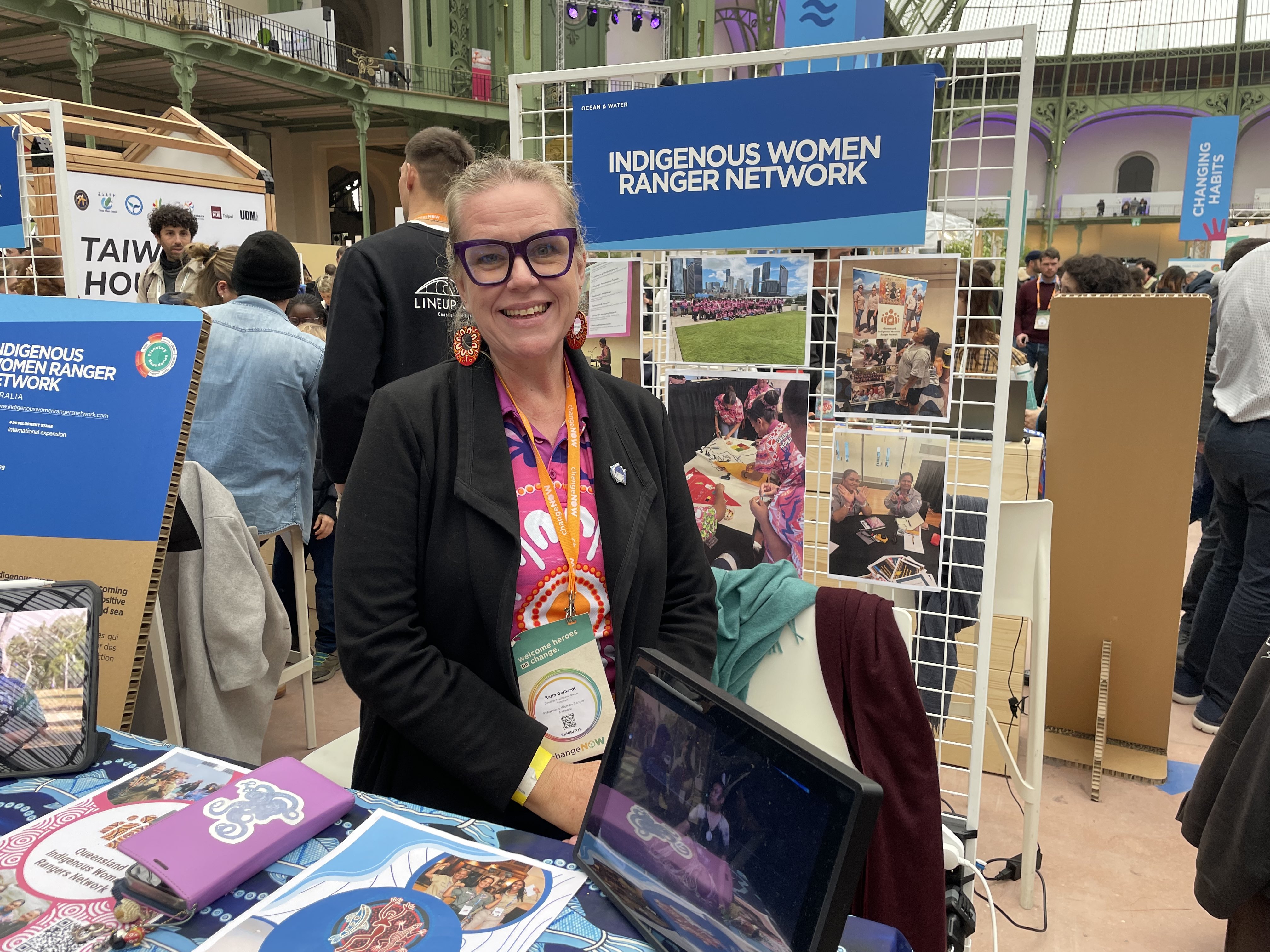
Q: Why are you here?
KG: There are two main reasons: one is the experience that we get from understanding what everyone else is doing, but we're also here for funding, and for partnerships – we can't do it all alone. What is the AI space doing? What are other partners doing? [For example], I just talked to someone who's developed a grant writer program – that's a feature that I need.
Q: What do you find difficult?
KG: It's hard coming into a new space because you're wondering if you're going to fit. Knowing who you are and knowing what you need before you come into these spaces is really critically important. You've got to have a bit of an idea, because you're testing the thinking all the time.
It's hard coming into a new space because you're wondering if you're going to fit
Q: What do you enjoy?
KG: The creativity and the experience of everybody around here. Everyone comes at it from a different lens, but finding a common value amongst everyone here is the bit I'm finding most enjoyable. We're all here to do better for the environment, for society, for women, for children. We are all working towards a better Earth, and that's what I'm really enjoying in this space.
Q: What advice would you give other impact entrepreneurs exhibiting?
KG: Bring a lot of energy, because the opportunity really is here. If you have a booth, or if you have to wander around, it doesn't matter, as long as you bring the energy and just persevere – there is so much to be done, and people are warming up as you go through the day. Bring your Berocca, bring your sandwich – it's hard going!
The Indigenous Women Rangers Network is an Australian NGO that supports Indigenous women to access training and employment opportunities in ranger roles, addressing the lack of female representation and cultural knowledge in environmental management. The organisation, which held its first forum in 2018, now numbers 350 members and plans to expand internationally, starting with the Pacific. It won the Earthshot Prize in the ‘Revive our Oceans’ category in 2022.
Top image: The exhibition space in the Grand Palais in Paris for ChangeNOW, where hundreds of organisations showcased their solutions this spring.

| Ready to invest in independent, solutions-based journalism?
Our paying members get unrestricted access to all our content, while helping to sustain our journalism. Plus, we’re an independently owned social enterprise, so joining our mission means you’re investing in the social economy. |