
Collection: How to lead with purpose


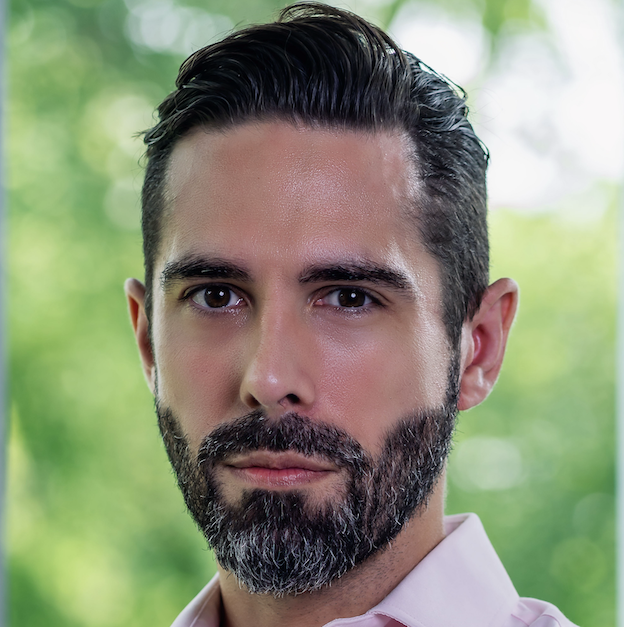 EXPERT INSIGHT: When a significant impact investment meets founders who have not previously been stress-tested at this scale, new threats appear, warns risk analysis and fraud specialist Rupert Evill. Traditional due diligence to check for skeletons in the closet won’t always predict what might occur going forward. Yet getting future-based data isn’t as difficult as you might think.
According to research by The Association of Certified Fraud Examiners, 85% of fraudsters “had no known history of fraud-related disciplinary action before the scheme occurred”. Fraud wrongdoing, in my experience, correlates strongly with broader governance, integrity, environmental, and social infractions.
In this context, it’s perhaps not a surprise that retrospective due diligence – checking for skeletons in closets – is not a risk management cure-all. I’m not suggesting we do away with sensible research to identify historical scandals, litigation, bankruptcy, disputes, and the rest. I’m wondering if, in investing, it might be the very injection of capital that creates the risk.
Why might sticking large sums of money into a founder team cause issues? Reddit threads provide a litany (of admittedly unproven) anecdotes, most of which make The Hangover movie seem tame. The Forbes 30 under 30 curse popularised this risk.
However, in the past seven years, I’ve seen only a couple of cases of obvious and intentional misrepresentation.
The more credible risks tend to be the unforeseen ones.
Years ago, I met a famous retired sportsperson from the States. He lives a reclusive life steeped in a healthy degree of paranoia. Why? Horrible threats against his wife and kids necessitate perpetual vigilance. As people become famously wealthy, their security posture changes. Yet, this lesson is seldom replicated when businesses transition into (apparent) wealth.
Once a promising startup or growth-stage company finally secures the backing they deserve to do the good things it promised, the predators appear
Most organisations don’t know they have a target on our back until it’s too late. Once a promising startup or growth-stage company finally secures the backing they deserve to do the good things it promised, the predators appear. These threats are compounded when the capital is used to do something they’ve never done before: explore a new market, hire aggressively, develop new products or service lines, vertically integrate, develop partnerships, and so on. We tend to be most vulnerable in unfamiliar territory.
To make the unknown more familiar, we might split risk into three sequential steps: context, controls and culture. Next, we need to project these three components into the future.
First, we must consider the future context. Once you enter Market A or launch Product Z, who might want a piece of that? Here, we start to find capricious regulators, dodgy public officials, unethical competitors and predatory criminals. On a recent project, where a healthcare distributor wanted investment to move into manufacturing generics for a drastically underserved population, we saw these dynamics. Importing the opioids and other compounds used in pain-relieving medicine, constructing a world-class factory, and expanding into new markets brought collisions with corrupt regulators, insurgents (after the opioid trade), supply chain interference (competitors), and more. All foreseeable and manageable if we get the next two steps right.
The controls that work in a tight-knit founder team don’t usually scale to delegated authorities, decentralisation, and a broader workforce who work to live (not live to work). So we must develop a workable (pragmatic, rightsized, time-bound) action plan. Ideally, any risk controls should be baked into the design of operationally efficient processes. For example, on a recent infrastructure rebuild project in a war-ravaged part of Ukraine, environmental and fraud prevention checks were easily woven into existing performance measurement software (rather than bolt-on compliance baggage).
Culture is perhaps a clumsy catch-all here. What I mean is human behaviour. I seldom meet a founder (or leadership team) who isn’t committed to their company. But sometimes that (and I say this as a founder myself) makes us myopic and dogmatic. Here, we (investors, founders, and anyone else in the chain) need to work together. It’s a delicate balance of collaboration and gentle confrontation. To do this effectively, we need the right sort of data.
I seldom meet a founder (or leadership team) who isn’t committed to their company. But sometimes that makes us myopic and dogmatic
For example, we might learn from Hungarian-American mathematician and statistician Abraham Wald. He contested plans to strengthen returning WWII American bombers in the places with most holes, and theorised that it would be better to strengthen the intact parts of the returning aircraft. The other bombers were evidently unable to sustain damage to those areas. Survivability increased.
In investing, this Waldian theory means we need to look at what’s not been considered or reported. Does a silent whistleblower or grievance hotline mean all is good? Generally not. Does clean procurement data (no anomalies, adjustments or overruns) mean we’re all good? Generally not. Does 100% completion data for mandatory annual training mean people have understood it? Generally not. Do reports with flawless and declining emission data mean we’ve saved the planet? Generally not. You get the idea.
Getting future-based data isn’t as difficult as you might think. But we need to do something that, as a species, we struggle with: learn from history and nature.
History: In 25 years of investigating, assessing risk, and gathering intelligence, patterns emerge. The technology and mechanics may change, impacting the opportunities for wrongdoing (AI is an unprecedented accelerant here). But pressure (goals, targets, financial distress, fear, etc) is constant. If you’re going to start managing future risk effectively – thereby safeguarding impact and returns – look at where pressure will aggregate as the system stretches, strains and expands.
Nature: Think of pressure like water passing through a terrain – we need to understand the interplay between natural flows (behaviour), the future terrain (context), and our impact on the landscape (controls). If we don’t, we risk damming the wrong waterways (misplaced controls), thereby destroying crops (impact). Get it right, and risk management becomes a seamless part of a regenerative and healing system.
Header photo Pixabay, published under a Creative Commons licence

| Ready to invest in independent, solutions-based journalism?
Our paying members get unrestricted access to all our content, while helping to sustain our journalism. Plus, we’re an independently owned social enterprise, so joining our mission means you’re investing in the social economy. |