


Would your social enterprise fail this two-number sustainability test?
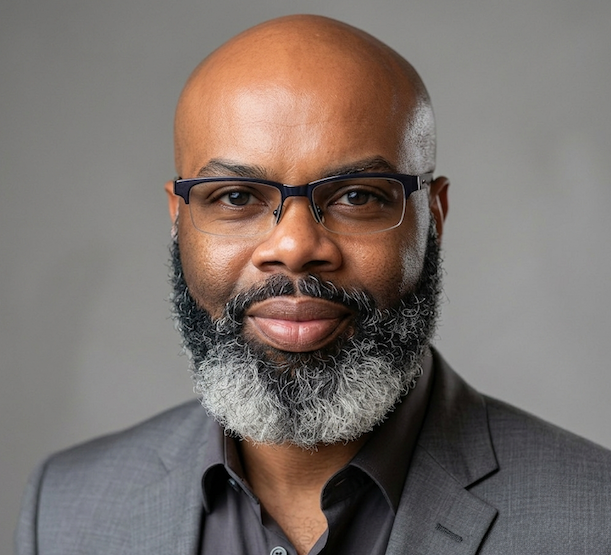 EXPERT INSIGHT: Although most social enterprises think they’re financially sustainable, most of them are not, argues consultant Thaddaeus Hubbard – and they’ll collapse if a grant is suddenly withdrawn. He’s devised a simple test to discover if their underlying numbers work out or not.
Every social enterprise I have worked with calls itself sustainable. Almost none can prove it.
‘Sustainable’ has become a word we use to describe hope, not condition. It signals intention. It gestures at diversified funding. It reassures boards and satisfies grant applications. But it rarely refers to anything you can measure on a Tuesday.
There is a simple test that changes that. It uses two numbers, and most enterprises fail it. The ones that pass have made specific structural choices that make them recognisable at a glance.
The test
Take one unit of the service you exist to deliver. For example, one client served; one meal distributed; one workforce placement made; one micro-loan issued.
Calculate two numbers about that unit.
- The first number is the true fully loaded cost of delivering that unit. That’s everything: direct programme costs; staff time; a fair share of leadership and administration; facilities; technology; insurance; compliance. Not the direct programme budget. The whole cost, allocated honestly.
- The second number is your reliable income per unit. Reliable income is money you can defend as recurring: earned revenue from fees, contracts, or market-rate services, plus grants committed for three years or longer with high renewal probability. Not one-off grants. Not campaign revenue. Not restricted funding for capacity or innovation. Reliable, recurring, per unit.
The sustainability condition is straightforward. Reliable income per unit must equal or exceed true fully loaded cost per unit. If it does, you can survive a bad grant year. If it does not, you cannot.
Most enterprises have never done this calculation. That explains the sector’s condition better than any narrative about donor fatigue or funder priorities.
Why ‘diversified funding’ is not the same as sustainability
Diversification is a hedge. It reduces the chance that any single funder walking away will kill you. That is worth doing, but it is not sustainability.
Sustainability is a structural claim. It asserts that the organisation’s underlying economics work. Diversified funding disguises whether they do. An enterprise can hold contributions from ten funders and still not cover its true cost. Losing one funder simply reveals faster what was already true.
The two-number test cuts through this. It ignores who is paying. It asks only whether the money coming in reliably matches the cost of the work.
What passing the test looks like
Consider a workforce development enterprise. (This is a composite drawn from real diagnostic engagements.) Annual budget of $3m, and roughly 400 clients served each year.
Leadership originally reported cost per client as $1,500. Once the true fully loaded cost was calculated, the number was $2,150. The reliable income per client, mostly from employer contracts and a handful of long-term grants, was $1,900.
The gap was $250 per client. Annually, that would be a $100,000 shortfall.
That gap could be closed. It was closed over 18 months through three moves: an expanded employer contract line raised reliable income per client to $2,200, operational changes reduced cost per client by $200 to $1,950, and re-priced grant proposals reflected true cost rather than understated programme budgets.
The enterprise passed the test. Reliable income per unit now exceeds true fully loaded cost per unit. If a grant is not renewed next year, the organisation will still operate. That is sustainability. It’s not an aspiration, it’s a condition.
Before the diagnostic, leadership described the organisation as sustainable. It was not. It survived on grant velocity. It has now stopped doing that.
What separates enterprises that pass
Three patterns show up consistently in enterprises that pass the test.
First, they know their unit cost, fully loaded. Not the programme cost. The full cost, allocated. They can produce it in five minutes. Most enterprises cannot produce it in a week.
Second, they treat earned income as a primary revenue engine, not a distraction from mission. They have designed at least one offering that generates surplus at market rates, and they use that surplus intentionally to subsidise access for clients who cannot pay. This is the earned-income-first posture. It is not the norm.
Successful social enterprises use grants for capacity, innovation, and one-off investments, not perpetual operating cover
Third, they use grants for what grants are actually good at: capacity, innovation, and one-off investments. Not perpetual operating cover. When leaders stop trying to make grants do a job they cannot reliably do, the reliable income calculation gets honest fast.
What you can do this quarter
If you lead a social enterprise, run the test. Take one unit of your core service. Calculate its true fully loaded cost. Calculate your reliable income per unit. Look at the gap.
If reliable income is less than cost, you are grant-dependent. You may have diversified funding, strong impact stories, and a good annual report. You are still grant-dependent. That is a condition, not an accusation.
Then decide what to do about it. The moves are limited. Raise reliable income (which usually means designing an earned-income offering). Reduce cost per unit (which usually means addressing operational leverage). Or contract the number of units to what your economics can actually support. Most enterprises do a combination of the first two.
None of this is theoretical. The test either works for your enterprise or it does not. The answer is on a spreadsheet. The choice about what to do with it is on you.
Sustainability is a business-model problem, not a funding problem. Every claim of sustainability is a claim about the model. The two-number test lets you check whether the claim holds.
Most enterprises will not run it. The ones that do will spend the next 18 months building a different kind of organisation.
Thaddaeus Hubbard is the founder of BSEG Advisory, LLC and author of Bridging the SE Gap: Master earned income, end grant dependence, and achieve sustainable social impact for nonprofits (2026)

| Ready to invest in independent, solutions-based journalism?
Our paying members get unrestricted access to all our content, while helping to sustain our journalism. Plus, we’re an independently owned social enterprise, so joining our mission means you’re investing in the social economy. |