

The Editor's Post: HOT solutions to extreme heat

As Europe is facing an unprecedented heatwave caused by climate change, it has much to learn from the global south, with many examples of people-centred, nature-driven solutions to climate adaptation, as we've reported in our Earth Fixers series over the years.
With a red heat health alert in place across the city on Wednesday, London School of Economics (LSE) made a difficult decision: to cancel a public event it was due to host.
The bitter irony is the event in question was a panel discussion on ‘Extreme Heat: Improving governance and strengthening action around the world’, scheduled as part of London Climate Action Week.
On Tuesday temperatures in Pissos, south-west France, reached a record 44.3C, with the country’s national average also hitting a new day-night average record of 30C on Wednesday. On Thursday, 101m Europeans experienced temperatures above 35C and tragically there have been heat-related deaths across the continent.
Europe’s cities are just not built to withstand these temperatures. LSE’s decision to cancel its event was presumably partly due to many rail services recommending against travelling because of heat-related disruptions. Doctors in England have described MRI scanners, IT systems and cooling units in hospitals failing.
In France, 68,000 households lost power on Wednesday while three of the country’s nuclear reactors have been shut down to avoid discharging too much hot water into rivers.
In case it needed to be emphasised, analysis by scientists from the World Weather Attribution consortium has shown this is the worst heatwave Europe has ever faced and is only possible due to the climate crisis driven by fossil fuel burning.
Of course, in countries in the global south, which have contributed least to the man-made climate crisis but are facing its worst effects, communities are battling through even harsher heat stress.
In May, US charity People’s Courage International published research which found increasing temperatures are turning cities across south and south-east Asia into places where workers can no longer recover from the heat from one day to the next.
The report found that for delivery riders, construction workers and street vendors, who live in cramped conditions with little ventilation, sleep is increasingly difficult. Not being able to rest and cool down is worsening heat-related illnesses and threatening the livelihoods of already economically vulnerable people.
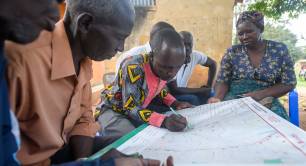
How vulnerable and underserved communities can build resilience to heatwaves was a topic which came up in the article I wrote about Humanitarian OpenStreetMap Team (HOT), a non-profit which creates and supports the use of open-source maps for humanitarian aid and community development.

Rebecca Firth, executive director of HOT, described to me how the organisation is supporting communities to gather “micro data” on which parts of towns are adequately covered by shade, and where inexpensive interventions can be deployed.
“That data is the difference between a resilient life and a not-resilient life. Planting a tree is not an expensive intervention. Painting a roof is not an expensive intervention,” she said.
The article on HOT was part of our Earth Fixers series, produced in partnership with Hogan Lovells law firm, which covers how entrepreneurial minds are helping to restore the planet.
Recent Earth Fixers features have covered the Earth Rover Program’s revolutionary approach to soil health testing based on seismology, the finance innovators racing to save our ecosystems, fashion pioneers working with biomaterials, and more.
So if the heatwave has left you searching for sources of hope we can mitigate the worst effects of the climate crisis, delve into our Earth Fixers collection for inspiring stories about people-centred climate and biodiversity solutions.
This week's top stories:
‘Proof of concept’: Pathway Fund incubator graduates secure investment from British Business Bank
OPINION: 'Impact due diligence is the blind spot in impact investing'
Social enterprise and impact investing events in 2026 and beyond
Top image: Humanitarian OpenStreetMap Team worked with the Malawi Red Cross to provide maps to support disaster preparedness in Chikwawa village, Malawi. Credit: Humanitarian OpenStreetMap Team.

| Ready to invest in independent, solutions-based journalism?
Our paying members get unrestricted access to all our content, while helping to sustain our journalism. Plus, we’re an independently owned social enterprise, so joining our mission means you’re investing in the social economy. |