


The case for impact-first investing, or why having to pay for impact isn’t a myth after all
Impact Finance Bulletin: The wisdom used to be that impact investors didn’t need to sacrifice returns to make a difference – and saying the opposite would have got you into trouble. But in the face of a changing world, it is becoming increasingly obvious that a tradeoff is needed.
A few years ago, I would, every so often, hear someone important say “we must bust the myth that you cannot have impact and market-rate returns”, with passion and conviction. This myth was preventing capital from flowing towards impact, the argument went; impact investing was a win-win solution, and people who said impact had to cost money were just stuck in simplistic, binary frameworks of philanthropy versus extraction and just didn’t realise what financial innovation was capable of.
Some of you might even remember Sir Ronald Cohen saying in 2018: “Impact investment does not have to involve delivering below-market returns… We can make more profits because of impact. We can attract more talent because of impact. We can grow funds because of impact.”
But the past few months have seen a significant shift in this conversation. As cheap money from state-backed sources and international aid is drying out, and a changing world is increasing both the need for what social enterprises deliver and the challenges they face, yearly volumes of capital committed by impact investors are dropping (-30% year on year in 2024, according to the GIIN), and they’re becoming more risk-averse.
There’s US$1.57tn of impact investments quantified worldwide, but social entrepreneurs feel that little of this seems to be reaching them
This reveals a reality that social entrepreneurs have actually been facing on the ground for years: there’s US$1.57tn of impact investments quantified worldwide, but they feel that little of this seems to be reaching them. Growing evidence shows that what works for them is an impact-first approach, where investors are accepting to forego some financial returns to correct market failures and pay for impact where regular investors won’t.
In the US, the Miller Center for Global Impact has just published a much-awaited piece of research that quantifies the “tradeoff” between impact and financial return for the first time, at precisely $0.13 per dollar deployed. The study of eight impact-first funds makes clear this cost doesn’t reflect fund underperformance, but is simply the price to pay for impact – something that would have been considered treason by the movement just a few years ago.
- Sign up to our free newsletter to receive the full Impact Finance Bulletin in your inbox each month
Voices have become louder and bolder calling for an impact-first approach – and they’re gaining traction. This month, Caroline Bressan, CEO of Open Road, argues that impact investing might be growing in name, but it’s shrinking in conviction. It is time to put impact first, she says – and explains what that means for capital allocators, fund managers and entrepreneurs. A sign that this resonates with our audience is that Caroline’s piece is the most-read article on Pioneers Post this month – I urge you to explore it (we’ve lifted the paywall for now).
Don’t get me wrong, what Ronnie Cohen was saying in 2018 does hold truth: you can have a lot of impact and still get market-rate returns on your investments. But it only works in a very narrow range of sectors – renewable energy, for example. And it is now accepted that finance-first impact investing is not enough.
I attended the Impact Days conference this month, organised by Impact Europe in Brussels. It had a strong focus on mobilising the “whole spectrum of capital”, from commercial to philanthropic, for impact. This is not a new approach for Impact Europe. But what I have found this time, is that while in previous years, mobilising commercial capital appeared the most important challenge – necessary to achieve scale – now it’s almost become the easy bit. Finding investors happy to pay for impact is hard; now it’s acknowledged that it is essential. We’ll keep building the conversation around this topic in our coverage – feel free to get in touch if you want to share your thoughts.
This month's top stories
Opinion: ‘Impact due diligence is the blind spot in impact investing’
Chart of the month
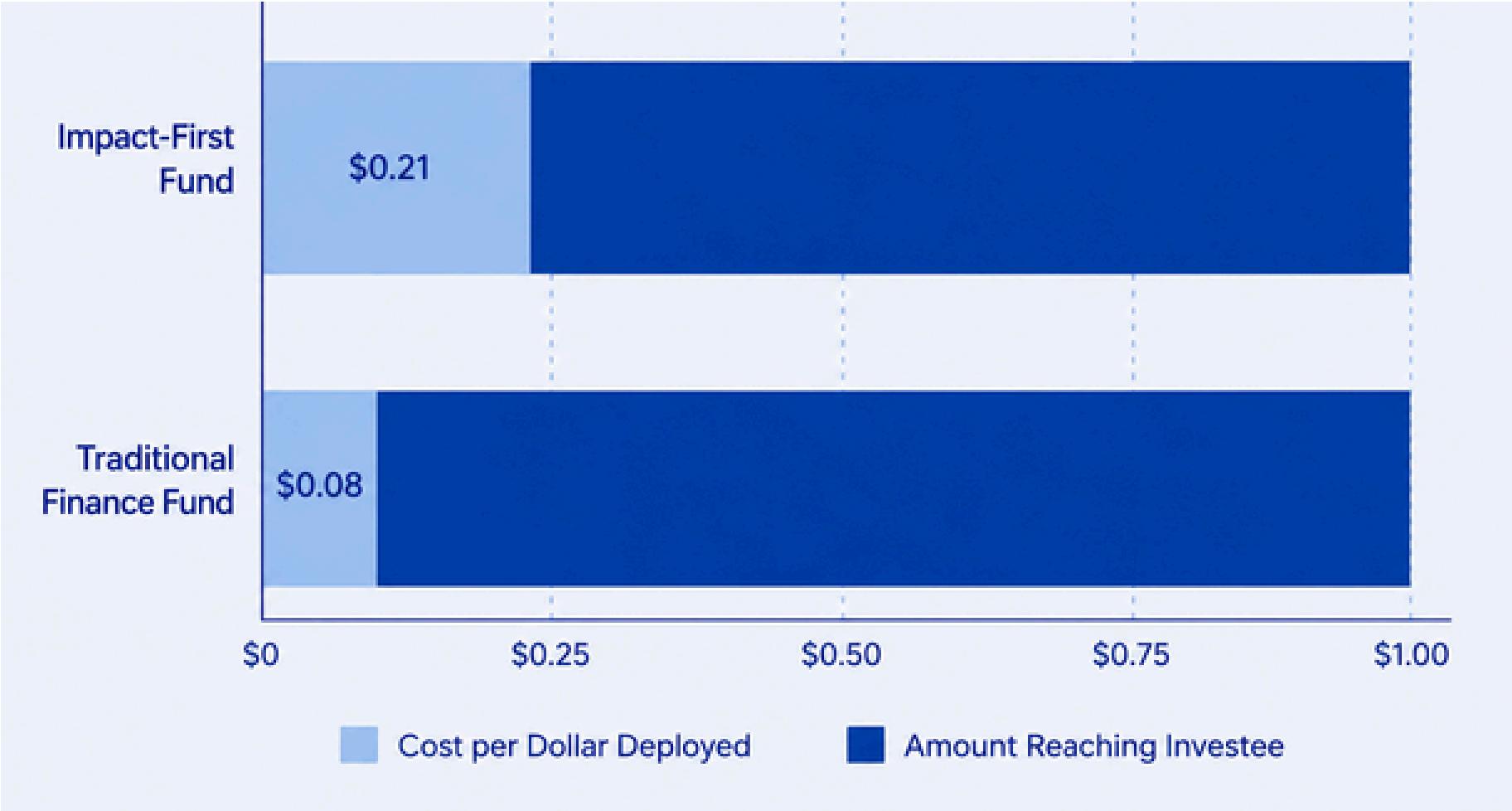
The cost of an impact-first investing approach stands at an estimated $0.13 per dollar deployed – and it is worth paying for, according to a new study of eight impact-first funds, benchmarked against a sample of traditional funds, comparable in size and type.
Source: The True Cost Of Impact-First Investing, Miller Center for Global Impact, 2026
On our radar
Come and meet the Pioneers Post team at the Latimpacto Impact Minds 2026 conference in Manaus, Brazil from 8 to 11 September! We are officially media partners and editors Anna Patton and Julie Pybus will be hosting a workshop focusing on storytelling for impact investors during the event. The theme of Impact Minds 2026 is ‘Connecting Us’, and the agenda will emphasise themes including the bioeconomy, biodiversity, climate, territorial development, education and health. Find out more here, and note early-bird booking ends today.
(Have some off-the-record leads or tips you'd like to share? Let's have a chat.)
Top image: Freepik

| Ready to invest in independent, solutions-based journalism?
Our paying members get unrestricted access to all our content, while helping to sustain our journalism. Plus, we’re an independently owned social enterprise, so joining our mission means you’re investing in the social economy. |