

Impact Finance Bulletin: early takeaways from the impact conference season
Impact conferences are an opportunity to discover perspectives from around the world. This month, Pioneers Post was in India and Brazil to bring you the latest on the conversations that matter for social entrepreneurs and impact investors in Asia and South America.
The impact conference season is in full flight, which is an opportunity for us at Pioneers Post to bring you perspectives from all around the world. At the end of August, our correspondent Kenan Machado was in New Delhi to attend AVPN’s annual conference – alongside 2,400 delegates. The Asian network of impact investors was holding its flagship event on Indian soil for the first time, and there was much to discuss – from how to mobilise Asia’s own wealth for impact to whether philanthropy can replace aid funding, and even debates on climate finance facing a reality check as heavy rainfall and flooding hit the Indian capital on the first day of the conference. If you appreciate honesty and straight-talking, make sure to read Kenan’s interview with AVPN’s CEO Naina Subberwal Batra, who doesn’t hold back on Asia’s poor record on gender investing, commitments “without any backbone” and her concerns her own country doesn’t listen to its neighbours.
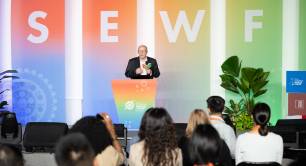
A week later, our editors Julie Pybus and Anna Patton were in the Brazilian city of Manaus for Impact Minds, the annual conference of Latimpacto, the impact network for Latin America. Don’t miss their interview with the organisation’s CEO Carolina Suárez Visbal and Julie’s account of her trip deep in the Amazon forest to meet a local impact entrepreneur. They also spent some time asking conference delegates about their experience – read their testimonies here.
Underinvested democracy
One of the issues discussed in Manaus was the lack of impact investing flowing towards protecting democracy. The evidence is there: a 2025 report from Phenix Capital Group shows that, out of a database of 2,900 impact funds, only 40 target SDG16, which covers peace, justice and strong institutions. And a Dealroom analysis of global venture capital investments found that SDG16 attracted just US$2bn of VC funding between 2010 and 2025, one of the most underfunded goals (compared with US$234bn flowing towards climate action for example).
A solid democracy is a prerequisite to deliver any type of social impact, explained Gabriel de Carvalho Morais, from Brazilian political education non-profit Renova BR, during the Latimpacto conference. So why are impact investors allocating so little of their capital to it?
Carvalho Morais suggests one sticking point is that – despite the fact that his organisation is ‘supra-partisan’, working across parties – many investors are concerned about financing an endeavour that might look like it’s got a political agenda, which has reputational risks.
One could also argue that investment isn’t always the right type of finance for some organisations (as a useful study from New Philanthropy Capital and Social Investment Business reminded us this summer), and it might be that the projects working to support a healthy democracy tend to better suit traditional grants. The Dealroom report also suggests that SDG16 is by nature more reliant on policy and public funding, something that doesn’t “fit” the VC investment model.
But there’s scope for innovation. This debate made us think of an article we published last year, based on a discussion organised by impact investing firm FASE on whether impact investors could step up and invest in mission-driven enterprises dedicated to supporting a healthy democracy. The piece reviewed three different examples of how that’s already being done – an impact fund dedicated to supporting independent media, a social enterprise fighting hate speech and a project supporting business to have a positive impact on democracy through their activities and internal workings.
Backing such ideas however requires daring to think outside the box, something impact investors are often criticised for not doing enough. And it’s fair to say that when attending international impact investing conferences myself, I have at times found that they have a bit of a tendency to turn into echo chambers. Leaders like Naina Subberwal Batra, who are not afraid of being provocative to shake things up, are ever more valuable.
This month's top stories
Asia's problem isn't money, it’s the lack of coordination, says AVPN's Naina Subberwal Batra
On our radar
Since conference season is far from over, here are three impact investing events for your calendar:
- The first edition of the Arab Impact Summit will kick off in Amman, Jordan, next week, co-organised by Alfanar and Anara Impact Capital to bring together impact investors and social entrepreneurs from across the region to shape what a sovereign, self-determined Arab region can look like. It is part-funded by the EU and partners include the Arab Foundations Forum, Build Palestine and Impact Europe.
- On 13 October in London, NPC Ignites, organised by New Philanthropy Capital, will bring together charities, foundations, social enterprises and purpose-driven organisations to help them navigate what’s next for the impact economy and maximise their impact.
- At the end of the month (27-29), all eyes will be on the GIIN’s Impact Forum in Amsterdam – which will be co-founder Amit Bouri’s last edition as CEO before he steps down.
Something we’ll be keeping a close eye on this month is the UK government’s budget – the first of Andy Burnham’s premiership. We know the prime minister is a strong ally of the social economy sector, but how that will translate in terms of money allocated to the sector is another story.
(Have some off-the-record leads or tips you'd like to share? Let's have a chat.)
Top image: Latimpacto CEO Carolina Suárez Visbal (third from left) surrounded by delegates on stage at the Impact Minds conference 2026 this month.

| Ready to invest in independent, solutions-based journalism?
Our paying members get unrestricted access to all our content, while helping to sustain our journalism. Plus, we’re an independently owned social enterprise, so joining our mission means you’re investing in the social economy. |