

The Impact World this Week: 9 October 2026
Your quick guide to the most interesting news snippets about social enterprise, impact investment and mission-driven business around the world from the Pioneers Post team. This week: Belu celebrates £6.5m of donations to WaterAid; Nearly 120,000 ‘for-purpose’ organisations in New Zealand; Funding CDFIs unlocks affordable lending, investment and financial inclusion, confirms analysis; and more...
UK: Drinking water social enterprise Belu has donated £6.5m to WaterAid over 15 years
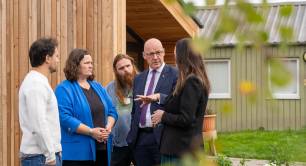
Belu, a social enterprise that provides hotels, restaurants and catering providers with natural British mineral water, filtration systems and refillable bottles, celebrated the 15th anniversary of its partnership with WaterAid at an event in Tower Bridge, London, last week. Winner of the 2026 SE100 Impact Storyteller award, Belu donates 100% of its net profits to WaterAid, a charity which provides systems that deliver clean water, decent toilets and good hygiene to people across the world. Over the course of the partnership, Belu has generated over £6.5m for WaterAid’s work, reaching more than 435,000 people. The social enterprise expects a revenue of £12m this financial year, a year-on-year increase of 20% and its most successful to date.
New Zealand: Nearly 120,000 ‘for-purpose’ organisations contributed NZ$19bn to GDP during 2025/26
An estimated 119,400 ‘for-purpose’ organisations in New Zealand contributed NZ$19.1bn (US$10.7bn) to the country’s GDP during the year ending March 2026. That figure equates to 4.2% of New Zealand’s GDP, and rises to NZ$25.8bn (5.7% of GDP) when the value of volunteer labour is included. The figures come from a report, titled The Economic Value of the Sector, published by wealth management and investment advisory firm JBWere and the University of Waikato. The report uses a deliberately broad “activity-based” definition of for-purpose organisations, which includes social enterprises, charities, B Corps, tertiary institutions and “other purpose-led entities where activity is oriented toward social, cultural, environmental, or collective benefit rather than private profit”.
UK: New network will bring together corporate philanthropy, CSR, sustainability and impact practitioners to explore potential of social impact investing
The Corporate Social Impact Investing Network, a new organisation where corporate leaders and practitioners can learn, collaborate and explore how social impact investment can support social purpose organisations, has been launched to encourage corporates to invest in social enterprise. A two-year pilot of the network, which started in September, has been funded by Access – The Foundation for Social Investment, Macquarie Group Foundation and Collective Futures, and will be hosted by Funders Together. The network is open to corporate representatives with an existing social impact investment programme or an interest in developing one. Participation is free during the two-year pilot, with the network exploring a sustainable membership model for the future.
UK: Funding CDFIs unlocks affordable lending, investment and financial inclusion, confirms new analysis
Community lenders turned £600,000 into £7m of affordable loans, saving 8,300 people an average of £1,200 in interest compared with high-cost alternatives through a community development finance institution (CDFI) pilot programme. The pilot involved a £600,000 grant from City Bridge Foundation to three CDFIs – Fair Finance, Fair for You and Salad Money – to help them mobilise further capital towards affordable loans. An independent impact analysis of the pilot carried out by WPI Economics and published on Wednesday, found that the programme delivered strong value for money for their funders, with up to £18 mobilised for every £1 of grant funding. Beyond saving money by borrowing from CDFIs compared with higher-cost options, customers reported improvements in their mental and physical health, ability to manage debt, productivity and more. Despite the perceived high-risk nature of lending to some of these groups, the loans were found to have low arrears, defaults and write-off rates.
Global: Make impact an ordinary part of economic decision-making, says World Economic Forum
Only 15% of Sustainable Development Goal targets with sufficient data to measure are on track, despite companies increasingly disclosing their social impacts, which shows that governments, companies and investors need to help create markets where verified social outcomes are demanded, priced and funded, rather than only requiring corporate transparency. That is the finding of a new report, The Impact Economy: Turning Disclosure into Demand, published yesterday by the World Economic Forum and the Schwab Foundation for Social Entrepreneurship, developed in collaboration with SK Group’s Center for Social Value Enhancement Studies (CSES) and Social Finance International. The report calls on governments to create policy certainty, philanthropy to absorb early risk and corporations to embed impact into core functions.
Scotland: New fund for smaller businesses in West of Scotland aims to break down barriers to finance
A £3.5m fund for smaller businesses across West of Scotland was launched by Social Investment Scotland on Tuesday. Loans of between £25,001 and £125,000 are available to eligible smaller businesses in seven local authority areas. It is the first time Social Investment Scotland has been able to provide funds to limited companies, sole traders or partnerships. The aim of the fund is to provide finance to smaller businesses overlooked or declined by mainstream lenders. Social Investment Scotland plans to widen access to the fund across the rest of Scotland once the pilot phase concludes and its approach has been tested.
- Read more: Scotland’s forthcoming social economy strategy must be backed by funds and ‘bold new ideas’
Movers and Shakers
- Jamie Broderick has been named as the chair of Philanthropy Impact. Broderick is deputy chair of the Impact Investing Institute. He will succeed Rennie Hoare, who has served as chair of Philanthropy Impact for the past six years.
- Moira Sinclair has been appointed as incoming chair of trustees of the Joseph Rowntree Foundation. Sinclair is currently chair of Clore Leadership, Factory International in Manchester and the Investment Committee of the Arts Impact Fund.
Top image: Over the course of a 15 year partnership, social enterprise Belu has generated over £6.5m for WaterAid’s work to provide clean water, decent toilets and good hygiene to people across the world (credit: Belu)

| Ready to invest in independent, solutions-based journalism?
Our paying members get unrestricted access to all our content, while helping to sustain our journalism. Plus, we’re an independently owned social enterprise, so joining our mission means you’re investing in the social economy. |