
Collection: NatWest WISE100: Leading Women


INTERVIEW: The £300,000 pilot will invest exclusively in refugee-owned or led businesses, aiming to create a proof of concept for a £10m follow-on fund as refugee entrepreneurs are too often cut off from VC investment opportunities. We speak to TERN co-founder Charlie Fraser to find out more.
The Entrepreneurial Refugee Network (TERN) on Wednesday launched the Refugee Venture Fund, a new £300,000 pilot venture capital fund dedicated to refugee entrepreneurs, the first of its kind in the UK.
TERN is a social enterprise that helps refugees to become entrepreneurs and launch businesses, through training, mentoring, expert advice and business opportunities.
Planning to invest between £50,000 and £100,000 in three to five refugee-owned or led businesses, the pilot fund aims to build a track record and demonstrate the potential of refugee-first investments in order to build a larger £10m vehicle.
The fund will target startups with high-growth potential; it is not focused on a specific sector, but it will have a particular interest in areas like software, AI and climate tech. It aims to show VC investors refugee businesses can be as commercially attractive as other startups with “competitive financial returns”, targeting “credible exit routes” after five to 10 years. To be eligible, businesses must be majority-owned or led by refugees, and founders must be UK-based and have legal refugee status.
The Refugee Venture Fund is a response to a lack of access to investment for refugee founders, which are typically overlooked by UK investors because they have a limited track record in the country, smaller networks and are unfamiliar with the UK’s funding environment. Investors and financial institutions also tend to have negative misconceptions about refugee entrepreneurs’ potential to succeed, according to TERN.
TERN co-founder and strategy and partnerships director Charlie Fraser said: “We’ve spent over a decade working with refugee entrepreneurs and have repeatedly seen that the problem isn’t a shortage of entrepreneurial ability or ambition. It’s access to the networks and capital that other founders can take for granted.
“The Refugee Venture Fund will back the UK’s most ambitious refugee founders, which traditional venture funds overlook. This is about closing a market gap, not lowering the investment bar.”
Founding investors include This Day Foundation, businessman Sukhpal Ahluwalia, who himself came to the UK as a refugee with his parents in the 1970s, and five smaller investors – individual angel investors, trusts and foundations (sums committed by each investor are undisclosed). The fund is backed by a grant from VC firm Atomico to help cover operational costs, and support from impact VC firms Ada Ventures and Concept Ventures as advisors.
Ahluwalia said: “Refugees bring a hunger, determination and drive to succeed, and this fund will help them build ambitious businesses even faster. That means new jobs, more British companies selling to the world, and a stronger UK tech sector.”
|
How does the deal work? The fund is structured as a special purpose vehicle, where investors are shareholders. Investors hold Class B shares and have priority rights to any returns up to the size of their initial investment. Beyond this, 80% of profits are distributed to investors, and the remaining 20% are reinvested in the fund’s mission. TERN holds Class A shares, giving it stronger governance rights to preserve the purpose of the fund in the future. |
The pilot will also assess the impact of its investments on the wider refugee population in the UK, for example looking at how many people from refugee and migrant backgrounds are being hired by investees.
TERN has supported more than 1,800 refugee entrepreneurs across 21 UK cities since it was founded in 2016. In 2021, it launched Skylight Ventures, a debt fund which provides micro-loans for refugee entrepreneurs, which has since invested in 150 businesses.
Fundraising for the pilot will continue until the end of January, targeting a £500,000 final close.
How did the fund come about? What lessons can we learn from it? What are the next steps? Pioneers Post speaks to TERN co-founder Charlie Fraser to find out more.
Pioneers Post: How did the idea for the Refugee Venture Fund come about?
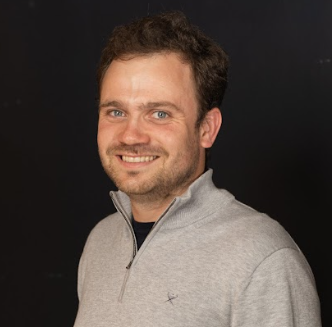 Charlie Fraser: TERN has been operating for 10 years. We support refugee entrepreneurs building businesses in the UK, and for the first five years of our existence, that was very focused on idea generation and entry to market. TERN, over the years, has become quite good at helping entrepreneurs get into market; then what we started to see, increasingly, was that entrepreneurs were being held back from growth by a lack of access to a range of capital that would allow them to scale. For the majority, that was debt, but for those that were hyper-ambitious, really looking at maximum growth, there was really no pathway to access venture capital.
When we were trying to get entrepreneurs in front of investors, there was a gap between the track record that entrepreneurs from refugee backgrounds were able to show, and the understanding that investors had of what it meant to build a business from a refugee background. So we decided that we wanted to try and close that gap by launching a product that could really be the first step towards improving the investability of refugee entrepreneurs in the UK.
PP: How was the process of building this fund?
CF: It was a long process. We were very lucky that early on, when we'd been trying to connect entrepreneurs into [the venture capital] world, we connected with two very supportive VCs – Concept Ventures and Ada Ventures. These are two early-stage VCs who are really looking to back entrepreneurs from diverse backgrounds, and I think they intuitively understood our thesis, and they were really helpful in terms of building networks in this space and advising us on what the structure should look like.
Initially, we had this ambition to try and build a £10m full VC fund, but quite quickly it became apparent that we probably wouldn't have sufficient traction to do that – without a track record, that would be difficult. So we pivoted to doing this smaller ‘proof of concept’ vehicle, and as soon as we made that pivot, then we started getting commitments from key investors in the space who believe in what we're trying to do and were able more easily to come on board with that smaller structure. So we outlined the big vision in year one, pivoted to the smaller vehicle in year two and are launching at the end of that second year.
For refugee entrepreneurs that were hyper-ambitious, really looking at maximum growth, there was really no pathway to access venture capital
PP: What was fundraising like?
CF: We had to be patient and persistent, and we were lucky because we were fundraising [as part of our work at] TERN – we didn't need to raise capital for our own salaries, so we were able to be patient. And that's probably one of the key lessons for us, certainly, building a vehicle from an impact lens: on the one hand, capacity was a constraint in terms of how fast we could move, but on the other hand, we didn't have to pay for salaries because we could do that through TERN, so that allowed us to be patient.
Quite early on, This Day Foundation came on board as our anchor first ticket, so that gave us something to build off to have further conversations. And once Sukhpal Ahluwalia came on board, that was the last ticket we needed to do the initial close. We're not out of fundraising mode yet – we're going to keep raising to the end of January to try and get towards the £500,000 full close.
PP: The pilot aims to lead to a £10m fund – that’s a big jump. How are you going to achieve this?
CF: The next step is to deploy to three to five companies – we'll deploy as much as we can raise by the end of January. Then we have 12 months to look at: how do those entrepreneurs perform? Are they able to raise follow-on rounds? Are they able to prove that we can build traction quickly to refugee companies with initial tickets? Then, off the back of that 12-month performance, we're going to go back to market with that track record to see if we can leverage the follow-on capital into that larger fund.
Although we're trying to change the nature of this conversation, we're still facing that systemic imbalance
[When we were initially looking at launching a £10m fund straight away], we did quite a lot of connecting with some of the main players in this space, who would be interested in that larger vehicle, especially if we can prove traction – Atomico, Better Society Capital, the British Business Bank would be on the radar. [VC firm] Apex Partners, set up by Sir Ronnald Cohen – who is a former refugee himself – and their foundation has supported TERN for many years, and if we can prove traction, we'd be hoping to pitch to them about coming in as a follow-on investor in the main vehicle.
There's a degree of confidence that [we] can prove the track record, that it's possible. The constraint is that we need to have that track record to be able to scale and get to a meaningful amount of capital – but to get that track record, we have quite a smaller pool [of investments], so the risk is very large. Most VCs don't have such capital constraints that they can only make five bets. Although we're trying to change the nature of this conversation, we're still facing that systemic imbalance, which is that although we're bringing a new pipeline into the VC market, there's a lot of pressure on us to make the right first five bets, and other VCs don't need to to be so concentrated. So there's a sort of inbuilt inequality still persisting there, but still, it's great that we can start and try to make a dent and see what we can prove.
The interview has been edited for clarity and length.
Top image: members of the TERN refugee entrepreneur community.

| Ready to invest in independent, solutions-based journalism?
Our paying members get unrestricted access to all our content, while helping to sustain our journalism. Plus, we’re an independently owned social enterprise, so joining our mission means you’re investing in the social economy. |