


TERN: Creating an entrepreneurial path to inclusion for refugees in a ‘cruel’ political landscape
As the UK government changes its rules to make refugee status temporary, Charlie Fraser, co-founder of The Entrepreneurial Refugee Network, sees entrepreneurship as a way out of the refugee visa ‘doom loop’.
In a move branded “cruel and unworkable” by refugee support charities, the UK government this month changed asylum rules to make refugee status temporary.
Under the new rules, which came into force on Monday 9 March, refugee status will be reviewed every 30 months, and people whose countries are deemed safe could then be deported. Under the previous rules refugees were granted five years’ leave to remain and after that could apply for indefinite leave to remain.
After home secretary Shabana Mahmood announced the new system, charities including the Scottish Refugee Council, Care4Calais and Choose Love said: “All that these reforms will achieve is to make life harder for those to whom the UK has already recognised its duty to provide sanctuary.”
A specific way the new rules will make life harder for refugees, as flagged by Charlie Fraser, co-founder of The Entrepreneurial Refugee Network (TERN), is drastically reducing the initial time period they have to attempt to launch a business.
 Social entrepreneur Maria Igwebuike [left], founder of sustainable, body-positive luxury lingerie and bridal brand Maria Callisto, with one of the TERN team at a pop-up store
TERN is a community interest company which helps refugees to become entrepreneurs and launch businesses. Fraser says: “On a five-year visa, often you’re only starting entrepreneurship in year two or three. To cut that even further only adds more uncertainty and barriers to fair access to entrepreneurship for our community.”
Of course, the rule change hasn’t emerged from a vacuum, but is the result of years of attacks on refugees and migrants (often treated as synonymous, and with equal scorn) by politicians and the media.
“The last five years has been the biggest degradation of refugee rights in the UK since possibly the 1950s and that has a powerful knock-on effect on the realities of our community,” says Fraser.
‘Blowing the front door off’ business support for refugee entrepreneurs
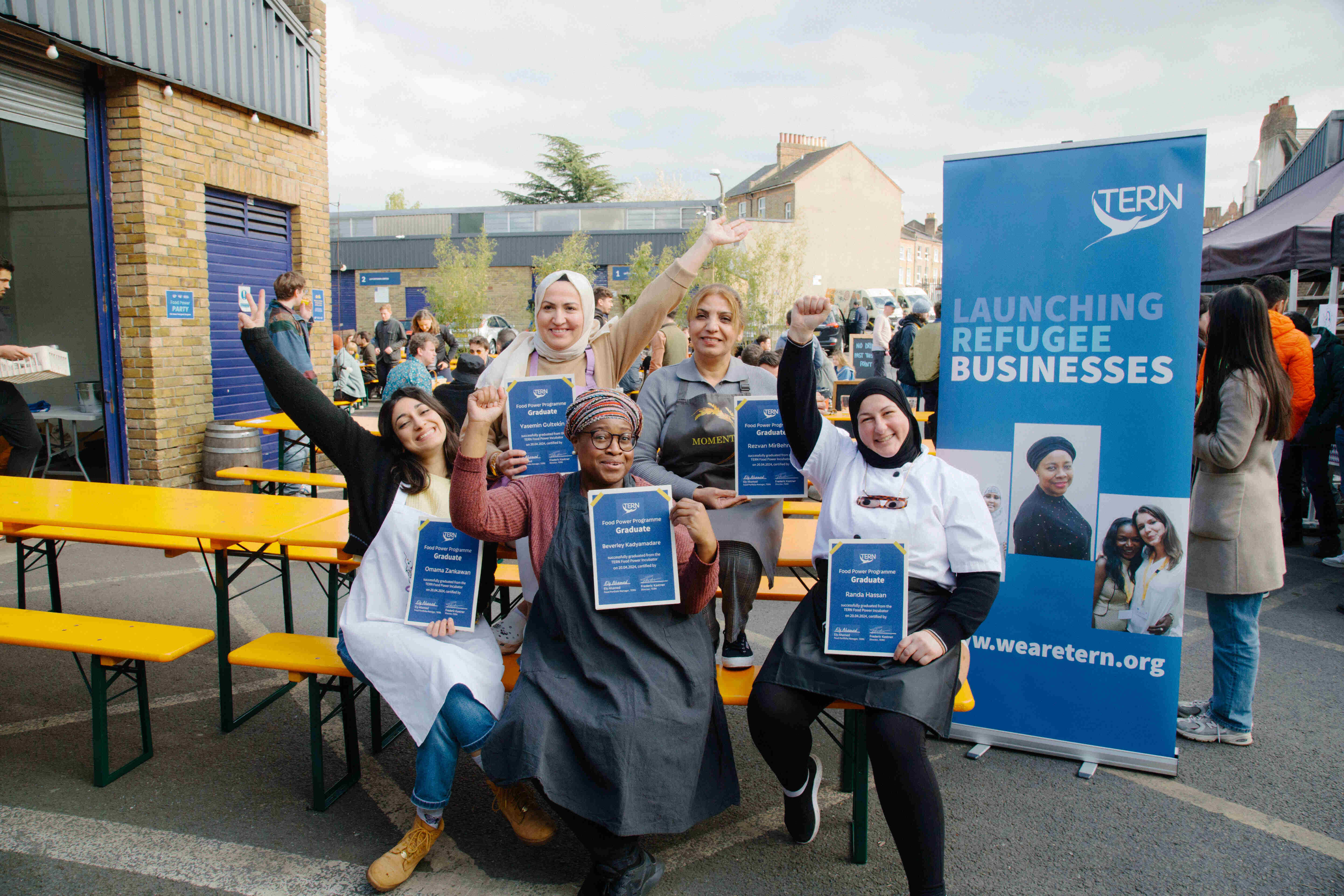
Graduates from TERN's 2024 incubator for refugee food & beverage founders
TERN has supported more than 800 refugee entrepreneurs and helped launch 141 new refugee-led companies across the UK since it was founded in 2016. The organisation has unlocked £1m in finance for refugee founders and trained 11 other providers to expand access to refugee business support both nationally and internationally.
In 2025 Fraser was one of four winners of the Cambridge Social Innovation Prize. The prize includes a £10,000 award for personal and professional development.
TERN is using some of that prize money to recruit new directors, specifically with lived experience of being a refugee, as well as coaching for both Fraser and the new directors, with the aim of embedding refugee leadership at the heart of its governance.
|
The Cambridge Social Innovation Prize The Cambridge Social Innovation Prize celebrates social impact through business across the UK. It is a prize for mid-career social innovators. Rather than targeting the rising stars or presenting lifetime achievement awards, it recognises those with potential to grow their impact who could use support to get to the next level. It is delivered by Trinity Hall and the Cambridge Centre for Social Innovation, supported by a donation from Trinity Hall alumnus Graham Ross Russell. Winners of the Cambridge Social Innovation Prize are selected for their achievements and potential in creating positive social impact for individuals and communities in different parts of the UK. These awards are made annually to extraordinary founder-CEOs of scale up social enterprises to support their growth as leaders. The Cambridge Social Innovation Prize includes a £10,000 cash award for personal and professional development. Additionally, mentoring from experts from Cambridge Social Ventures at Cambridge Judge Business School and support from an expanding community of social innovators at Trinity Hall help the winners to develop the skills, resources and networks they need to create more impact.
|
One of these is Abeer AbuGhaith, who was appointed in November 2025 as director of systemic change. AbuGhaith is a tech founder who fled Palestine after Israel’s invasion of Gaza in 2023.
To this point, TERN has focused on offering specialist products to refugee entrepreneurs, providing access to services, access to markets and access to finance, including a micro-credit fund.
AbuGhaith’s role will now focus on how TERN can influence change in the wider business environment, so refugee entrepreneurs can compete for mainstream loans, marketplaces and business support services, which Fraser says are currently often implicitly or explicitly exclusionary.
Or, as Fraser put it, after TERN opened the “side door” to business support for refugee entrepreneurs, AbuGhaith is now aiming to deliver systemic change to “blow the front door off”.
On Monday TERN will open recruitment for its second director with lived experience of being a refugee. The second role is director of participation, which will focus on the governance, growth and strategic impact of the organisation’s Refugee Economic Leadership Council, the body that ensures refugee voices influence TERN’s decisions, programmes, and direction.
TERN turns 10
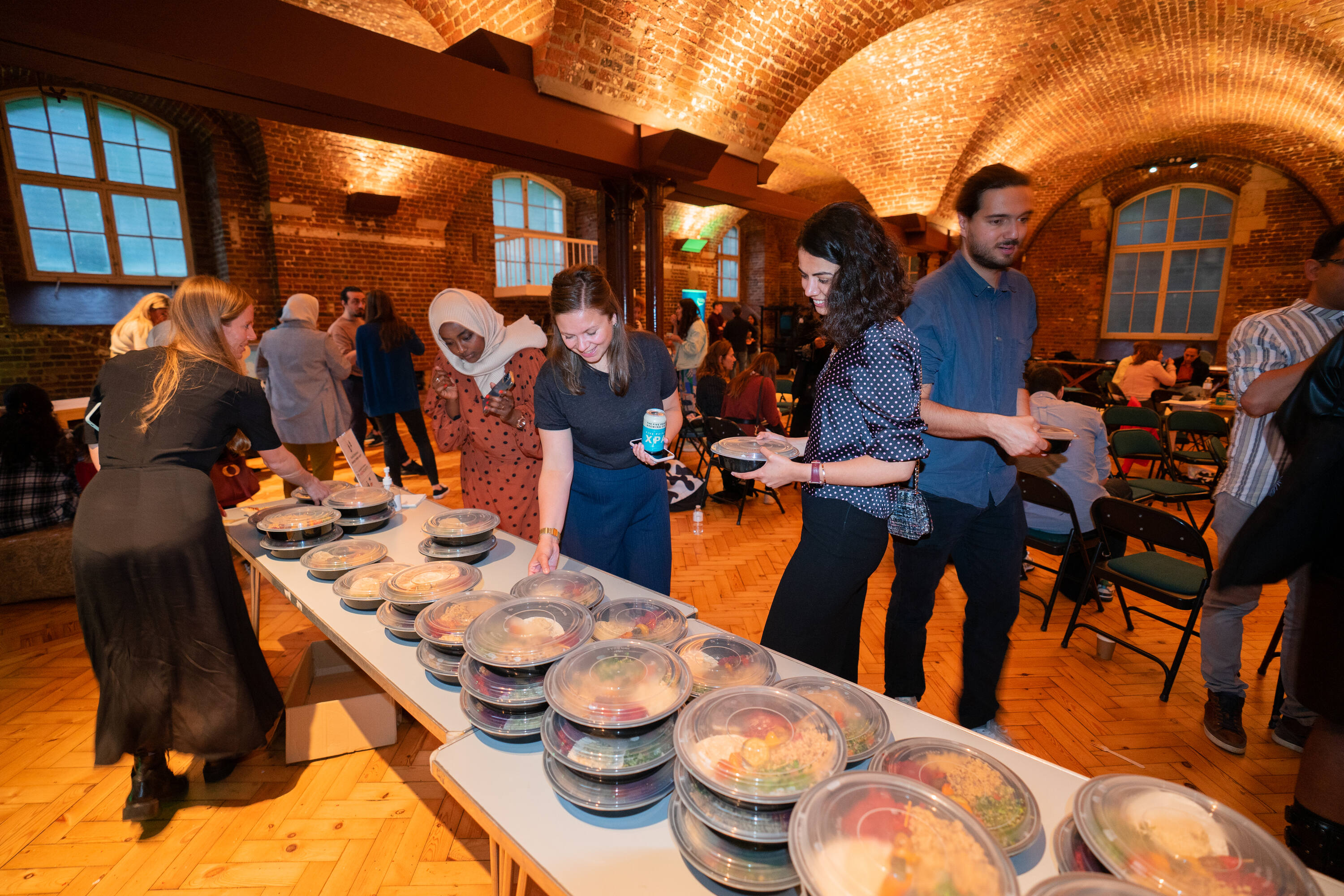
Graduation celebrations for TERN's international idea development programme, UP Collective, developed in partnership with Ben & Jerry's
Fraser says winning the Cambridge Social Innovation Prize has also had a “mainstreaming effect” for both TERN and the concept of refugee entrepreneurship.
“Refugee entrepreneurship has been seen as a secondary or niche topic area within the broader space of inclusion. I think the award has helped legitimise us and the community as a whole and it’s bringing a broader conversation of what social entrepreneurship should look like in the UK,” he says.
In October TERN will celebrate its 10th anniversary, following the publication of the organisation’s 2030 strategy in April. Fraser is aiming for yet more significant milestones in the year, with TERN having secured an anchor investor for a £300,000 special purpose vehicle to invest in 3-5 refugee-led start-ups. The aim is to prove the concept that refugee founders are investable in advance of TERN launching a larger £10m venture fund, which would by the first in the UK to exclusively invest in the refugee business community.
The momentum behind TERN’s work might seem at odds with the hostile political and media landscape, but Fraser sees reasons for hope for refugee entrepreneurship in the UK. He says he senses from the government an “openness” to the idea of enterprise as a pathway for refugees to contribute to their new communities.
Through processes like the Cedar Review – an independent review into refugee entrepreneurship in the UK taking place this year – Fraser hopes a vision can be presented to government where “entrepreneurship is seen as a way of accelerating inclusion, rather than getting people trapped into a doom loop with a refugee visa”.
All images courtesy of TERN

This content is brought to you by Pioneers Post in partnership with the Cambridge Social Innovation Prize, a collaboration between Cambridge Centre for Social Innovation and Trinity Hall.


| Ready to invest in independent, solutions-based journalism?
Our paying members get unrestricted access to all our content, while helping to sustain our journalism. Plus, we’re an independently owned social enterprise, so joining our mission means you’re investing in the social economy. |
