

Irish government ‘anxious’ to drive social procurement as social enterprise census reveals challenges for sector
Republic of Ireland 2026 National Social Enterprise Census shows 'considerable' contribution to the economy, but a heavy reliance on grants and concerns about financial sustainability.
More than three quarters of the social enterprises in the Republic of Ireland currently take no part in procurement, and the sector has a “heavy reliance” on grants, according to the 2026 National Social Enterprise Census.
A preview of results from the census were shared at the Social Enterprise Republic of Ireland (SERI) annual conference 2026, held in County Meath on 19 November, International Social Enterprise Day.
There are 4,733 social enterprises in Ireland, according to the census, up from 4,335 in 2023, generating a total income of €2.45bn. 77% of those social enterprises took no part in procurement either from public authorities or private businesses during the survey period, while 64% reported taking on grants.
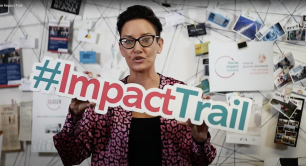
Presenting the findings, Lorraine Corcoran (pictured top), co-founder and director of SERI, said the country’s sector had a “heavy reliance on grants” and made “limited use of loans and debt finance”, with 11% of social enterprises taking on some form of social finance.
Despite the challenges it faces, Corcoran said the census showed the sector is a major economic and social asset for Ireland and its contribution to the economy is considerable. The full census report would be published “imminently”, she said.
| 2026 census results | 2023 baseline exercise results |
| €2.45bn indicative estimate of sector’s total income | Sector generates €2.34 billion in income, 0.63% of GDP. |
| 52% of social enterprises established for more than 20 years; 11% established in the last four years | 48% of social enterprises established for more than 20 years; 16% established in the last four years |
| 49% of social enterprises based in rural areas, 50% based in urban areas | 43% of social enterprises based in rural areas, 57% based in urban areas |
| 76% of social enterprises focus on their localities, 14% operate internationally | 75% of focus on their localities, 15% operate internationally |
| 75,423 total employees | 84,000 total employees |
| 64% of the workforce are women | 69% of the workforce are women |
| 66% of social enterprises concentrated in four sectors: Childcare; Community Infrastructure & Local Development; Health, Youth Services & Social Care; Heritage, Festivals, Arts & Creative Industry | 68% of social enterprises concentrated in four sectors: Childcare; Community Infrastructure & Local Development; Health, Youth Services & Social Care; Heritage Festivals, Arts & Creative Industry |
The conference was opened by Jerry Buttimer, Irish minister of state at the department of rural and community development and the Gaeltacht (the districts in Ireland where Irish Gaelic is spoken as the predominant language).
Buttimer used his speech to highlight the support the government had put in place for social enterprise in recent years, including funding the census, its national social enterprise policy 2024–2027 (which was co-designed with the sector) and social procurement targets for public contracts which were included in the national public procurement strategy 2026–2030.
The procurement strategy includes a target of 10% of public contracts to incorporate socially responsible public procurement by 2030 (from a baseline of 4.6% of published Irish tenders including such criteria in 2025).
Speaking about the government’s aim of increasing social procurement within public contracts, Buttimer said: “As a minister, I want to drive that, and I’m anxious to do that”, adding that the government was “not finished yet” in terms of encouraging social procurement.
Reflecting on the census results, Buttimer said it “confirms that the social enterprise sector is a substantial, diverse and long-established part of Irish economic and community life, present in every county and particularly significant in rural areas,” but he acknowledged that “the findings also highlight challenges”.
A ‘structural misalignment between government expectations and funding for social enterprises’
John Logue, CEO of SERI, said the business models of many social enterprises in Ireland did not lend themselves to engaging in procurement, and even if they did, they may not be big enough to fulfil large contracts.
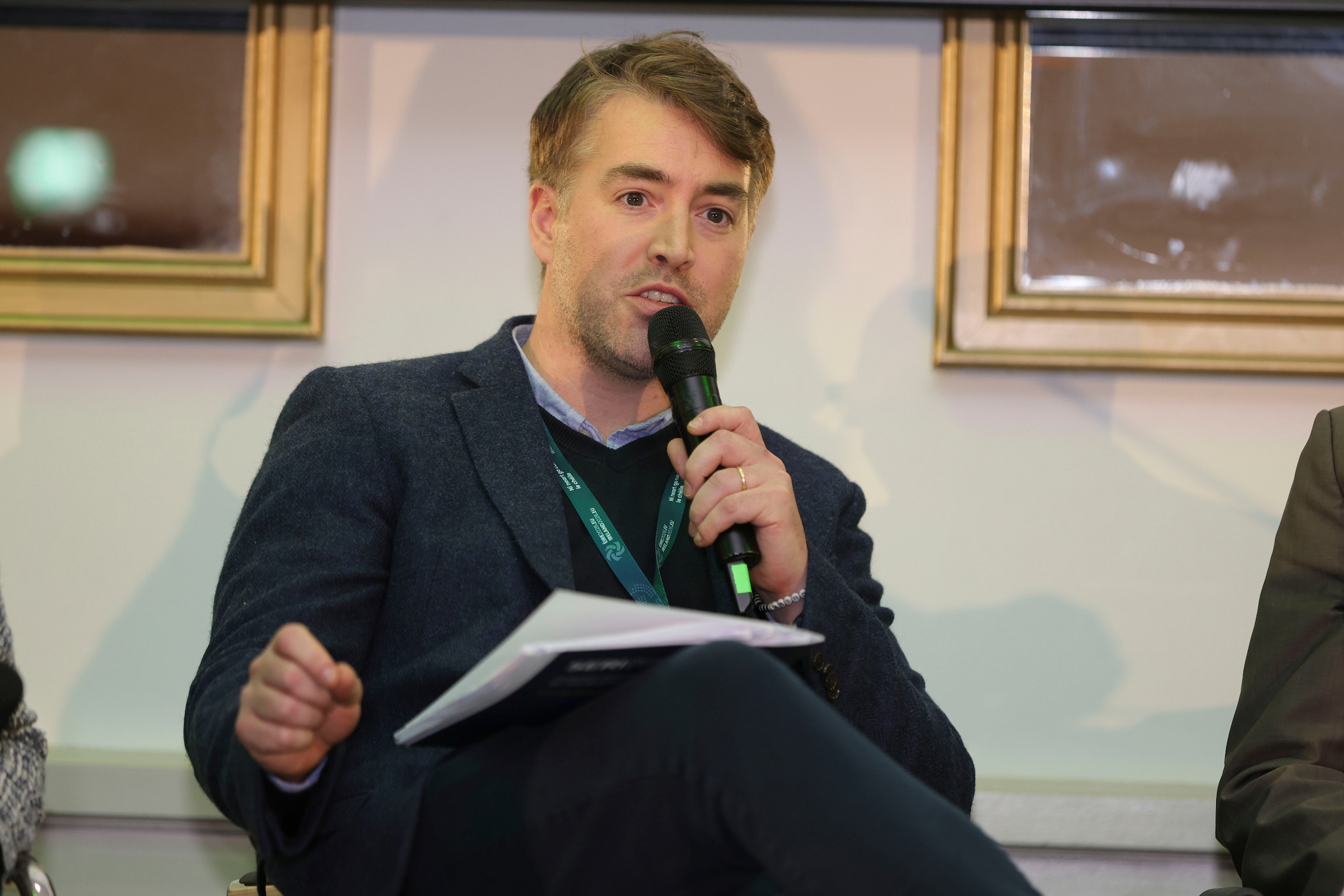
Speaking to Pioneers Post, Logue (pictured) said: “Social enterprises in Ireland tend to be set up first of all as a community project, then develop a trading element afterwards, and aren’t necessarily doing procurement-ready stuff.”
The census found 29% of responding social enterprises have an annual income of less than €100,000, with the median income in the sector being €243,500. In terms of employees, 58% of social enterprises in Ireland are micro enterprises (with 1–9 employees).
Those figures show that the Irish social enterprise sector is in line with Europe’s. In the 2026 European Social Enterprise Monitor, the results of which were also shared at the SERI annual conference, social enterprises across the continent reported a median income of €230,000, while 50% of the respondents were micro enterprises.
- Read more: European social enterprises look to third party certification in face of ‘confusion’ over legal form
The Irish census showed that social enterprises are concerned about the future: 58% of social enterprises said they do not expect financial sustainability to improve over the next 12 months, and 19% expect it to get worse.
Speaking during a panel session at the SERI annual conference, John Logue said to better support social enterprises the government needed to address the economic circumstances they were operating in.
“What we need to recognise is the majority of social enterprises [in Ireland] operate in market failure conditions. They're more like rural post offices than they are like businesses,” he said. “I think we need to be real about the market failure that [Irish social enterprises] are experiencing and design policy around that.”
Earlier this year SERI published the Social Enterprise New Deal, as a submission to the government’s 2027 budget, which argued there is a “structural misalignment between government expectations and funding for social enterprises”. The report outlined seven policy measures to better support social enterprise, covering trading support, procurement and cost relief, with a total cost of €7.58m.
It said: “The government should support social enterprises to maximise trading income where possible, while recognising that market failure necessitates sustained state co-funding and cost relief to ensure viability.”
The 2026 Republic of Ireland National Social Enterprise Census was carried out by Amárach Research, in partnership with Social Enterprise Republic of Ireland, on behalf of the Department of Rural and Community Development and the Gaeltacht.
Top image: Lorraine Corcoran (pictured top), co-founder and director of SERI, presents the census results at the organisation's annual conference (credit: Julien Behal/SERI)

| Ready to invest in independent, solutions-based journalism?
Our paying members get unrestricted access to all our content, while helping to sustain our journalism. Plus, we’re an independently owned social enterprise, so joining our mission means you’re investing in the social economy. |