Leading voices from UK social enterprise, co-operatives and social investment have raised concerns over a “landmark” definition of the ‘impact economy’ that risks alienating a number of impactful organisations.
Impact Europe today revealed the name of its new chief: Angela Wiebeck, praised for “building bridges” between mainstream finance and impact over her two decades at UBS and Aquila Capital. She speaks to Pioneers Post from Brussels.
OPINION: There’s a message blowing across the Atlantic that the business of investment is to maximise return, and considering people and planet is woke nonsense. This argument is outdated, says GSG Impact chair Nick Hurd.
INTERVIEW: Putting a price tag on a company’s social and environmental impact is the only way to demonstrate its true profit and loss, believes Sir Ronald Cohen, who is now focusing on driving forward the next accounting revolution.
As conflict continues in the Middle East, Jordan-based Andrew Gharaibeh Collingwood shares how the region’s support organisations are continuing to develop the impact finance market and back social enterprises.
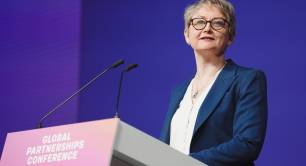
North Star initiative launched at Global Partnerships Conference last week, as UK ministers seek to improve cooperation across sectors and give more agency to countries in the global south – while development aid cuts bite.
OPINION: Lasting impact doesn’t come from individual heroics, says serial social entrepreneur Jeroo Billimoria. A fixation on entrepreneurial ‘saviours’ risks obscuring the true collaborative nature of change.
As B Lab marks its first two decades and creating a community of more than 10,000 companies, we look back at our coverage of the movement and highlight some of the pioneering B Corps which have made headlines with us.
EXPERT INSIGHT Millions of hectares of degraded, dried out peatlands across Europe are a huge climate risk. Attracting the billions of euros of private capital they need to be restored could lie in not only carbon, but water, says Matt Robinson.
The norms, metrics and tools used in impact investing are still very much set by the global north. Trying to parachute pre-made requirements or concepts where they don't align with local values is likely to be counterproductive.
A new report published by Impact Jordan argues understandings of impact must be relevant to local experiences and culture, rather than defined by global north frameworks.
With the next EU budget on the horizon, now is the time for the bloc to drive forward global efforts for a more sustainable and social economy. But without action, the social economy could miss out, writes Euclid Network’s Toby Gazeley.