As protests grow around the world against the building of massive, environmentally destructive data centres to serve the ever growing demands of AI, one Australian social entrepreneur has developed a different type of AI data centre which meets his organisation’s social values.
Impact assets under management in Spain grew by more than 50% between 2023 and 2025, shows fresh research which was previewed at this week’s annual ‘Camino al Impacto’ event in Madrid.
OPINION: Hopes are up for the sector as prime minister Andy Burnham’s refreshed political priorities have made ministers more receptive to the message of the social enterprise community, writes Social Enterprise UK’s Jovan Owusu-Nepaul.
Social Enterprise World Forum’s Social Investment Manifesto calls for a reframing of social investment, as social enterprises remain excluded from investment opportunities in a market still split between profit maximisation and philanthropy.
Your quick guide to the news in social enterprise, impact investment and mission-driven business. This week featuring startups in Madrid, impact investing qualifications, a campaign for 'true and fair' accounting, and more.
Research carried out by Aspire Impact reveals that investors and shareholders are more likely to push for companies to create a chief impact officer role than policymakers, consumers and employees.
From discussions on the social economy in the UN to supporting communities in conflict and crisis, experts from the impact community share their hopes and predictions for 2024.
EXCLUSIVE: Research reveals gulf between UK and European counterparts in strength of the social economy, pointing to the Basque Country and Emilia-Romagna as regions to emulate, as lobbying steps up for business reform ahead of general election.
Erinch Sahan from DEAL says we shouldn't over-celebrate our wins. Plus, new research finds 10m social enterprises worldwide and how two startups harnessed ‘the power of tech’ for good. This week’s view from the Pioneers Post newsroom.
Your quick guide to the news in social enterprise, impact investment and mission-driven business. This week featuring World Economic Forum updates, good news about impact investments in Japan, plans to celebrate Suzanne Biegel's life and more.
Most comprehensive analysis to date launched at the World Economic Forum shows social entrepreneurship sector is twice as large as the global advertising industry.
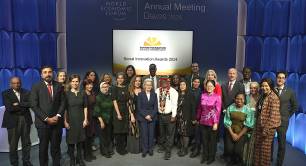
The leaders of 16 organisations have been recognised by the Schwab Foundation for Social Entrepreneurship for their advancements in social innovation at the 2024 World Economic Forum Annual Meeting.