
Will you be able to mission-lock your company under the new ‘EU Inc.’ regime?
A draft new law that could give steward ownership an EU-wide legal status is progressing through the European Union’s legislative machine – and campaigners are working hard to save a decisive amendment from being scrapped.
A new law could be transformational for European impact entrepreneurs seeking to mission-lock their business – but campaigners fear the opportunity will be missed as the proposal text makes its way through the European Union’s legislative process.
The proposal aims to create an EU-wide corporate legal framework for companies, and the latest amendments introduce a legal form for steward-owned companies that would be recognised across the bloc, but its fate remains uncertain.
The European Commission published its initial proposal for the “28th regime corporate legal framework”, also known as “EU Inc.” in March. The EU Inc. legal status will be recognised across all member states, and its aim is to simplify processes and make it easier for businesses, in particular startups and scaleups, to launch, operate and grow in the EU, and attract investment.
Key elements of the EU Inc. framework include being able to register a company online within two days, at a maximum cost of €100. EU Inc. companies will be recognised in all member states, making it easier for them to operate across the single market.
Initial recommendations to the Commission, voted through by the European Parliament in December 2025, included a call for the creation of an optional steward ownership form for companies seeking to future-proof their mission, but it was not included in the Commission’s proposal in March, to the disappointment of campaigners.
On 29 June, René Repasi, the Social Democrat German MEP who acts as rapporteur of the European Parliament legal affairs committee, in charge of the proposal, published a draft report with suggested amendments to the text, re-introducing an optional, voluntary variant for steward-owned EU Inc. companies: “EU Inc. SO”.
|
What are steward-owned businesses? Steward-owned companies separate ‘control’ rights from ‘economic participation’ rights. Control rights are exercised by ‘stewards’, who have a mission to preserve the company’s long-term independence and purpose; they cannot be involved in gaining profits from the company, and can be individuals, employees, or a foundation. Shareholders economically invested in the company do not have any decision-making power, and profit distribution to shareholders is restricted. This ownership structure is often used by mission-driven businesses keen to lock in their mission in the long term – examples include Patagonia, pharma company Novo Nordisk and search engine Ecosia.
|
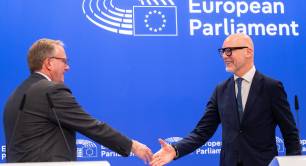
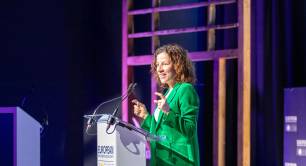
Repasi (pictured, top) said founders who wanted to adopt steward ownership “lack[ed] fundamental freedom and free movement within the internal market”. The EU Inc. SO form “is only strengthening, expanding the freedom of founders and not limiting them”, he added.
Repasi’s report also proposes that EU Inc. companies should be able to establish an “employee share ownership plan” (EU-ESOP), that would give employees the option to receive company shares for their work (but not instead of wages), and pave the way for employee ownership of the company.
Contributing to the EU’s objectives
The European Ownership campaign, a coalition of entrepreneurs, civil society organisations and academic experts calling for a EU Inc. form for steward-owned and employee-owned businesses, has gathered the backing of more than 350 entrepreneurs and investors across 17 countries so far.
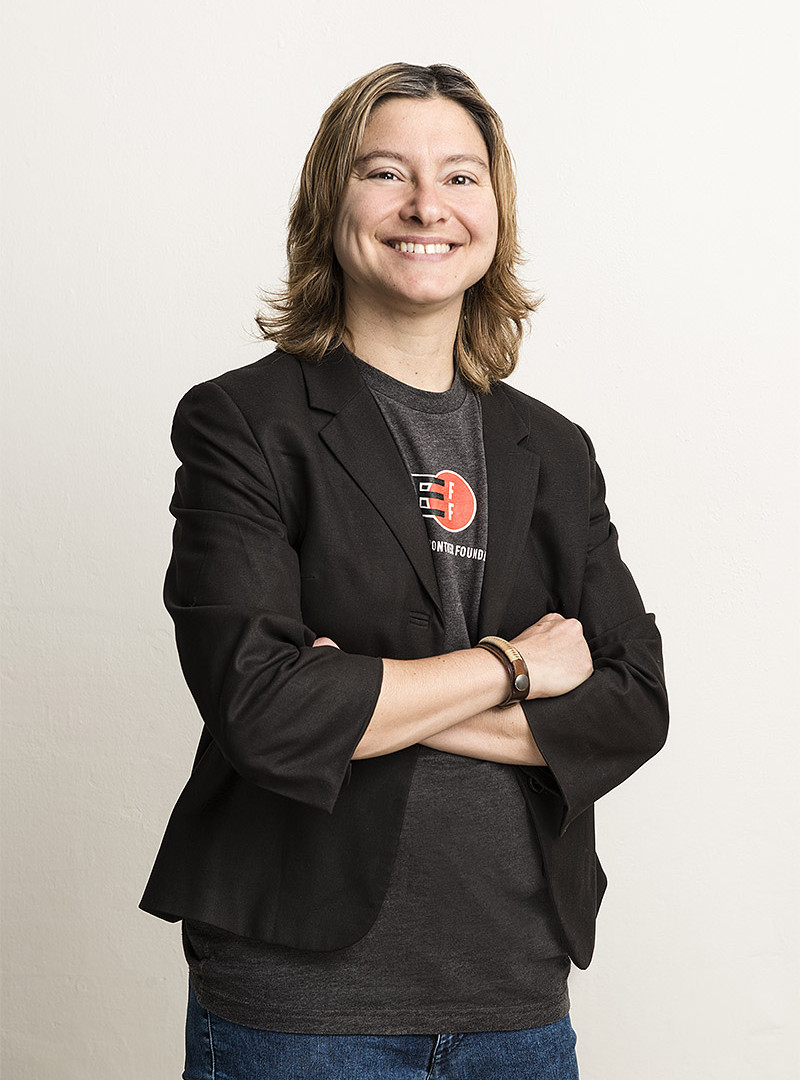 “European companies should be free to choose stewardship, remaining sovereign and rooted in the EU,” said Melanie Rieback (pictured), co-founder of cyber security company Radically Open Security and a long-time advocate of steward ownership.
For the group – which includes organisations such as We Are Stewards, Institute for Economic Democracy, The Sustainable Finance Lab's policy hub Finexus, Stiftung Verantwortungseigentum, N-EXT LAW, Steward Ownership network (StONe), and Purpose Group – steward and employee ownership sit comfortably alongside the EU’s current focus on sovereignty and competitiveness.
“Steward ownership emerges as a strong ownership model that can contribute to the EU’s economy and policy objectives,” the campaign group states in its position paper.
It argues that the benefits of steward-ownership include addressing the issue of succession – when a founder exits the company – which often sees non-EU investors take over startups and extract their value from the bloc. Steward-owned companies also prioritise reinvestment, notably in research and development, stimulating innovation, and focus on the long-term, providing stability.
European companies should be free to choose stewardship, remaining sovereign and rooted in the EU
Repasi said: “Let us make use of new ways of how founders are founding companies.”
In March – before the Commission published its proposal – a group of 158 impact finance leaders signed an open letter to European Commission president Ursula von der Leyen calling for inclusion of harmonised corporate finance instruments and elements of steward-ownership in the legislative proposal. Those included FASE's Markus Freiburg, Triodos's Hans Stegeman and Erinch Sahan of the Joseph Rowntree Foundation.
A risky journey ahead
Repasi’s report – which reflects his position but not the full committee’s – forms the basis for negotiations among committee members which started this week. His amendments focus on including some guardrails to the framework, to prevent the focus on simplifying processes to open the door to fraud and abuse, for example on workers’ rights.
Let us make use of new ways of how founders are founding companies
But this week’s meeting of the legal affairs committee highlighted disagreements over many key elements of the text – and, during the discussions, a Commission representative rejected the idea of introducing a steward ownership legal form.
He said the concept had “clear merits in itself, but we believe that it doesn't fit the proposal’s objectives to attract investment and provide credible exit options for investors. The permanent nature of the suggested steward-owned legal form with its distinct, more rigid governance framework is also fundamentally different from the simple and flexible governance rules for EU Inc.”
Other parties have until the end of this week to submit amendments, and the text will be negotiated to produce a version supported by the committee (which is representative of the wider parliament). A plenary session is scheduled to take place in the European Parliament in October, after which “trilogue” negotiations between the Parliament, the Commission and the Council of Ministers (made of relevant ministers of the 17 member states) will take place, with a final agreement hoped by the end of the year.
Top image: René Repasi speaks in the European Parliament in July 2026 © European Union 2026 - Source : EP. Portrait of Melanie Rieback by Tobias Groenland.

| Ready to invest in independent, solutions-based journalism?
Our paying members get unrestricted access to all our content, while helping to sustain our journalism. Plus, we’re an independently owned social enterprise, so joining our mission means you’re investing in the social economy. |