


Is investing in mental health an overlooked opportunity?
EXPERT INSIGHT: If you’re an impact investor, what’s your first reaction to mental health? Do you immediately think of founders’ wellbeing, of highly scalable, AI-enabled therapy apps, or are you convinced that it’s rather a personal topic that isn’t investable at all?
Many impact investors still overlook mental health or don’t seem to find a way to fit it into their asset allocation. A recent expert discussion organised by Germany-based consultancy FASE brought together Silke Schweizer, business angel and mentor at Encourageventures, Paul Aretin, co-founder of Coobi, Bastian Sudhoff, co-founder of Lucoyo Health and Joshua Haynes, co-founding partner at investor Masawa to discuss the topic of ‘mental health as an investment case’.
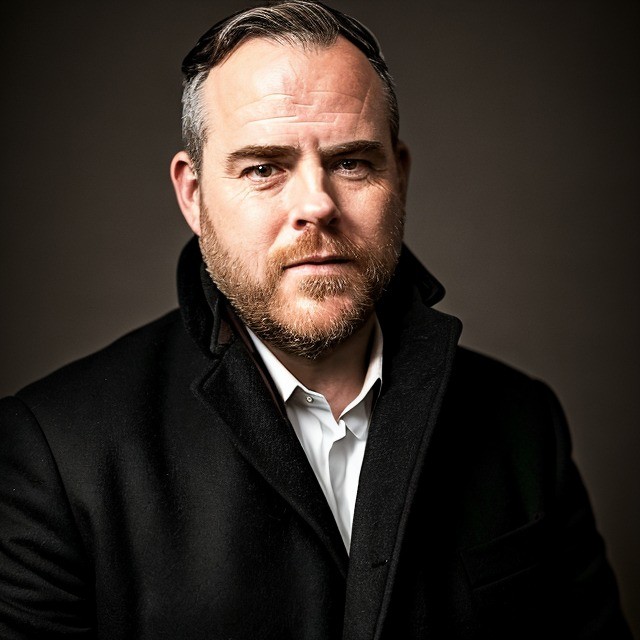
 For some investors, like experienced angel investor and founders’ mentor Schweizer (pictured), it’s a topic that “unfortunately continues to run silently in the background until high performers leave” and thus affects the economy at large “through absenteeism, turnover and productivity loss”. For others, such as Haynes, it’s a highly attractive and investable vertical that his firm dedicated an entire impact fund to.
I always ask myself if the startup has an idea that the world really needs and a team that can execute it
But not all mental health solutions have the credentials to become bona fide investment cases: they need a scalable business model, strong clinical evidence, regulatory compliance, and “a real solution,” as Schweizer puts it. “My initial due diligence is quick: I always ask myself if the startup has an idea that the world really needs and a team that can execute it.”
 Impact ventures such as Coobi and Lucoyo Health have found ways to combine both, becoming an investment case and solving a challenge that deeply underpins our economic and social reality. But the path hasn’t been easy. “In the medical system today, mental health is still being stigmatised,” Coobi’s Aretin (pictured) reports from experience. “Many don’t take existing therapies seriously and even doubt their effectiveness.” This is why his main motivation is “to bring medical solutions to the forefront and look at them objectively”.
Many don’t take existing therapies seriously and even doubt their effectiveness
If we check the facts, the negative impact of what some call “the global mental health crisis” can hardly be ignored: Globally, 1bn people live with a mental health condition. In Europe, yearly costs exceed €76bn and are estimated to lead to a GDP reduction of 1.7% a year between 2025 and 2050. Many who are seeking help are left without access or must wait months to get a therapy slot. This is even more alarming if you consider that 50% of mental illnesses are already established by the age of 14. And while around 12% of the global population is personally affected, only 2% of public spending is allocated to this challenge.
 High time for the private sector to step in, one might think. But even if investors start to consider mental health as an important vertical, there is still a lot of prejudice, ignorance and uncertainty about how to implement it. “When I present our investment strategy, people often think that we’re talking about meditation apps or that mental health is only about depression, anxiety, addiction and trauma,” says Haynes. “But at Masawa, we look at an entire scale that reaches from mental illness to resilience, from prevention to wellbeing.” Examples are as diverse as urban space design, brain training for elderly people, founders’ health and protecting young people against the adverse effects of AI use. Mental health is everywhere. And the market opportunity is sized at no less than US$256bn by 2030.
Impact solutions in mental health
 Lucoyo Health has found its unique spot in this market. The impact venture developed a digital solution that frees up to 20% of extra therapy hours through efficient appointment and data management. This directly enables patients to get the right service at the right time. More than 10m additional therapy sessions could be triggered this way in Germany alone. Co-founder Sudhoff (pictured) has a clear idea of which types of capital providers he prefers: “We welcome investors who not only bring money but also expertise. But most important is that they’re partners who share our mission of transforming how patients navigate mental healthcare and want to help build it with the use of AI.”
AI also sits at the heart of Coobi’s solution. To overcome the lack of continuous support in mental health issues such as addiction, the impact venture captures 30+ biomarkers through wearables and smartphones, analyzes them with a proprietary AI model, and empowers patients and therapists to better manage the situation after rehab. When it comes to investors, CEO Paul Aretin builds on the valuable advice he received from an angel investor: “He told me to look at our investor setup like a soccer team: specific positions should be filled with specific people.” Beyond capital, what counts most are complementary skill sets of investors such as knowledge of growth pains and how to deal with them or deep insights into medical research and the inner workings of the health system.
VC isn’t the only way to finance mental health
But what about investments in mental health solutions that can’t be optimized and scaled with the help of AI? “Digital health applications (short: “DiGA” in German) only make up for about 10% of the market”, Silke Schweizer confirms. “But in my experience, the greatest need is often exactly where they don’t apply, such as in prevention, early detection, workplace solutions, female health and menopause. These areas are supposedly too soft for traditional healthtech investors and too complex for generic SaaS funds.”
It seems that three structural challenges must be overcome to unlock the flow of investments: the evidence gap, the question of who’s paying for the service, and finally, the lack of investors who have mental health investments on their agendas. And then there are those solutions that can’t be converted into a VC-type investment case at all: being in nature, healthy nutrition, community. “VC isn’t the only way to finance mental health”, Joshua Haynes confirms. He cites the example of The Friendship Bench in Zimbabwe, which addresses depression through empathy and connection, and is financed by foundations and other philanthropic or public funders.
Whether one believes in mental health as an investment case or not, one aspect is crystal clear: while founding or investing in these solutions often comes from a deeply personal story, the topic touches the lives of everyone on this planet. High time to make it a standard investment vertical, don’t you think?
FASE's next More Impact for Lunch explores circularity as an investment vertical, bringing together specialized investors and leading sector experts to unpack the major challenges and opportunities defining the space. It will take place on 20 October, 1–2pm CEST, online. Register here.
Top image via Magnific.

| Ready to invest in independent, solutions-based journalism?
Our paying members get unrestricted access to all our content, while helping to sustain our journalism. Plus, we’re an independently owned social enterprise, so joining our mission means you’re investing in the social economy. |