

Social Investment Manifesto provides a shared direction – but not all answers

SEWF's Social Investment Manifesto says many things we've heard before, but it can act as a "compass" to help supporters of social enterprises around the world to adopt a common direction in their efforts to unlock investment that works for them. This week's view from the Pioneers Post newsroom.
This week the Social Enterprise World Forum launched its much-awaited Social Investment Manifesto, the result of months of research, multiple surveys and interviews with stakeholders from across the social enterprise ecosystem, all around the world. Its aim: to increase access to capital for mission-locked social enterprises (which put purpose before profit and have this embedded in their legal structure).
Its starting point is that there is a misalignment between the types of investment available and the needs of mission-locked social enterprises, and we have to address it to enable them to reach their full potential. This is a problem well understood across the sector.
The manifesto goes on to establish a series of recommendations to address that problem – from better recognising the specificities of social enterprises, to developing blended finance tools and using policy levers to create the right environment for change to happen. These calls to action to various stakeholders have been heard before: social enterprises are urged to champion their models and support organisations to coordinate; investors to provide flexible capital; policymakers to create frameworks and infrastructure for social enterprises to thrive.

For those of us closely following the debate around whether pursuing real impact requires financial tradeoffs or not, the SEWF manifesto might look like it’s trying to reinvent the wheel. It calls for a shift from what it terms as “social investment” (capital that seeks simultaneously impact and returns, often market-rate, which is often referred to as finance-first impact investing) towards “social finance” (forms of capital that will accept concessions on risk, returns or flexibility to create impact, equivalent to what many call “impact-first investing”).
In the end it stays stuck where others have been before: it doesn’t really answer the question of “where will the money come from?”, which is probably one of the stickiest points of all. Not least because sources of cheaper, more risk-friendly capital best suited to the needs of social enterprises are drying out: international aid is being cut and governments across the world are under pressure to reign in spending. Philanthropy alone can’t fill the gap – and foundations are not yet adopting impact-first investing en masse, still focusing on traditional grantmaking.
But what the manifesto does provide is a guide – to help all supporters of social enterprises, around the world, to adopt a common direction in their efforts to unlock investment that works for them. As Matt Pfahlert, CEO and co-founder of the Australian Centre for Rural Entrepreneurship (ACRE), wrote on LinkedIn: “This is a reminder and a compass for where we need to focus our energies”.
We’re finalists!
To our surprise and delight, our NatWest SE100 Impact Pioneer Awards, which took place in Manchester in May to celebrate the UK’s most impressive social enterprises, have been shortlisted for ‘Leading Live Event of the Year’ at the This Is Manchester Awards 2026. We’re in stellar (and eclectic) company, with other finalists including the likes of the Brit Fest, the Manchester Board Game Festival, and even English National Opera’s Cosí Fan Tutte (yes, the Mozart opera) – which I know will particularly please our founding editor Tim West, a keen classical singer himself (although he didn’t sing at the SE100 awards). Thank you to This Is Manchester for recognising the importance of social impact!
This week's top stories:
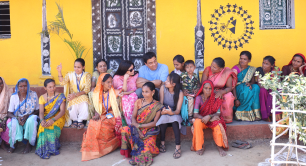
In rural India, media mogul Ronnie Screwvala tests whether charity can have an exit plan
Our ambition to transform children’s first 1,000 days in Senegal and beyond

| Ready to invest in independent, solutions-based journalism?
Our paying members get unrestricted access to all our content, while helping to sustain our journalism. Plus, we’re an independently owned social enterprise, so joining our mission means you’re investing in the social economy. |