

The Editor's Post: New economy campaigners: is it time for you all to jump on the same bus?

While there’s a strong sense that the current economic system is not working, there’s no consensus on what should replace it. Is this mix of perspectives a positive thing, or hindering progress? Anna Patton reports from the P4NE conference in Bonn, Germany this week.
The funders behind Partners for a New Economy (P4NE) have so far given $40m to 65 grantees – organisations working to shape an economic system that serves people and nature. That pales in comparison with the hundreds of millions given by philanthropists since the 1970s, to the think tanks, university departments, advocacy groups and so on that helped to embed a very different, often damaging system – neoliberalism.
Brian Valbjørn Sørensen, who runs Denmark’s KR Foundation, a founding funder of P4NE, acknowledged the vast shortfall at the P4NE annual gathering that I attended this week in Bonn, Germany. “This field remains seriously underfunded,” he said. “So that’s my promise to you: we will do everything we can to fundraise for this work because that's our role – to help you transform the economy.”
Transformation is no longer a niche desire, it seems. In a recent survey by Earth4All, among citizens of 17 of the world’s largest economies, 65% said the economic system was rigged in favour of the rich and powerful, and 69% said they wanted major changes to that system.
Is this enough momentum? Or will we fall back into the same “pattern of inertia”, as South African activist Kumi Naidoo put it – the same inertia that saw all those ‘build back better’ promises quietly disappear once the worst of the Covid-19 pandemic was over?
It depends partly on how the new economy field – it is perhaps not quite a “movement”, yet – evolves, because while there’s a strong sense of what is not working, there’s no consensus on what should replace it. Many see the mix of perspectives as a positive. “Solidarity doesn’t exist if there’s no plurality,” said Thobile Chittenden, network co-lead at the Wellbeing Economy Alliance. P4NE director Jo Swinson, echoing her comments from 2024, said the fight would not be won “with a narrow group of people”. Naidoo suggested the audience see themselves as a fleet of ships: sailing in the same direction, but not necessarily on exactly the same route. 
Convenors like P4NE play an important role in advancing this sometimes messy, relationship-based work. As Valbjørn Sørensen said: change is made “by people who know each other, who trust each other, and who call on each other when things get difficult”. But at what point do we need to narrow down the options? An event that welcomes “different subcultures” is a good thing, said Chris Monaghan, who led a detailed analysis of Europe’s new economy field, published last year. But when it comes to strategising, inclusivity risks a loss of focus. “Where people fall on policy is very different, and what kind of political party they would support, or political messaging, is very different,” he told me.
One proposed approach came from Eric Beinhocker, executive director of the Institute for New Economic Thinking at Oxford University, who made the case for “market humanism”. This redefines the goal as human flourishing, not GDP growth; it rewards cooperation, not greed; it reframes markets as tools designed by us, not as natural and self-correcting.
For some people, this model is nowhere near radical enough. But I can’t help thinking of the advice about voting in elections. It’s like getting a bus, they say – your chosen candidate is unlikely to take you exactly where you want to go, so you pick the one that gets you closest. Is it time for new economy advocates to choose their bus?
This week's top stories
NEWS: TERN launches Refugee Venture Fund to ‘close market gap’ for ambitious, high-growth refugee startups
EXPERT INSIGHT: Would your social enterprise fail this two-number sustainability test?
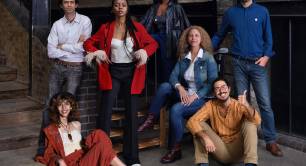
Top image: a discussion takes place between participants of the P4NE conference in Bonn this week.

| Ready to invest in independent, solutions-based journalism?
Our paying members get unrestricted access to all our content, while helping to sustain our journalism. Plus, we’re an independently owned social enterprise, so joining our mission means you’re investing in the social economy. |