Mixed reactions as UK’s Office for the Impact Economy is pushed out of the ‘heart of government’
Is the Office for the Impact Economy’s new home in DCMS a deprioritisation or an opportunity? As the dust settles after Andy Burnham became prime minister on Monday, social entrepreneurs, impact investors and others consider their new position in the political landscape.
The new UK government this week announced the Office for the Impact Economy has moved from the Cabinet Office to the Department for Culture, Media and Sport (DCMS), leading to fears that the impact economy agenda is being removed from the “heart of government”.
The Office for the Impact Economy was created in November 2025 by the then chief secretary to the prime minister, Darren Jones, to provide a “central point of contact” for social investors, purpose-driven business and philanthropists to engage with government on the impact economy and help grow the sector.
It was tasked with driving a cross-government strategy on the impact economy, with its place at the “heart of government” in the Cabinet Office seen as key to support engagement between different ministries, using a “hub and spoke” model.
On Tuesday – the day after Andy Burnham became UK prime minister – several functions were moved out of the Cabinet Office in an effort to “slim down the centre of government” and align them “with departments suited to their purpose”, the government said.
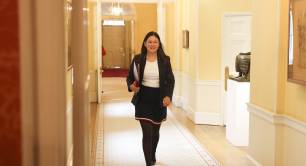
The impact economy brief will fall under the remit of Stephanie Peacock (pictured top), who, it was confirmed late yesterday, remains minister for civil society within DCMS. Lisa Nandy, who has backed the impact economy agenda since taking office in 2024, remains at the head of the department as culture secretary.
Downgrade, consolidation, or housekeeping?
Announcing the news on LinkedIn, the Office for the Impact Economy said: “Partnership with the Impact Economy is crucial to delivering better outcomes for people and places, and it continues to be a key partner in national renewal.”
It added the change would bring “policy, delivery and funding levers together, providing a stronger platform from which to pursue that ambition”. The statement said the Office looked forward to continuing work on the impact economy agenda together with DCMS colleagues and across government. “In the meantime, it’s business as usual.”
The announcement was met with mixed reactions from the impact community. “Looks like a downgrade”, commented Neil McInroy, global lead for community wealth building at the Democracy Collaborative, on LinkedIn. But it could signal an upgrade of Nandy’s responsibility, he added.
- Read more: ‘The Office for the Impact Economy should capitalise on the strengths of its new home in DCMS’
Bonnie Chiu, managing director of The Social Investment Consultancy, wrote on LinkedIn the move could imply that the impact economy was seen as a civil society agenda rather than a cross-department one.
But for Dom Llewellyn, head of the Impact Economy Collective, who was a member of the government’s advisory body on social impact investment (which recommended the creation of the Office for the Impact Economy), having a dedicated office is what matters. “Government now has an Office for the Impact Economy – something more than 100 organisations and individuals across the impact economy helped shape and have worked towards for years,” he told Pioneers Post.
What matters now is giving the Office the leadership, the cross-Whitehall remit and the reach into places to serve the full breadth of the impact economy
The DCMS transfer could be beneficial, he added. “The move to DCMS brings welcome join-up, placing the Office alongside government's work on philanthropy, social investment and the Better Futures Fund. At a moment when every pound of public money must work harder, the impact economy is one of government's greatest untapped partners.
“What matters now is giving the Office the leadership, the cross-Whitehall remit and the reach into places to serve the full breadth of the impact economy – philanthropy, impact investing and the spectrum of purpose driven business – as a single front door into government. Get that right, and every department gains more innovation, capital and capacity to back the prime minister's priorities, from ending rough sleeping to renewal in every postcode.”
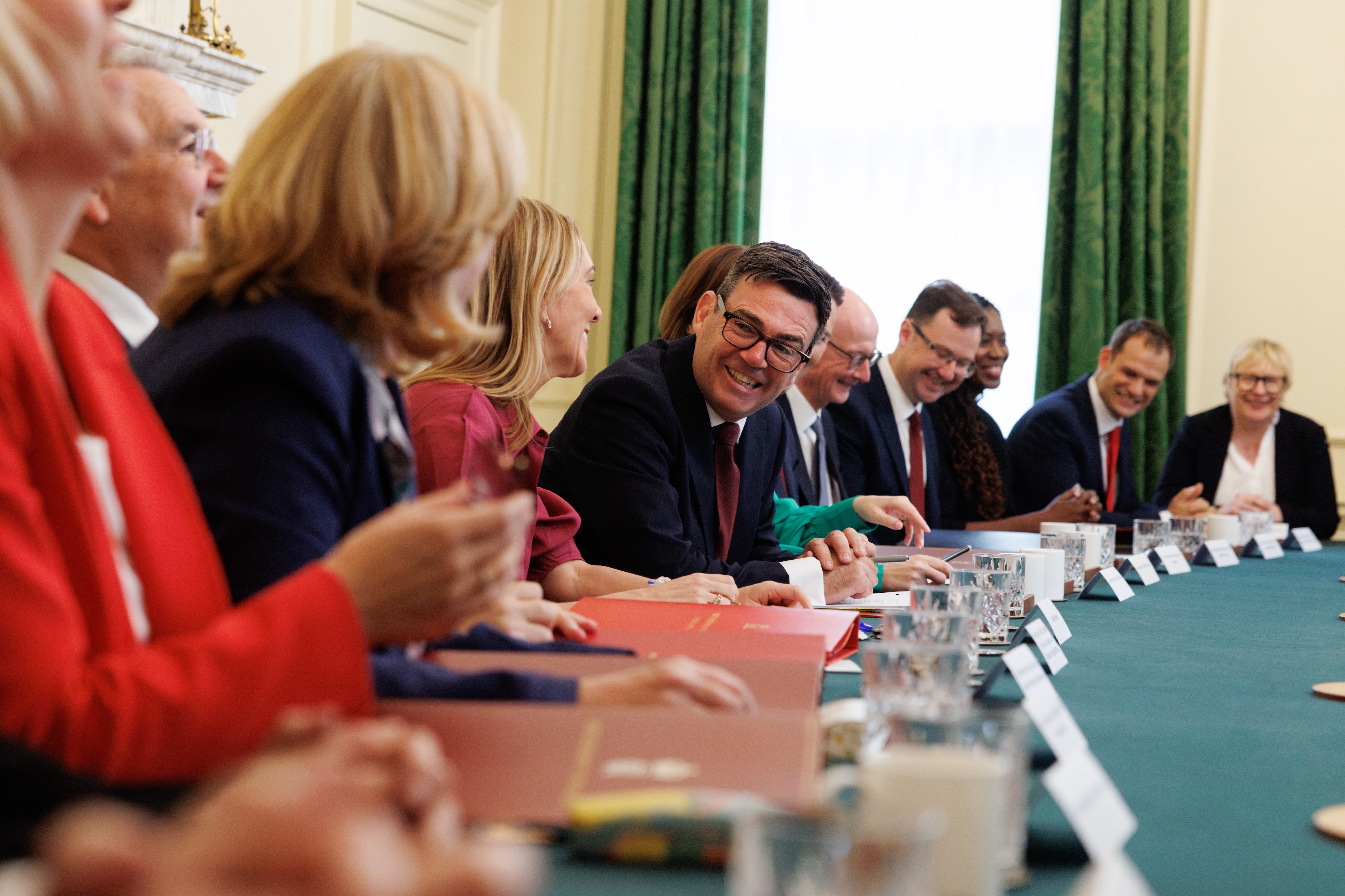
Above: Andy Burnham holds his first cabinet meeting this week (Picture by Lauren Hurley/No 10 Downing Street)
For Peter Holbrook, group CEO at Social Enterprise UK, it is too early to draw any conclusions. He said: “The commitments, priorities and emerging narrative from No.10 is encouraging. It’s hard to see the move of the Office for the Impact Economy as anything other than a bit of short-term housekeeping at this stage.
“I suspect and hope that this is part of the visible beginning of a bigger rethink – ultimately better aligning government architecture and support to meet Burnham’s bigger ambition. I’d be surprised and disappointed if the reorganisation stopped here.”
It’s hard to see the move of the Office for the Impact Economy as anything other than a bit of short-term housekeeping at this stage
Risk of narrowing the scope of the impact economy
Writing in a column for Pioneers Post, Jack Wakefield, head of policy and communications at Social Investment Business, said: “Some have worried this could be a downgrade or a sign of deprioritisation… They may be right, but I think there is another possibility: this could be the moment the impact economy agenda shifts to delivery at scale.”
He argues the Office “should capitalise on the strengths of their new home in DCMS”, including delivering results, being close to communities and its expertise in civil society and philanthropy. But for the move to succeed, “the Office also needs to be connected to the flows of capital that shape the wider economy” – and it needs to be properly connected to other departments.
The real question is design more than location
A source with knowledge of the matter said they understood the transfer to DCMS might look like deprioritisation, but that retaining a dedicated office was positive, and DCMS had shown long-standing leadership on social investment, social enterprise and civil society. “The real question is design more than location,” they added, and it was important that the Office retained its cross-departmental remit.
A worry was that the scope of the impact economy, which is intentionally broad spanning institutional investment and philanthropy through to social enterprise, co-ops and B Corps, might be reduced to what has traditionally been included in the civil society brief, such as social enterprises, charities and social investment, they added. It was important the Office held on to its capacity to engage with large pools of capital and big business, and they said investors and businesses might raise eyebrows at the idea of the impact economy being moved to DCMS.
But Andy Burnham’s own alignment with the sector – including engaging with big investors and businesses in Manchester as well as his support for social enterprise – was encouraging and those signals helped offset the concerns around the Office for the Impact Economy, they concluded.
‘Not the most powerful department’
Dan Gregory, formerly of Social Enterprise UK and co-founder of Popular, wondered what the impact of the change would actually be. “It's only been a year or so since the ‘impact economy’ was invented and already the new powerful, central government team has been shunted off to DCMS,” he told Pioneers Post.
“Most social entrepreneurs, co-operators and, er, ‘impacteers’ are generally quite bored of machinery of government changes so won't be too bothered either way. But the Office's statement that this ‘change brings policy, delivery and funding levers together, providing a stronger platform from which to pursue that ambition’ isn't particularly credible and sounds quite unlikely.”
Most social entrepreneurs, co-operators and ‘impacteers’ are generally quite bored of machinery of government changes so won't be too bothered either way
The “civil society” brief has been housed in DCMS since 2016, but many figures from the impact community have long argued that social enterprise and impact investing should live in a more central department, such as the Treasury or department for business. In damning remarks in 2021, former minister and current GSG Impact chair Nick Hurd said that while some people within DCMS understood the social economy, “with the best will in the world, and they’d be the first to admit it, that’s not the most powerful department in government”.
Ministerial responsibility for civil society had previously been located in the Cabinet Office between 2006 and 2016. Before that, from 2001 to 2006, there had been a Social Enterprise Unit located in the Department of Trade and Industry, with a specific focus on social enterprise and its own social enterprise minister.
The move comes as part of what the government called “a number of changes to the machinery of government to rewire the state, change the geography of government to deliver a stronger, more strategic centre that empowers local leaders, and acts as the engine room for driving economic growth across the whole country”.
Top image: Civil society minister Stephanie Peacock visits East Bierley Community Sports Association at the end of May. Peacock will now be in charge of the impact economy brief. Credit: DCMS.
Note: this article was updated on 24 July 2026 to clarify that the government's advisory body on social impact investment (SIIAG) had recommended the creation of the Office for the Impact Economy.

| Ready to invest in independent, solutions-based journalism?
Our paying members get unrestricted access to all our content, while helping to sustain our journalism. Plus, we’re an independently owned social enterprise, so joining our mission means you’re investing in the social economy. |