

‘The Office for the Impact Economy should capitalise on the strengths of its new home in DCMS’
 OPINION: The Office for the Impact Economy’s move to DCMS under new prime minister Andy Burnham could be viewed as a downgrade, but, argues Jack Wakefield, the movement must seize the moment. Published today, a new proposal from NPC and Social Investment Business for how to define the impact economy should help.
The UK’s new prime minister, Andy Burnham, has hit the ground running with new policy announcements and a rapid restructure of government. Bringing together innovation and business under the same team, strengthening an ‘Office for the Prime Minister’ and shifting local growth and devolution to the new ‘No10 North’. Amidst all the change was a quieter but significant change: The Office for the Impact Economy will move out of the Cabinet Office (a central department with responsibility for coordinating activity right across government), to the Department for Digital, Culture, Media and Sport (DCMS).
Some have worried this could be a downgrade or a sign of deprioritisation: we’re no longer in the remit of the prime minister’s number two, but in a department with far less system-level power. They may be right, but I think there is another possibility: this could be the moment the impact economy agenda shifts to delivery at scale.
Those of us within the impact economy must seize this moment to support Lisa Nandy (the Secretary of State leading DCMS), and the Office, to quickly build the right structures around them.
The Office, under Nandy’s leadership, should capitalise on the strengths of their new home in DCMS: a department that knows how to deliver results, has proximity to where impact actually happens, and is the centre of expertise in civil society and philanthropy. It’s a department with years of expertise in social investment, outcomes contracting and commissioning. If the government is serious about good growth in every postcode, this new home for the Office is significant. But for the move to DCMS to succeed, the Office also needs to be connected to the flows of capital that shape the wider economy. It cannot be limited by DCMS’ current remit.
For the move to DCMS to succeed, the Office also needs to be connected to the flows of capital that shape the wider economy. It cannot be limited by DCMS’ current remit
Positioning the Office as the hub, with spokes in the Department for Business, Innovation, Science and Trade (DBIST), HM Treasury and No10 North, would allow them to link that expertise in DCMS to the decisions that shape how public and private capital is directed, how procurement is designed, and how businesses are supported to grow. And this must be paired with a data-led understanding of organisational capacity across the country: who can deliver, at what scale, where, and against which outcomes. Successfully leading across all of this would place DCMS at the heart of the government’s agenda to deliver good growth to every postcode.
- Read more: Mixed reactions as UK’s Office for the Impact Economy is pushed out of the ‘heart of government’
A new common framework to define the impact economy
In partnership with NPC, we at Social Investment Business have been developing a framework for understanding the breadth of the impact economy and the distinctions within it. We’ve published an overview as a first step to supporting the Office as they shape and define their new role within DCMS, with a full version launching in the coming weeks.
- Read more: NPC’s ‘impact economy’ definition: a ‘missed opportunity’ or chance to collaborate better?
The full framework explores the distinct segments that comprise the impact economy and the various roles public finance must play to support each one: shaping markets, providing subsidy, the roles of revenue, catalytic or patient capital and so on.
Crucially it outlines that the impact economy goes far beyond DCMS’ traditional remit of charities, community organisations and social enterprises. It also includes co-operatives and mutuals, B-Corps, and impact-led businesses, as well as pension funds, PuFIns (public finance institutions like the National Wealth Fund, or British Business Bank), and institutional investors.
The new framework outlines that the impact economy goes far beyond DCMS’ traditional remit of charities, community organisations and social enterprises
The Office for the Impact Economy could seize this restructure to deliver on its mandate and ensure each distinct segment of the impact economy has the tools and support it needs to thrive. By adopting this hub-and-spoke approach DBIST would bring mission-led business, innovation and the industrial strategy. HMT add PuFins, pension funds and expertise on blended finance at scale, while No10 North ensure this is anchored in local growth and devolved power: building a genuinely place-led impact economy.
The government has set out a clear direction: devolution of power and funding, a new approach to growth, and reform of public procurement. With the right structures and support around them, DCMS and the Office can unlock the potential of the impact economy to be the delivery engine for all three.
Jack Wakefield is head of policy and communications at UK social investor Social Investment Business
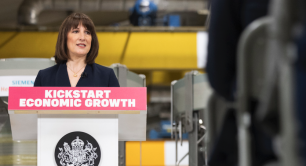
Header photo: Secretary of state for the Department of Digital, Culture, Media and Sport, Lisa Nandy. Photo published under a Creative Commons licence via No. 10 Flickr

| Ready to invest in independent, solutions-based journalism?
Our paying members get unrestricted access to all our content, while helping to sustain our journalism. Plus, we’re an independently owned social enterprise, so joining our mission means you’re investing in the social economy. |