

The Impact World this Week: 20 November 2026
Your quick guide to the most interesting news snippets about social enterprise, impact investment and mission-driven business around the world from the Pioneers Post team. This week: Earthshot Prize winners revealed, Milburn review points to impact finance as possible source of investment for youth employment, study shows impact capital is too slow to reach social entrepreneurs, and… happy Social Enterprise Day!
Global: Happy Social Enterprise Day!
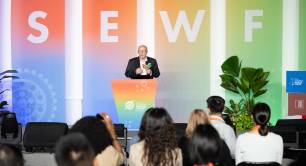
Members of the social enterprise community were celebrating World Social Enterprise Day yesterday – have a scroll through #socialenterpriseday posts on social media to enjoy uplifting messages from social business leaders around the world. Social Enterprise Republic of Ireland seized the opportunity to organise its annual summit (which Pioneers Post’s David Lyons attended in person – look out for his report). The Social Enterprise World Forum also chose the date to launch its ‘Business Unusual’ campaign, to help social enterprises communicate with “one voice” and have their model better understood by the wider population. Social Enterprise Day was also chosen by Stanford Social Innovation Review to publish a provocative piece by Cait Brumme, a non-profit founder and a former director at Social Finance, who writes that it might be time to retire the phrase “social enterprise”, which she argues has, over time, come to mean too many different things.
Global: Earthshot Prize winners revealed
A new financing model for ocean conservation, a campaign to end ‘forever chemicals’ in France and a Danish wind power pioneer are among this year’s Earthshot Prize winners, revealed at an awards ceremony in Mumbai, India on Tuesday. The Prize, now in its sixth edition, is a global environmental award launched by Prince William to identify, celebrate and support solutions to repair the planet. The winners include global offshore wind power company Ørsted, for his role in leading the shift to renewable energy; Mahindra Last Mile Mobility, an Indian company making small ‘last mile’ electric vehicles such as three-wheelers affordable for drivers; Niue Ocean Wide Trust, which has built a NZ$32m endowment to fund ocean conservation in the Pacific; the country of Bhutan, which has enshrined nature conservation in its constitution and successfully maintained nearly 70% of forest cover across the country; and the PFAS-Free France campaign, for raising awareness of the issue of forever chemicals in the country and leading to legal changes.
Global: Impact capital too slow to reach social entrepreneurs, according to new Acumen study
Impact capital takes longer to reach social enterprise founders than their cash lasts, according to a new survey of 140 social enterprise founders and executives across 33 countries from Acumen and the William Davidson Institute at the University of Michigan (WDI). Slow investment timelines are the top drawback of raising impact capital, cited by 47% of respondents. Almost half said they waited more than six months just for an investor’s decision – while four in ten have six months or less in cash reserves. Acumen founder and CEO Jacqueline Novogratz said: “If the capital takes too long to reach founders, it can’t do the good it’s capable of. Investors need to have more agility, more transparency, and the humility to listen to what founders really need.” The report urges impact investors to move capital faster, and help reduce the impact reporting burden for social entrepreneurs by using standard impact metrics.
UK: Milburn review points to impact finance as possible source of investment for youth employment
A landmark review into youth unemployment in the UK says impact investments and social outcomes partnerships should be used as a way of mobilising investment towards youth employment. The independent report produced by former government minister Alan Milburn advocates for increasing apprenticeships for young people, taxing employers less for hiring young people and changes in the welfare system. It has been criticised as a big spending plan by the opposition, but the review says there is “scope to draw on alternative sources of finance alongside public spending”, in particular impact investment, which has previously been used to support youth employment and is described in the report as “well suited” to the challenge. Existing vehicles, such as the Better Futures Fund – a £500m outcomes fund focused on tackling child poverty – as well as philanthropic funding could “play a supporting role where they can complement rather than substitute for core public investment”.
Global: Youth panel exposes shortcomings among fund managers as foundations seek to invest their endowments in line with their mission
After several foundations launched the Endowment Investing Challenge – committing to move an aggregated £50m of their investments to a fund more aligned with their missions, and specifically focused on intentional positive impact on future generations – they received applications from 55 investment service providers. The group of foundations – which includes the Joseph Rowntree Foundation, Friends Provident Foundation, the Blagrave Trust, the Children’s Society and others – put a panel of seven young adults aged 18-25 in charge of choosing who was suitable. A new report reveals how the experiment did not quite go as expected. The Future Generations Panel exposed fund managers’ little consideration of their impact on young people within their investment process, and questions relating to human rights, conflict and genocide were commonly avoided by investment service providers. Another key finding was that it is not currently possible to maximise positive impact for future generations and financial return while also minimising financial risk. Following the panel’s recommendations, the foundations committed £20m of their investments, including £12m to Triodos Investment Management. While they said they expected further commitments in the future, they added they “did not expect to reach our initial target of £50 million, which reflects the state of the sector”.
Movers and Shakers
- Mark Simms, group CEO at P3 Charity Group, has been appointed chair of award-winning social enterprise, the London Early Years Foundation (LEYF).

| Ready to invest in independent, solutions-based journalism?
Our paying members get unrestricted access to all our content, while helping to sustain our journalism. Plus, we’re an independently owned social enterprise, so joining our mission means you’re investing in the social economy. |