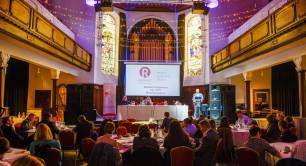
Resilient Scotland revealed more support for its investees at a symposium in Glasgow. And a Scottish cabinet minister revealed which types of investment the government is most keen on.
A year after we first reported it, South Africa's first social impact bond is close to being agreed. At the Skoll World Forum, social enterprise mothers2mothers shared the challenges of the long journey it has undertaken.
The potential of social impact bonds may be more limited than the government suggests and social investment is too expensive for many, finds the House of Lords select committee on charities.
In a UK-first, a social impact bond is being used to launch a scheme for young people with special needs to learn to use public transport on their own. The aim is to save councils money as well as improving young people's independence.
Does the complexity of social challenges mean that the oft touted winning attribute of social impact bonds (SIBs), namely measurement, is an empty boast? In his second look at SIBs, James Ronicle continues to scratch his chin.
Social impact bonds are growing in popularity across the globe, but are they ethical? In the first of two articles, James Ronicle reports on an event that brought together 40 researchers to debate the pros and cons.
These investor-backed schemes to tackle social problems show 'real potential to improve how governments worldwide deliver public services', says report.
The GIIN's 2016 Impact Investor's Survey forecasts steady growth in the global impact investment market over the next year. Ellie Ward speaks to CEO Amit Bouri to find out more.
"A common misconception about Social Impact Bonds (SIBs) is that money is the driving factor." Jenny North from Impetus PEF explains why she welcomes government enthusiasm for SIBs.