As protests grow around the world against the building of massive, environmentally destructive data centres to serve the ever growing demands of AI, one Australian social entrepreneur has developed a different type of AI data centre which meets his organisation’s social values.
Impact assets under management in Spain grew by more than 50% between 2023 and 2025, shows fresh research which was previewed at this week’s annual ‘Camino al Impacto’ event in Madrid.
OPINION: Hopes are up for the sector as prime minister Andy Burnham’s refreshed political priorities have made ministers more receptive to the message of the social enterprise community, writes Social Enterprise UK’s Jovan Owusu-Nepaul.
Social Enterprise World Forum’s Social Investment Manifesto calls for a reframing of social investment, as social enterprises remain excluded from investment opportunities in a market still split between profit maximisation and philanthropy.
ANALYSIS: Dormant assets and €1bn of innovation funding are in the spotlight as Germany unveils long-awaited first strategy for social enterprise and innovation – but the clock is ticking to make progress before an expected change of government.
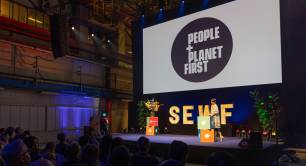
Important questions asked amid the enthusiasm of this week's Social Enterprise World Forum, where a new global social enterprise brand is launched. Plus, our columnist calls for closer scrutiny of impact event sponsors everywhere.
Concerns about virtue-signalling and purpose-washing are widespread – and sometimes justified – in the conference circuit. Big claims or good intentions are no longer enough: sponsors must do all they can to prove their commitment.
SEWF23: Verification scheme launched at this week's Social Enterprise World Forum aims to overcome cultural and language differences, to provide clear identity for businesses focused on positive purpose.
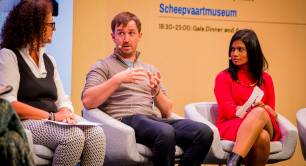
SEWF23: The impact economy is the future. Or is it? In a debate at this week's Social Enterprise World Forum in Amsterdam, progressive economy heavyweights Erinch Sahan and Katie Hill squared up to test the strengths of their theories.
Social enterprise is a significant force in the UK economy – but available data is still incomplete and even contradictory. Tim Thorlby pinpoints three questions to explore, and calls for robust, detailed data-gathering by the government.
Blended finance is no magic wand – and there's little reason to use it in most of Asia, one expert says. Plus, more positive sentiments from speakers at this week's gathering in Spain – but a plea for “more African representation” next time.
SAP, Johnson & Johnson and Siemens among six big-name backers of campaign delivered by SEUK-backed startup Telos – which aims to highlight the “opportunities rather than risks” of supply chains.
Low-key government announcement of latest £350m dormant assets funding allocation falls short of what social investment leaders had been campaigning for, as money will be evenly split between four ‘good causes’.