Collection: Cities of Impact


Art in a toilet, a navy base transformed into a hub for social innovation and a community wealth building pilot project: Pioneers Post reporter David Lyons explores social innovation initiatives in Amsterdam during the Euclid Network Impact Summit.
‘Art exhibition in a public toilet’ probably wasn’t at the top of many delegates’ agendas for the 2026 Euclid Network Impact Summit, but it is what they got courtesy of Amsterdam art, design and science venue Mediamatic.
The exhibition in the Mediamatic toilet (pictured) – Soft Sabotage by artist Julia Löffler – displays handmade soap and accompanying information in one of Mediamatic’s toilets, to question the Dutch government’s policy of collecting biochemical residues from sewage to monitor drug use, stress levels, nutrition and other population-wide health indicators.
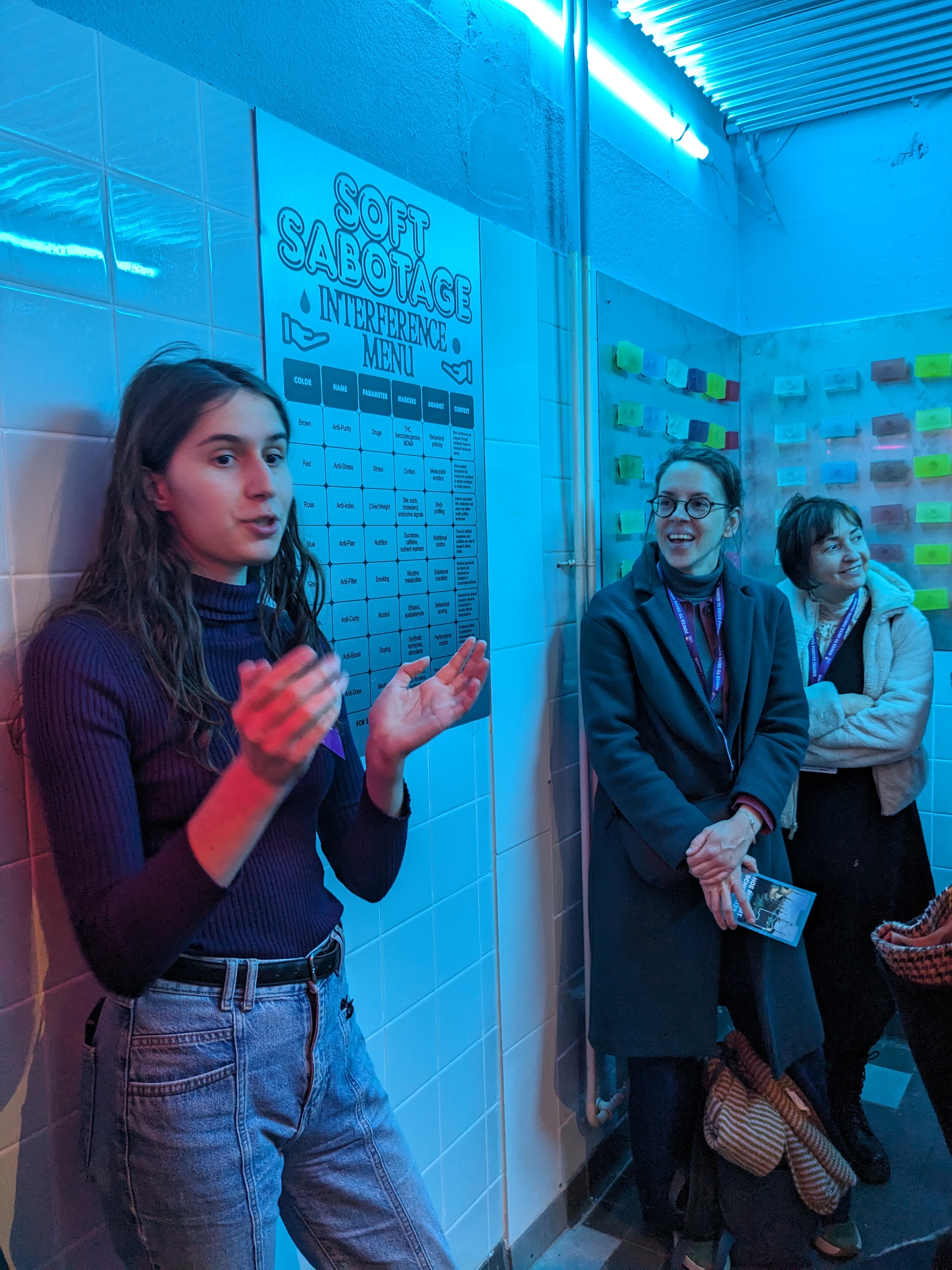
The artistic toilet stop was one of the visits on a social enterprise tour showcasing Amsterdam’s status as an ‘impact city’, which actively fosters social innovation, circular economy initiatives and sustainable urban development. The city’s initiatives on display during the tours were interrogated and compared to innovations elsewhere during the two-day event, held last week.
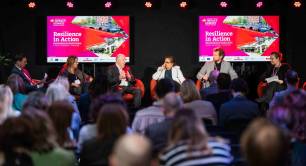
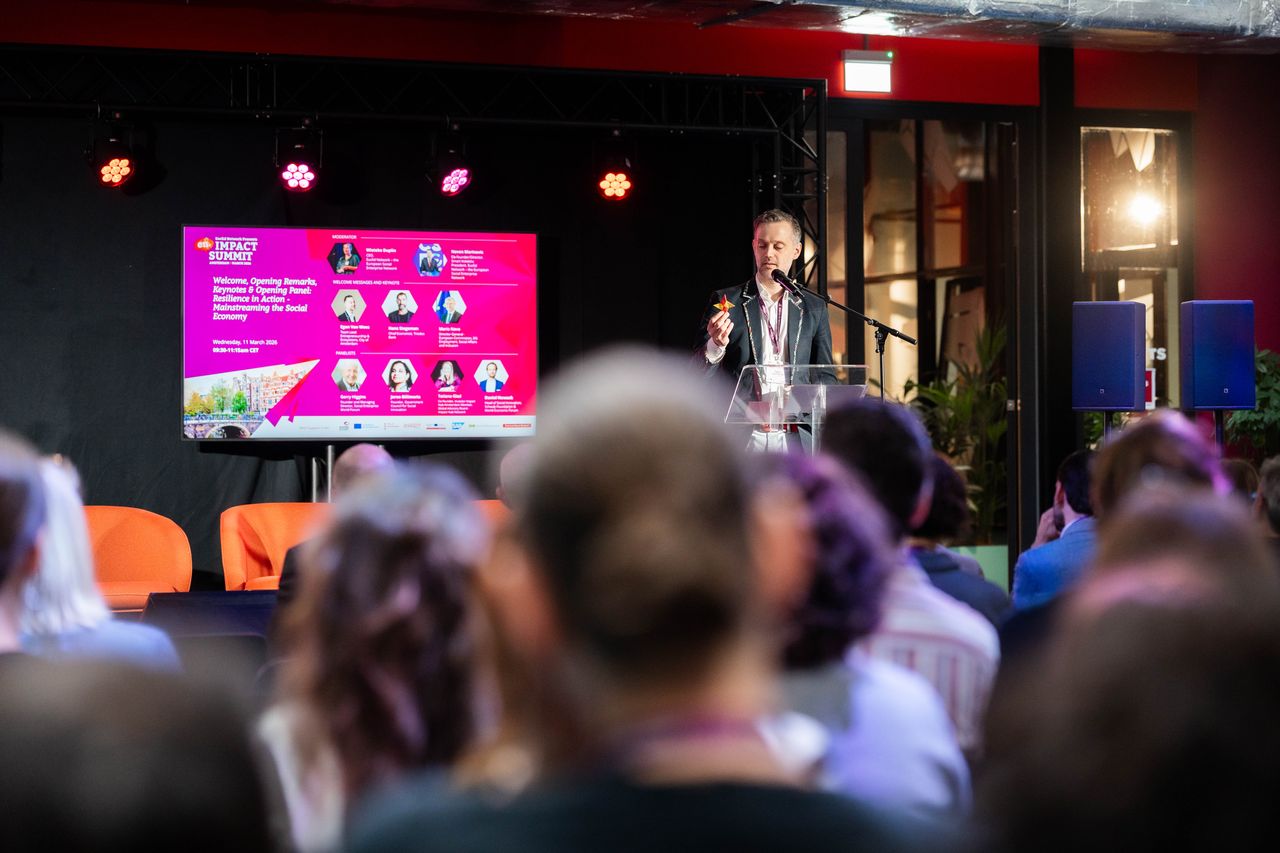
At the opening of the Impact Summit, Egon van Wees, team lead for entrepreneurship and ecosystems for the City of Amsterdam, said: “For us, it's important to invest unequally for equal opportunities, because the city is a divided city where there are different neighbourhoods that need more. We are putting more emphasis on those neighbourhoods with place-based impact investing funds and community wealth building programmes.”
Mediamatic, a short walk from Amsterdam central station, looks across a canal at the Marineterrein, a former navy base on the island of Kattenburg which since 2013 has been transforming into an ‘innovation district’, focused on enabling the development of social innovation and circular economy solutions to urban challenges.
Tour participants also visited the Marineterrein’s CRCL PARK, a hub for circular innovation designed to scale circular solutions in sectors like construction, fashion and food. CRCL PARK is run by Impact Hub Amsterdam and the Amsterdam Institute for Advanced Metropolitan Solutions.
Based next to Mediamatic is Rederij Lampedusa, a social enterprise offering boat tours of the Amsterdam canals, which transported Impact Summit delegates from event venue and B Corp hotel The Social Hub Amsterdam City to the Marineterrein.
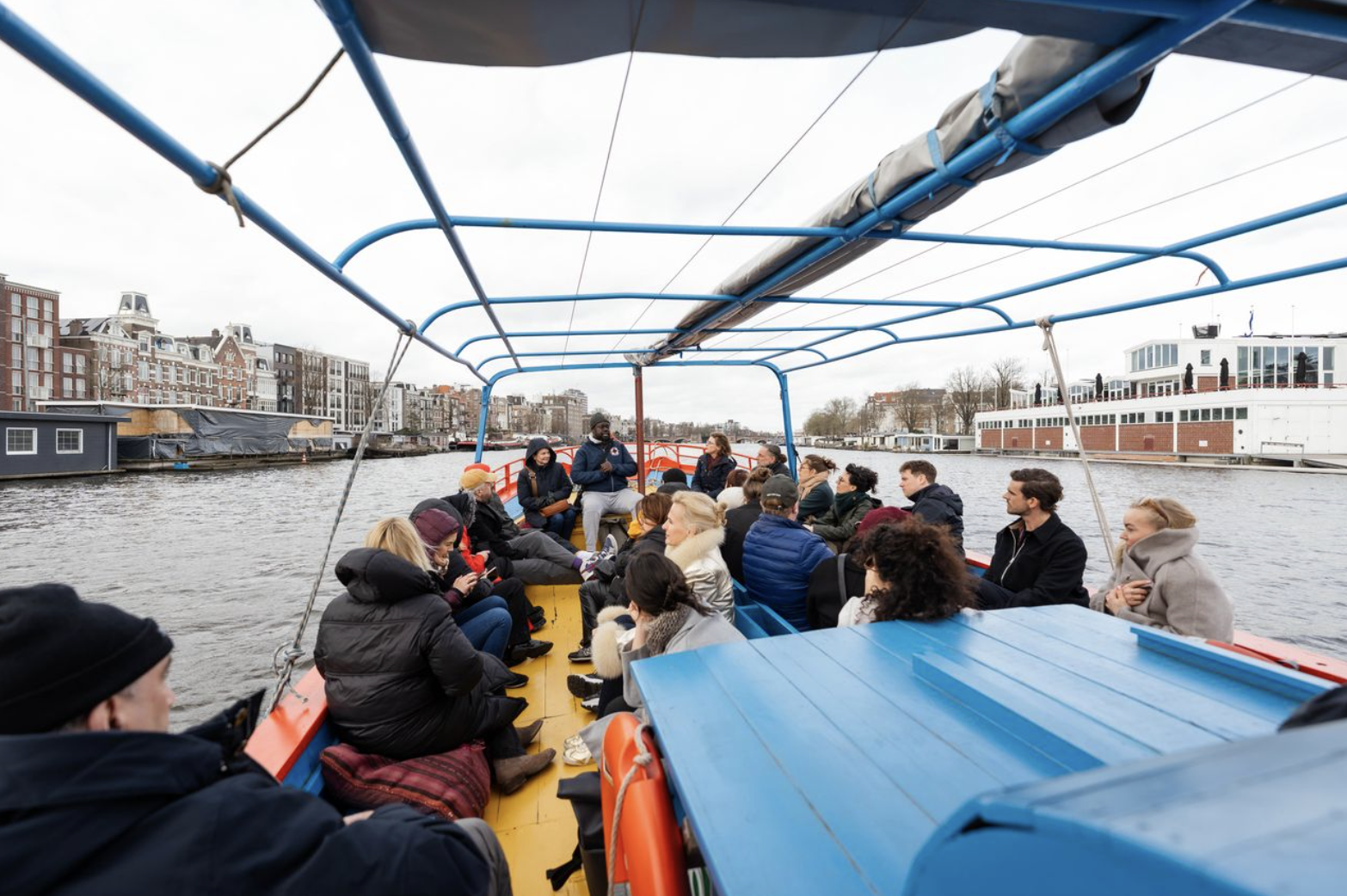
Rederij Lampedusa tour guides are refugees, who share with their guests both the history of Amsterdam and insights into the experience of asylum seekers in the Netherlands. Our guide for the trip Yusuf Adam Suali (pictured top), from Somalia, fled to the Netherlands after persecution because of his political and social activism. In the Netherlands he campaigns for the rights of migrants as part of the We Are Here collective.
Suali said: “In the Netherlands now, things are changing after our movement, but before, when I arrived, if you didn't have a document, you didn't have a right to a lot of things. You didn't have a right to shelter, you didn't have a right to go to school, even if you wanted to study.”
Even our boat was a reminder of the realities of the hardships faced by asylum seekers seeking sanctuary in Europe – named Alhadj Djumaa (or “Mr Friday”), it was gifted to the social enterprise by Italian authorities, who had seized it when 282 passengers attempted to cross the Mediterranean sea in it from Egypt.
Separate from the City of Amsterdam’s ‘innovation district’ initiative, but equally socially innovative, is its piloting of an economic model called community wealth building in one of its most underserved districts.
Community wealth building is an economic model which seeks to redirect wealth back into local economies where it is generated, and places the control and benefits of that wealth into the hands of local people.
The City of Amsterdam is piloting this approach in its Nieuw-West district, which is home to neighbourhoods facing high rates of poverty, unemployment and income inequality.
In a session on community wealth building at the Impact Summit, Rob van Hilten, team leader of entrepreneurs and civil servants for the City of Amsterdam, said: “We saw what it did in Cleveland [US]. We saw what it did in Preston [England]. We were witnessing the development in Scotland. Let's see if we can replicate that in Amsterdam.”
Actions the city is taking include encouraging local residents to form cooperatives to manage local assets and services, and working with "anchor institutions" – large, local entities like hospitals, housing corporations and schools – to leverage their procurement budgets to support local suppliers rather than external corporations.
We need to start to redesign complete supply chains. It is about setting up businesses that work differently, where profit is not as important
Van Hilten said: “We need to start to redesign complete supply chains. It is about setting up businesses that work differently, where profit is not as important.”
EU procurement laws, which prioritise competitive, open tendering, often favouring large, non-local suppliers with greater economies of scale, can be a challenge to community wealth building initiatives, said van Hilten.
He added that the EU is currently reviewing its Public Procurement Directive, and that the City of Amsterdam has made a submission (called an “opinion”) in support of favouring local suppliers.
Yadan Al Drajy, community lead at Community Wealth Building Amsterdam Nieuw-West, highlighted the example of a renovation and maintenance cooperative based in Amsterdam Nieuw-West to demonstrate challenges local organisations can face when attempting to be a suitable supplier for the municipality or other large “tier one” contractors.
Al Drajy said tendering conditions often exclude startups, SMEs and co-operatives and cost barriers like certification can create financial thresholds.
In February Scotland became the first country in the world to legislate for the implementation of community wealth building at a national, regional and local level.
The legislation requires Scottish ministers and various public bodies, particularly local authorities, to publish and implement action plans and guidance on the generation, circulation and retention of wealth in local and regional economies. This could include boosting social enterprises, buying or procuring more goods and services from local businesses or helping community groups to acquire vacant buildings and land.
At the Impact Summit, speakers from Scotland compared their experiences with those of their colleagues in Amsterdam.
We’ve found building a commercial team around the entrepreneurs can lead to accelerated growth
Eoghan Mackie, CEO of the Challenges Group, explained how his organisation’s Ventures Lab initiative attempts to support startups to achieve the scale necessary to deliver large procurement opportunities.
Alongside funding, the Ventures Lab provides professional services and business development support, including bookkeeping and accounting, human resources, IT, legal advice, social media and marketing, to deliver longer term growth support for ventures.
He said: “Some of the social entrepreneurs we support obviously understand the issue they’re trying to tackle intimately, but they're not necessarily deeply commercially experienced. We’ve found building a commercial team around the entrepreneurs can lead to accelerated growth and cut down some of the limiting factors, like basic commercial mistakes.”
Implementation is the bit we need to get right for the next couple years
Chris Martin, CEO of Social Enterprise Scotland, said following successful pilot programmes, and now the legislation had passed, his focus is on working with government and local authorities to ensure social enterprise is fully embedded within the new economic framework.
With this year marking the end of Social Enterprise Scotland’s 2016–2026 strategy, Martin said “implementation is the bit we need to get right for the next couple years”.
In a statement reflecting on the end of the 2016–2026 strategy, Martin added: “That means not only shaping what the next phase of support for the sector should look like, but also ensuring that the commitments being made through legislation translate into real opportunities for social enterprises on the ground.”

| Ready to invest in independent, solutions-based journalism?
Our paying members get unrestricted access to all our content, while helping to sustain our journalism. Plus, we’re an independently owned social enterprise, so joining our mission means you’re investing in the social economy. |