Leading voices from UK social enterprise, co-operatives and social investment have raised concerns over a “landmark” definition of the ‘impact economy’ that risks alienating a number of impactful organisations.
Impact Europe today revealed the name of its new chief: Angela Wiebeck, praised for “building bridges” between mainstream finance and impact over her two decades at UBS and Aquila Capital. She speaks to Pioneers Post from Brussels.
OPINION: There’s a message blowing across the Atlantic that the business of investment is to maximise return, and considering people and planet is woke nonsense. This argument is outdated, says GSG Impact chair Nick Hurd.
INTERVIEW: Putting a price tag on a company’s social and environmental impact is the only way to demonstrate its true profit and loss, believes Sir Ronald Cohen, who is now focusing on driving forward the next accounting revolution.
New data highlights the scale of the problem in British society and why social investors are well placed to address it, in first Better Society Index published this week.
EXPERT INSIGHT: An ‘elegantly simple’ grants scheme that incentivises trading income growth is enabling leaders to test innovations, enter new markets as well as transforming their mindsets, finds research from LSE’s Marshall Institute.
Young social entrepreneurs are remarkably optimistic for the future. Is it naive, or can change really happen? This week's view from the Pioneers Post newsroom.
A benign and enabling AI, moving beyond GDP as a measure of success, and businesses embedding true-cost accounting – these should all be key attributes of Europe’s economy in 2040, according to a survey of young social entrepreneurs.
EXPERT INSIGHT: Decades of philanthropy have failed to significantly improve educational outcomes in developing countries. The British Asian Trust’s LiftEd initiative provides valuable lessons in switching to a systems approach.
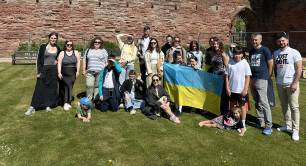
As the war in Ukraine continues, we remain committed to highlighting the social innovators who are finding solutions to some of its devastating impacts. This week's view from the Pioneers Post newsroom.
On the fourth anniversary of Russia’s invasion of Ukraine, Vitalii Diakov tells us about the journey that he and his wife took from Odesa to Dundee, and the social enterprise they founded.
A new study from Japan provides a refreshing perspective on impact investing – and a reality-check. Laura Joffre introduces this month's digest of impact investing news and analysis.
More than a fifth of Japanese consumers have heard of impact investing, with younger generations showing more interest in the practice, according to a new survey by the Japan Social Innovation and Investment Foundation.