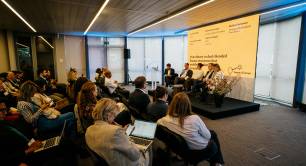
Autocracy is on the rise worldwide, and impact investors seem reluctant to step in. But large-scale transformations to health, education or the environment need a strong democratic base, the Latimpacto event heard last week.
Europeans have been hit hard by unprecedented crises over a hellish summer. As the EU negotiates its next multi-year budget, it’s time for the social economy to show both policymakers and citizens it has proven solutions to tackle them, writes Toby Gazeley from Brussels.
Travel is said to broaden your horizons, and the Latimpacto conference in the Brazilian city of Manaus this week gave delegates an ideal opportunity to bring fresh eyes to their work. We asked them what they were reconsidering.
In Delhi for the first time, Asia's largest philanthropy and impact investment network, AVPN, says that despite the region's 1,000+ billionaires, its biggest challenge is the lack of Asian money.
In Delhi for the first time, Asia's largest philanthropy and impact investment network, AVPN, says that despite the region's 1,000+ billionaires, its biggest challenge is the lack of Asian money.
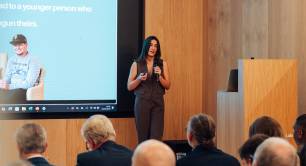
OPINION: Corporate decision-making typically privileges knowledge and length of service. But this model is under pressure as young people call for more influence over decisions which affect their futures, says Kate Robertson.
A new framework from Social Investment Business and New Philanthropy Capital aims to help funders, policymakers and investors better understand what market infrastructure is required to grow the impact economy.
This week: German social enterprise advocates disappointed at country’s new startup strategy; UK social enterprises and co-operatives included in new government’s talks with business; social and solidarity economy in Mongolia mapped; and more...
To operate at scale, impact investing needs the whole "spectrum of capital", from grants to institutional investment – the key is in the blending, to achieve a mix that works for social entrepreneurs: Laura Joffre reflects on her conversation with FASE's Markus Freiburg.
A new prime minister means uncertainty for the UK’s impact economy, and this week’s move of the Office for the Impact Economy out of the “heart of government” is leaving more questions than answers. How could the sector future-proof its relationship with government?
Contest founder wants to “democratise access to entrepreneurship so where you start doesn't decide where you finish”. Also new this year, a six-week accelerator programme for 16 semi-finalists – entries must be in by 9 August.
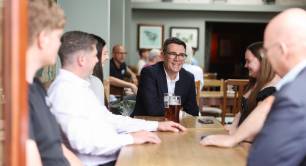
Is the Office for the Impact Economy’s new home in DCMS a deprioritisation or an opportunity? As the dust settles after Andy Burnham became prime minister on Monday, social entrepreneurs, impact investors and others consider their new position in the political landscape.