The Editor's Post: Is social enterprise half way to changing the world?

Taking the temperature of social enterprise sector confidence in Scotland and Ireland: This week's view from the Pioneers Post newsroom.
Before giving her speech at Firstport’s 20th anniversary celebrations, held on Wednesday in Glasgow, the organisation’s CEO, Gael Drummond, told me she didn’t want the event to be all about navel gazing and looking backwards.
She delivered on that ambition. The event took in discussions on how social enterprise can help eradicate child poverty and what needs to be done to create the conditions for social enterprise growth.
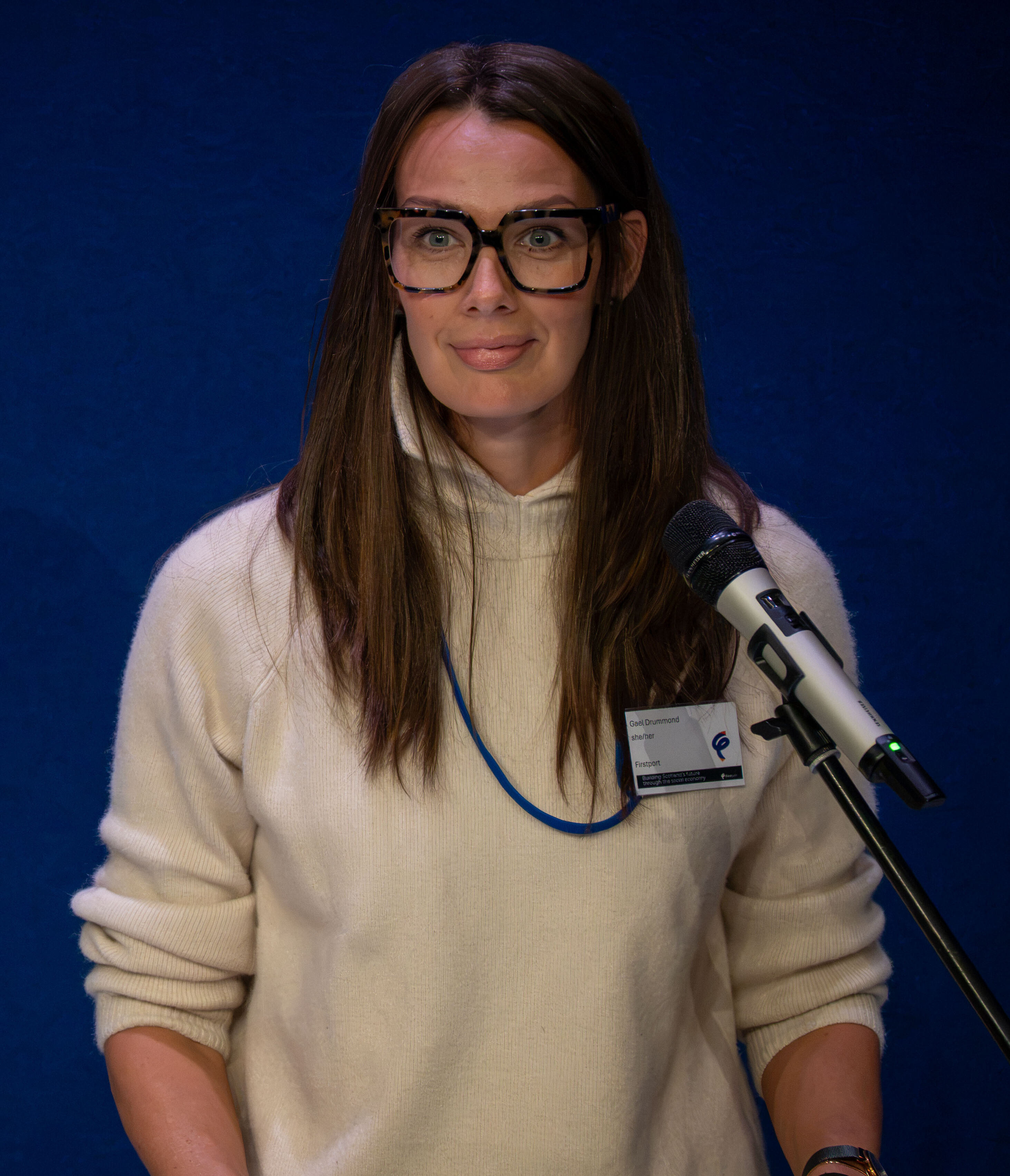
In her speech, Drummond (pictured, credit: Open Aye CIC) gave her audience a one-line assessment of the state of social enterprise in Scotland, and a mission statement: “If the last 20 years have been about establishing and proving the value of social enterprise, the next 20 years should be about ensuring it addresses the challenges facing our society.”
Recognising the government’s “long-standing commitment” to social enterprise, which has helped create “one of the most vibrant social enterprise sectors in the world”, Drummond said her ambition is for social enterprise “to be viewed not as an alternative to ‘real business’, but as an essential part of an inclusive economy.”
In his speech, Stephen Flynn, Scottish cabinet secretary for economy, tourism and transport, reiterated the commitment made to supporting social enterprise in his party’s programme for government, published in September. The extent of that will be revealed when the government announces its budget next week.
Barry Ayre, one of Firstport’s co-founders, told the audience the organisation was set up 20 years ago “to change the world”, and he thought it was “half way there”.
It was strident stuff. While some speakers and guests went on to argue the Scottish government could do more to support the sector, the confident tone was starkly different to that communicated by the Republic of Ireland social enterprise census, which I also reported on this week.
The Irish census showed limited growth in the total number of social enterprises since 2023, a heavy reliance on grants, and concern within the sector about financial sustainability.
Lorraine Corcoran, co-founder and director of Social Enterprise Republic of Ireland, shared a preview of the census results at the organisation’s annual conference, which took place last week.
At the conference there was plenty of recognition of the vital contribution social enterprises make to Ireland, but there were also many moments where speakers were looking to elsewhere in the EU, and specifically to Scotland, for examples of how social enterprises can be better supported.
Jerry Buttimer, Irish minister of state at the department of rural and community development and the Gaeltacht (the districts in Ireland where Irish Gaelic is spoken as the predominant language), opened the conference by highlighting the support the government had put in place for social enterprise in recent years.
But earlier this year SERI published a report which argued there is a “structural misalignment between government expectations and funding for social enterprises”.
Although the government’s national social enterprise policy 2024–2027 was co-designed with the sector, and despite the hard work of social entrepreneurs and support networks in the country, it would appear that significantly more engagement and support is required if it is to get to even halfway to changing the world.
Changemakers in action
We’re delighted to launch a new series this week called Changemakers in Action, in partnership with the LSE’s Marshall Institute. Bringing together a diverse community – from academics and students to social entrepreneurs, philanthropists, and policymakers – the Institute works to “improve the impact and effectiveness of private action for public benefit through research, teaching and catalysing action.”
Through this series, we’ll explore how leaders are putting the principles of social entrepreneurship into practice across business, government and civil society – and what we can learn from their experiences.
We’re starting with Gareth Taylor, who leads commercial investment opportunities at Great British Energy. Formally established in 2025, it is the UK’s first publicly owned clean energy developer in decades, built to operate at the intersection of commercial returns and social value.
This week's top stories:
UK impact investing market accelerates growth to exceed £110bn amidst global slowdown
Expert insight: Why women founders still struggle to find finance that fits
Changemakers in action: Building a public institution from scratch
Top image: Scottish minister Stephen Flynn reiterated the government's support for the social enterprise sector at Firstport's 20th anniversary celebrations (credit: Open Aye CIC)

| Ready to invest in independent, solutions-based journalism?
Our paying members get unrestricted access to all our content, while helping to sustain our journalism. Plus, we’re an independently owned social enterprise, so joining our mission means you’re investing in the social economy. |