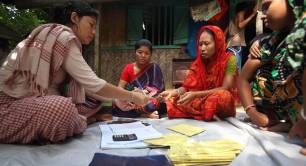
In Delhi for the first time, Asia's largest philanthropy and impact investment network says that despite the region's 1,000+ billionaires, its biggest challenge is the lack of Asian money.
OPINION: At a time when anti-rights movements are growing stronger, why is social investment not yet kicking in at scale to help build a more sustainable LGBTQI movement?
A new framework from Social Investment Business and New Philanthropy Capital aims to help funders, policymakers and investors better understand what market infrastructure is required to grow the impact economy.
Will geopolitics push social enterprise to the bottom of the inbox? Will power be truly shared through devolution? Will progress made so far be forgotten? We asked leaders from across the impact community to share their perspective on the new PM.
ACF, School for Social Entrepreneurs and Access Foundation set up taskforce to boost earned income through grants – billed “the missing piece in the finance jigsaw” – by building on success of match trading.
Certifying as a B Corp isn't easy, even for the most experienced ethical businesses. But should the bar be higher? The latest in our Awkward Questions series puts forward some important challenges. Plus, an overlooked solution to messy metrics.
Social Value International adds explicit requirement to ‘be responsive’ – as too few organisations have reached the stage of managing, not just measuring, their impact.
The B Corp idea disrupted entrenched narratives in business. But certification of companies like Nespresso shows that it must now evolve to embrace newer, bolder ideas in business – or risk being adapted to the needs of the “old economy”.
PLUS: EdTech Provider APDS gains US$7m to 'transform the correctional system'; new report calls for US$6trn in impact investing improve urban slums; Wysa raises US$20m to expand AI-powered mental health services, and more.
New study by Global Steering Group for Impact Investment calls for a change in viewpoint from seeing slums and their inhabitants as a problem and instead acknowledging the potential to transform urban liabilities into assets.
When organisations select their preferred impact metrics in isolation from others, it wastes time and makes it difficult to compare results with others. A promising solution: indices.
Social and environmental benefits are entirely interconnected; it's time for the impact community to properly put this into practice. Plus, we explore the recent challenges facing purposeful property enterprise Dot Dot Dot.
As heatwaves sweep Asia and Europe, the reality of the climate crisis is becoming ever more obvious to even the most hardened sceptics. Who has the ideas, skills and motivation to move us to net zero? Social entrepreneurs!